









I believe, in my heart, that when the majority of people are asked if they want to help the most vulnerable, care for those with the least, their first response will be: of course. If I don’t believe that, if we as a society don’t believe that, then our hope for a better future for all of us has little to no chance of succeeding. It is in this spirit that I am writing today.
Whenever proposals emerge to expand childcare, reduce homelessness, lower healthcare costs, or provide education support, Americans are told to ask a responsible question:
How will we pay for it?
It is a fair question. Public resources are finite. Priorities matter.
What is less clear is why that question seems to arise only when the conversation turns to helping ordinary people.
In recent months, Americans have watched plans advance for a new White House ballroom, seen new monuments and memorial projects in Washington, witnessed a birthday celebration with a UFC event on White House grounds, and had signage on buildings added, then removed, all of which costs money. All of this costs tens of millions of dollars. And, we have a war of choice taking place, that in addition to the numerous lives of soldiers and civilians lost, has cost us billions of dollars in just a few short months.
This is not an argument against ballrooms, monuments, public celebrations, or recognition. Or against national defense, when necessary.
It is an argument about priorities.
Because while our political leaders can always seem to find money, attention, and urgency for displays of power, prestige, and symbolism, they routinely tell Americans there is not enough money to help families struggling with housing, childcare, food, healthcare, or transportation. These are the very things for which taxpayer dollars should be used. And, when leaders have found the will to address these issues, they are often attacked as using taxpayer money irresponsibility.
As someone who works every day with people experiencing poverty and homelessness, I see how modest investments can change lives.
In Pasadena, the recently released 2026 homeless count reported 577 people as experiencing homelessness, including 322 living unsheltered on our streets. At the same time, average rents exceed $2,300 per month and continue to place enormous pressure on working families.
The numbers that dominate our national political conversations often sound abstract. But they are not.
A $10,000 payment can prevent many families from being evicted. A few thousand dollars can keep utilities connected, stabilize a household after a medical emergency, or help a parent remain employed while arranging childcare. These are the numbers we work with at Friends In Deed.
Now consider a project costing $200 million.
That is not simply a large number. It is equivalent to 20,000 payments of $10,000. It is the difference between thousands of families remaining housed or entering the downward spiral into homelessness. We saw during Covid, with a minimal amount of government assistance, we nearly ended childhood poverty. And, just for a larger perspective, a few days of war costs nearly $1 billion or more. That is 100,000 payments.
The question is not whether the government should spend money on symbols or public events. Of course, we should. It is not about whether we should fix football stadiums or beautify cherished historical treasures.
The question is why those expenditures so often feel urgent while human suffering feels negotiable.
Dr. Martin Luther King made famous the idea that ‘every budget is a moral document.’ It reveals our priorities more honestly than any speech. It tells us who matters enough to command our attention and who can wait another year.
The wealthiest nation in human history does not have a shortage of resources. What we have is a shortage of urgency when it comes to the struggles of our most vulnerable people.
The next time a politician asks how we can afford to help people, perhaps we should ask a different question:
Why is helping people the one expense that always seems to require justification?
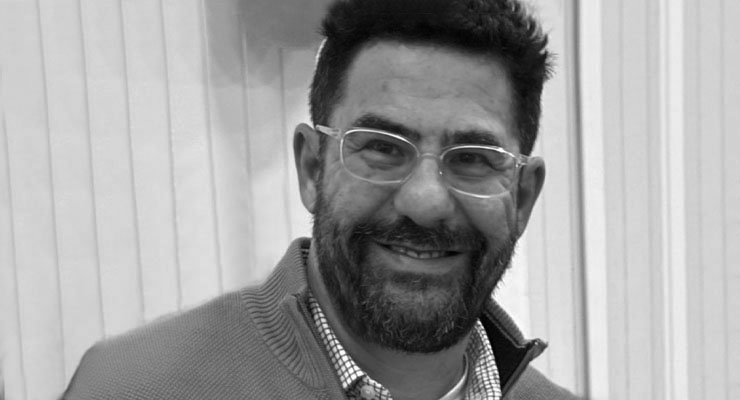
Rabbi Joshua Levine Grater is the CEO of Friends In Deed. The opinions expressed in this piece are solely his own.
 Get our daily Pasadena newspaper in your email box. Free.
Get all the latest Pasadena news, more than 10 fresh stories daily, 7 days a week at 7 a.m.


