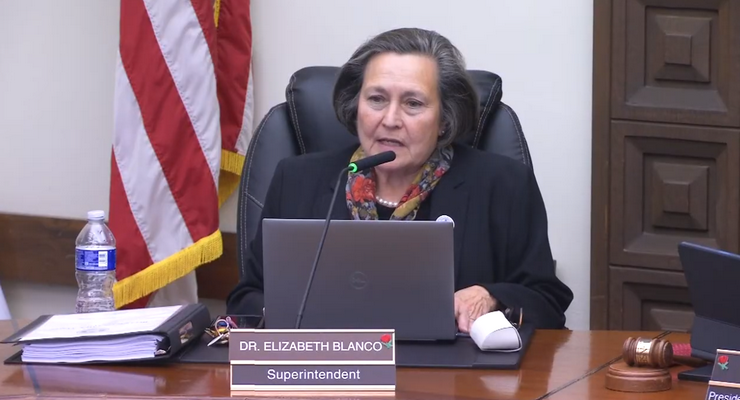





A panel at the Blinn House, headquarters of Pasadena Heritage, brought together housing developers, homeless services advocates and preservationists Tuesday to examine whether saving old buildings and building affordable housing can actually coexist.
Intern Hayley Block, a recent USC graduate, who moderated the event, said she came into the work with misconceptions about preservation. “I learned that I was wrong to think that it was just about saving old buildings or turning them into museums,” she said. “Instead, it’s about preserving the stories and lives that held this space.”
Charles Loveman, executive director of Heritage Housing Partners, focused on the region’s cost crisis. He said one bedroom condos in Pasadena now sell for $750,000. “Our housing market’s broken,” he said, arguing that the disappearance of starter homes for higher income renters has pushed pressure down onto the lowest income households. “The homelessness is created by pressure from the top,” he said.
Loveman also addressed how income limits are defined. For a four person household in LA County, the median income is $167,000, with low income capped at $133,000. “When we tossed around these words low income, middle income, it’s wacky,” he said. “It’s completely wacky.”
He described Heritage Housing Partners’ approach as mixed income by design, pairing market rate units with affordable ones. “We strongly, strongly believe in mixed income from low income all the way up to market buyers,” he said, adding that ownership itself is the goal. “We recognize ownership is a wealth engine.”
Shawn Morrissey, Vice President of Advocacy and Community Engagement at Union Station Homeless Services, said seniors on fixed incomes are increasingly affected. “The majority of people who are experiencing homelessness don’t have substance use issues,” he said. “They don’t have mental illness. There are people who have been priced out of their units basically.”
Bridget Lawlor, executive director of Pasadena Heritage, described the Blinn House itself as an example of adaptive reuse, built as a family residence in 1906 before becoming a meeting space for the Women’s City Club. She pointed to the Ronald McDonald House, housed in two craftsman homes, as a model for balancing accessibility with historic character, calling the renovation “thoughtful.”
Panelists agreed that preservation and housing production are often framed as opposing forces, but need not be.
More information on historic preservation is available at pasadenaheritage.org.
 Get our daily Pasadena newspaper in your email box. Free.
Get all the latest Pasadena news, more than 10 fresh stories daily, 7 days a week at 7 a.m.