







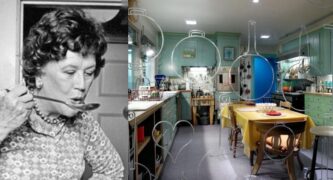

Then she left Southern California as a young woman, discovered food in Paris at 36, and spent four decades teaching a nation how to flip an omelet without fear.
Yet when Smithsonian curator Paula J. Johnson talks about the kitchen Julia Child donated to the National Museum of American History, the thread she pulls runs all the way back to the Crown City.
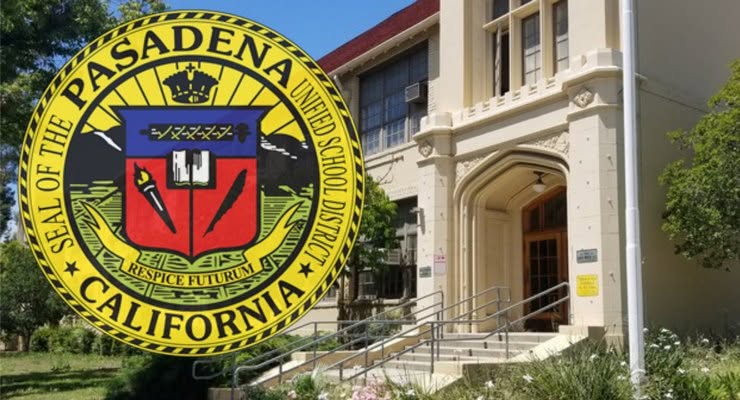
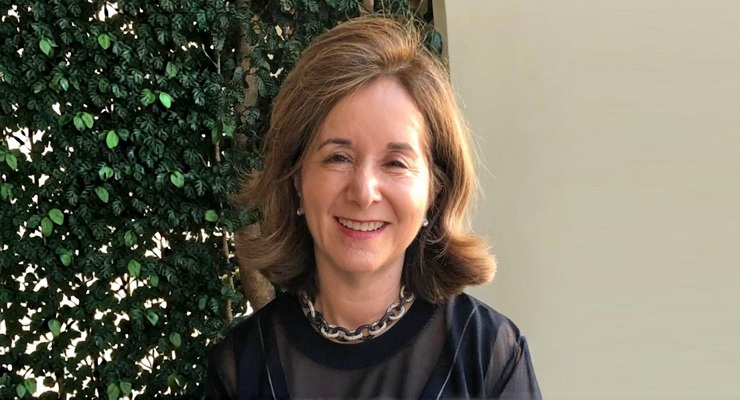
Saturday marks what would have been Child’s 114th birthday. Born Julia Carolyn McWilliams on August 15, 1912, in Pasadena, Julia grew up the eldest of three children in an affluent family — her father a Princeton-educated land manager, her maternal grandfather a lieutenant governor of Massachusetts. She attended Polytechnic School and Westridge School through ninth grade before heading to boarding school in Northern California, and then to Smith College, where she graduated in 1934.
Returning, she joined the Junior League of Pasadena — which is celebrating its centennial this year — and volunteered with the local Red Cross chapter before World War II pulled her to Washington and, eventually, the world.
It was overseas, working for the Office of Strategic Services, that she met Paul Cushing Child, a mapmaker and visual-presentation specialist who later served as a cultural attaché with the United States Information Service. They married in 1946. When Paul was posted to Paris, Julia enrolled at Le Cordon Bleu, and a culinary life began in earnest. With co-authors Simone Beck and Louisette Bertholle, she published Mastering the Art of French Cooking in 1961. Her public television program The French Chef, which debuted on Boston’s WGBH on February 11, 1963, made her a household name and became one of the first cooking shows on American television.
Child’s honors stacked up over decades: a Peabody Award for 1964, an Emmy in 1966, the National Book Award in 1980, and the Presidential Medal of Freedom in 2003. She died on August 13, 2004, in Montecito, two days before her 92nd birthday.
The artifact that may matter most today sits on the first floor of the National Museum in Washington, D.C.: her actual Cambridge, Massachusetts, kitchen, donated in 2001 when Child moved back to California. The 14-by-20-foot room holds more than 1,200 objects — copper pots from Paris, a braided ceramic fruit bowl, a six-burner Garland gas range she bought used in Washington, professional knives on magnetic wall holders, a soapstone mortar bought at a French flea market, and the wooden table and chairs she and Paul had shipped from Norway.
The kitchen anchors the permanent exhibition FOOD: Transforming the American Table, which opened in 2012 and was refreshed in 2019. Johnson, who was one of the curators who collected the kitchen in 2001 and is the author of Julia Child’s Kitchen: The Design, Tools, Stories, and Legacy of an Iconic Space, said the room has become a destination unto itself.
“For fans of Julia, her home kitchen on display at the Smithsonian’s National Museum of American History has become a pilgrimage,” Johnson said in a written interview with Pasadena Now. “People return again and again to see the room where, for 40 years, Julia tested recipes, prepped for her various television series, cooked and enjoyed meals with friends and family, and where three of her cooking shows were taped.”
“The logical organization of the kitchen also reflects her commitment to culinary work, her sense of humor, and her belief that cooking and eating are fundamentally social activities,” she said.
Johnson said the museum is not staging a special event for the 114th birthday.
“The kitchen will be in tip-top shape, as always, for visitors,” she said, pointing to imagery from Child’s 100th birthday celebration in 2012 as a reminder of how the public continues to pay its respects.
For Pasadena readers who may never visit the Smithsonian, Johnson had a direct message: “I hope everyone in Pasadena takes great pride in the fact that Julia Child was born and raised in their community. Julia’s life in food began later in life — she was 36 when she and Paul arrived in France — but her sense of adventure, curiosity, and fun surely reflects her early life.”
The Smithsonian’s permanent kitchen should not be confused with Julia Child: A Recipe for Life, a separate traveling exhibition produced by Flying Fish in collaboration with the Napa Valley Museum under rights from the Julia Child Foundation for Gastronomy and the Culinary Arts and Harvard’s Schlesinger Library. That touring show, which features interactive recreations including a replica French Chef television set, is on display at the Arizona Science Center through September 20, 2026.
Need to Know: Julia Child’s kitchen is on permanent display inside the exhibition FOOD: Transforming the American Table on the first floor of the Smithsonian’s National Museum of American History, located on Constitution Avenue Northwest between 12th and 14th Streets in Washington, D.C. The museum is open 10:00 a.m. to 5:30 p.m. daily except December 25. Admission is free and no tickets are required. More information is available at americanhistory.si.edu.
 Get our daily Pasadena newspaper in your email box. Free.
Get all the latest Pasadena news, more than 10 fresh stories daily, 7 days a week at 7 a.m.