






On Thursday, a coalition of six organizations alongside philanthropist and former Los Angeles Unified School District Superintendent Austin Beutner sent a letter to candidates Ben Allen and Jane Kim asking them to answer one simple question: if elected, would they hold insurers accountable, specifically over contamination remediation in homes.
State Sen. Allen, D-Santa Monica, has said he is running for insurance commissioner to make insurance more accessible and affordable, while cracking down on the insurance industry.
Former San Francisco Supervisor Kim, an attorney and longtime consumer advocate, has said she would create a single-payer universal disaster insurance program, which has been criticized for being farfetched and difficult to establish.
Beutner and the six organizations — Palisades Standing Homes Advisory Task Force, LA Standing Homes Network, Eaton Fire Residents United, Every Fire Survivor Network, Palisades Standing Homes, and Surviving Structures Eaton Fire — are asking for a response from the candidates by Oct. 26.
“I want to make sure people are aware of the health risk,” Beutner told City News Service in a telephone interview. “I want to make sure people are aware that insurance companies have responsibility to both look for the damage and fix it, if it’s there.”
He feels the issue has not gotten the attention it deserves.
“…With smoke contamination, insurance companies are trying to make the argument with many that it’s not so bad, or that you can’t see it, or they don’t want to pay for it, and all of those I find insufficient,” Beutner told CNS. “We’re trying to raise awareness, and we’re trying to make sure that we have commitments from whichever candidate becomes the next state insurance commissioner — that they’re going to hold the insurance companies accountable.”
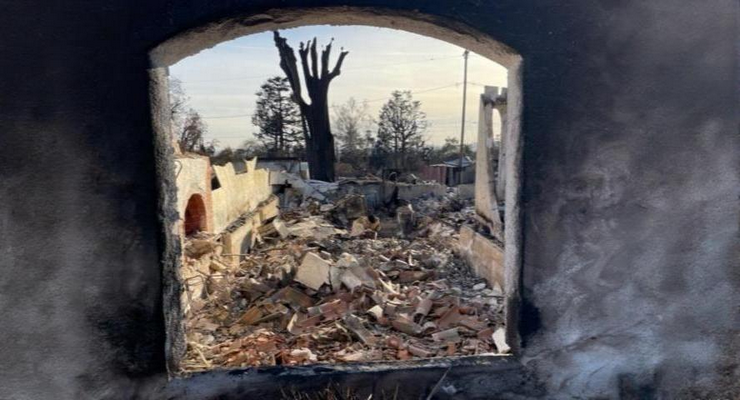
On Jan. 7, 2025, the communities of Altadena and Pacific Palisades were devastated by fire. Tens of thousands of people lost their homes and employment, more than 16,000 structures were destroyed and 31 people died.
Thousands more structures were badly damaged by toxic heavy metals from the fires. The California Department of Insurance has reported more than 13,000 insurance claims for smoke contamination have been filed.
“The problems these homeowners face are made worse by insurance companies that are engaging in unlawful businesses practices: not conducting proper evaluations of the damage, manufacturing implausible explanations to shift the blame for wildfire-related damage to unrelated causes as means of denying legitimate claims, and denying payment of valid claims,” the letter reads.
In the letter, the group said we’ve seen the devastating consequences of denying environmental hazards before, pointing to records released by New York City, which revealed how officials downplayed toxic dust hazards after 9/11, and encouraged residents to return home and clean up themselves.
“Twenty-five years later, thousands continue to suffer from exposure- related illnesses. The parallels with the Eaton and Palisades fires are alarming. Hazardous contaminants have infiltrated standing homes. The health consequences could be the same, without the mystery why,” the letter reads.
The group is asking for every home to be properly tested, including concealed spaces such as attics, wall cavities, ducting, and HVAC units.
“…It means testing for toxic heavy metals and hazards, including lead, lithium and arsenic,” the letter reads.
Beutner also compared January 2025 wildfires with the Love Canal disaster, a major environmental crisis in Niagara Falls that occurred in the 1940s-50s. Toxic chemical waste was dumped into a canal by Hooker Chemical, and later leaked into homes by the late 1970s, prompting federal emergencies and mass evacuations.
“Whether it’s 9/11 in downtown New York, or Love Canal, we know a lot more about what causes cancer. We know an awful lot about the toxins that were consumed by the fires and penetrated into homes that are still standing,” Beutner told CNS.
“So, what’s keeping us from making sure that we don’t have cancer clusters or incidents of other health effects from lead and other toxic metals in Altadena or Palisades? To me, it’s political will. It’s the willingness of people, like Ms. Kim or Mr. Allen, who might become the next state insurance commissioner and do the right thing,” Beutner added.
After the fires, in March 2025, the Department of Insurance reminded insurers of their duty to investigate wildfire debris, including testing for heavy metals and other hazardous substances.
A Los Angeles Superior Court judge in a June 2025 ruling confirmed that California laws require coverage for all loss by fire while noting that “direct physical loss” includes contamination detectable at a microscopic level, not just damage that can be seen or smelled, according to the group’s letter.
Beutner is among many fire survivors who have alleged insurance companies failed to properly address toxic contamination of their homes.
In early October, the Beutner family filed a lawsuit against their insurer, Chubb, alleging breach of contract and of professional negligence for refusing to pay for a full clean up of lead and other toxins.
According to the lawsuit, three independent environmental consulting firms retained by the family – APEX, AAA, and AIS – found extraordinarily high levels of the suite of heavy metals commonly referred to as CAM 17, as well as lithium, throughout the property.
Reports cited in the demand identified lead levels of 9,574 micrograms per square foot in wall cavities, nearly 1,000 times the level California deems safe on the floor of a residence. Investigators concluded that the contamination was caused by the fire and that the home is not safe for occupancy and must “be taken to the studs and rebuilt.”
The state and L.A. County have also launched lawsuits against State Farm and Farmers Insurance over allegations the companies mishandled fire survivor claims following the January 2025 fires.
Both State Farm and Farmers Insurance have maintained they have provided extensive support to policyholders.
State Farm said it deployed a Catastrophe Response Team to assist fire survivors, processed 13,700 claims and paid more than $6 billion to customers. Farmers Insurance has disputed county claims, adding the company operates in accordance with state laws.
“We remain focused on handling claims with care, consistency and attention to each customer’s unique situation,” Farmers Insurance said in a statement issued in September.
Also in October, L.A. County launched an investigation into claims handling practices by the California FAIR Plan Association.
The county’s investigation focuses on potential violations of California’s Unfair Competition Law and comes in the wake of complaints from residents about delays, underpayments and denials of wildfire claims. County officials also said residents have complained about the association’s refusals to pay for testing and remediation of toxic contamination.
California FAIR Plan officials said it has handled 5,400 claims from the Eaton and Palisades fires, paying nearly $3.5 billion to policy holders.
“We remain committed to supporting our policyholders impacted by disaster. The FAIR Plan evaluates each claim on its own merits, and pays all covered claims, including smoke damage claims, up to the individual policy limits, in compliance with all laws relating to property and casualty insurance claims handling,” California FAIR Plan’s statement concluded.
The California FAIR Plan is a private association composed of all insurers licensed to write property insurance in the state. It is funded primarily through the policies it sells to customers.
 Get our daily Pasadena newspaper in your email box. Free.
Get all the latest Pasadena news, more than 10 fresh stories daily, 7 days a week at 7 a.m.