



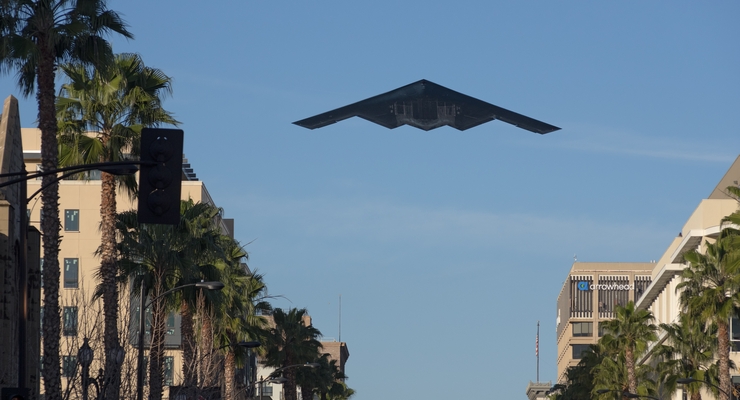
For the 2026 Pasadena flyover, two B-2s are expected to be dispatched, with one serving as backup—a configuration used in 2025. The aircraft will launch from Whiteman Air Force Base in Missouri around 2 a.m. Central time (midnight Pacific) and arrive over Pasadena at approximately 8 a.m., timed to coincide within seconds of the parade’s step-off.
A second flyover is scheduled for 1 p.m. over the Rose Bowl stadium, aligned with the conclusion of the national anthem before the college football playoff game. (The game will start one hour earlier than it has in previous years.)
Spectators in Pasadena will once again witness the aircraft’s distinctive 172-foot wingspan—a rare public glimpse of one of the nation’s most secretive strategic platforms. In service since 1997, only 19 B-2s remain operational as of 2024, with the fleet expected to remain active until at least 2032, when the B-21 Raider is slated to replace it.
The 2025 flyover involved a 15-hour round-trip mission, with pilots using call signs SHIP and DUKE coordinating with KC-135 Stratotanker crews for midair refueling and formation flying.
Between flyovers, the aircraft repositioned and refueled at lower altitude, demonstrating the precision teamwork required for such operations. Planning began a month in advance and involved thousands of personnel, underscoring the operational complexity of even ceremonial missions.
Military officials emphasize that the flyover is more than symbolic. It demonstrates the B-2’s global reach, stealth capabilities, and endurance, which allow it to conduct missions lasting 30 to 40 hours, with the longest recorded exceeding 44 hours. The aircraft’s radar-absorbent coatings, synthetic aperture radar navigation, and electronic warfare systems enable it to evade advanced defenses while delivering up to 40,000 pounds of ordnance with precision.
For many pilots, flying over Pasadena during the Rose Parade fulfills a childhood dream and represents a career milestone. The mission blends public celebration with operational rigor, offering a rare intersection of civic tradition and strategic capability.
 Get our daily Pasadena newspaper in your email box. Free.
Get all the latest Pasadena news, more than 10 fresh stories daily, 7 days a week at 7 a.m.