

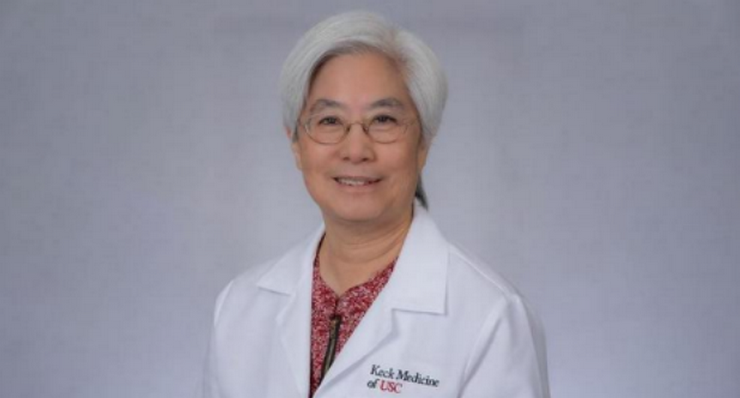
Blood tests now let primary care doctors diagnose Alzheimer’s disease with much greater accuracy, though gaps remain in interpreting and explaining the results, USC neurologist Dr. Helena Chui said ahead of her talk Thursday at the University Club of Pasadena.
Chui, chair of USC’s Department of Neurology and director of its Alzheimer’s Disease Research Center, will discuss the latest in research and treatment at a gathering benefiting regional nonprofit Alzheimer’s Los Angeles. More than 190,000 Los Angeles County residents 65 and older are affected by Alzheimer’s or related dementias, according to the county’s Aging & Disabilities Department, which expects the number to top 405,000 by 2040.
A 4:30 p.m. reception precedes Chui’s 5:15 p.m. talk, according to the invitation from hosts Lisa Bricker and Jennifer Bigelow. Chui and Bricker serve on the nonprofit’s board. The invitation encourages guests to bring questions and meet the people behind the organization.
Asked what is different today for a Pasadena family noticing a parent’s memory slipping, Chui pointed first to new drugs. “So about three years ago, new treatments came out against amyloid, but for the preceding 30 years, not too much has changed,” she said.
Before blood tests for Alzheimer’s arrived a couple of years ago, a primary care doctor could often tell a family only that a parent had mild cognitive impairment or dementia, and would have trouble saying with confidence that the cause was Alzheimer’s, Chui said. Family doctors, especially geriatricians, can now order the tests, and “I do now get referrals for people that come with their blood tests already,” she said of her specialty practice at USC.
The U.S. Food and Drug Administration cleared the first blood test to help diagnose Alzheimer’s disease in May 2025. The agency said the test is for adults 55 and older showing signs and symptoms of the disease and is not intended as a screening or stand-alone diagnostic test. Chui said good blood tests do not yet exist for other neurodegenerative conditions.
Results need explaining, Chui said, and “it takes time to explain to a patient and their families what they mean and what can be done about it.” Some patients she sees after a blood test or PET scan diagnosis have become “very, very anxious and depressed,” she said. “And so we have to think about how we communicate the news and what the support is for helping them, not just leaving them to look on the portal and see their blood test is abnormal.”
Because most memory loss accompanies normal aging, families often let a relative’s memory slipping go for several years before becoming truly concerned, Chui said. Getting that relative to a doctor can sometimes be hard, she said, because people with memory loss often do not realize they are forgetting. “They forget that they forgot,” she said.
About 20% of people with memory loss see a specialist, Chui said; most go to a family doctor. An evaluation includes memory testing, medical, family and medication histories, blood tests and a brain scan, because many causes of memory loss can be reversed, she said, citing vitamin B12 deficiency and medication side effects. “We can prescribe so many medications that have side effects and we call it brain fog, and that kind of memory loss can be reversed when the medications are discontinued,” she said.
Chui’s own research focuses on the brain’s blood vessels, which deliver glucose and oxygen and carry away waste. She said high blood pressure, high cholesterol and high glucose age blood vessels faster, and that “cerebrovascular disease is the second most common cause of dementia in late life after Alzheimer’s disease.”
Small vessels in the brain can narrow over years without a sudden event such as a stroke, causing a gradual loss of memory, she said, and paying attention to risk factors in midlife can help prevent that. “You don’t want to wait till you’re 60 or 70 when you’ve already lost 10 years of trying to keep the blood vessels healthy,” Chui said.
Hypertension prevention and management is one of three focus areas in a five-year dementia strategic plan that the Healthy Brain LA Coalition launched in 2023 with support from county agencies.
After age 65, the risk of mild cognitive impairment or dementia doubles every five years, Chui said. She said African Americans and Asian Americans are more prone to small vessel disease and need to watch for high blood pressure, while Latinos have more diabetes. That does not necessarily mean those groups have more Alzheimer’s, she said, noting that before blood tests many cases were simply called dementia. “And so each person, each group needs to consider their own lifestyle and risk factors individually,” Chui said.
Asked how the upheaval of the Eaton Fire can affect someone living with dementia, Chui explained that the tangles associated with Alzheimer’s tend to start in the hippocampus, the brain’s memory center, which records new memories. “I call it the tape recorder,” she said. As the tangles spread to where older memories are stored, those are affected too, she said. “And so it’s like the tapestry of our life, it no longer gets woven going forward,” Chui said. “And then as the tangles spread, the tapestry that we wove before starts to unravel and it unravels going backwards.”
For someone with short-term memory loss, familiar surroundings provide a sense of security, and a home works like an external memory aid, she said. “So if one’s home is burnt down, that’s another form of memory loss,” Chui said. The aim is to keep people with dementia at home with their families and in familiar places, she said, but after a fire, “It’s much harder for them to pick up and move.”
“I’ve been working in the field for 40 years and we talk about care and cure,” Chui said. In the last three years, she said, blood tests and PET scans have allowed earlier detection and new treatments have targeted amyloid plaques, but treatments are still needed for neurofibrillary tangles and neuroinflammation. “It’s still better to prevent than to treat.
So I’m hopeful that we are really on the cusp now of making some breakthroughs,” she said.
Developing a drug takes time, from animal studies to safety testing to trials designed to prove it works better than a placebo, Chui said. “So we need clinical trials,” she said. The USC Alzheimer’s Disease Research Center, founded in 1984 as one of the first five such centers designated by the National Institute on Aging, welcomes study participants regardless of their memory health, according to USC. Information is available at brainhealth.usc.edu or (323) 442-5775.
Alzheimer’s Los Angeles provides free services to people living with Alzheimer’s or another dementia and to their families. Its helpline is 844-435-7259.
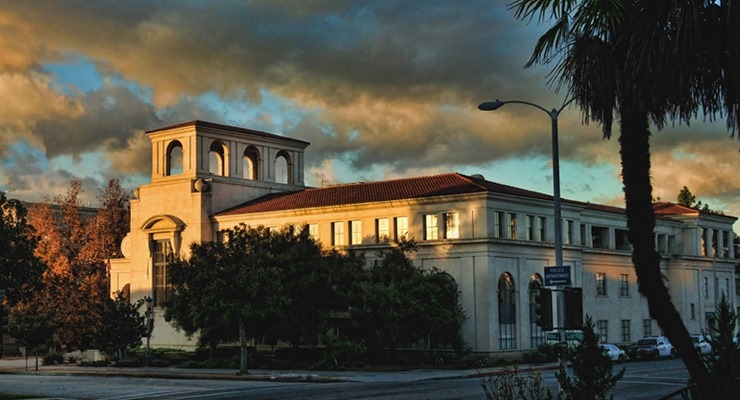
“Alzheimer’s Conversation: Support Now, Hope for the Future” is Thursday, Oct. 29, from 4:30 to 6:30 p.m. at the University Club of Pasadena, 175 N. Oakland Ave. Valet service is provided. The suggested donation is $25 per person. For questions, call 626-718-7125. RSVP at bit.ly/AlzLA-Pasadena.
 Get our daily Pasadena newspaper in your email box. Free.
Get all the latest Pasadena news, more than 10 fresh stories daily, 7 days a week at 7 a.m.