







The City Council on Monday will review recommendations from an Urban Land Institute technical advisory panel that says redevelopment of the former freeway stub will require a long-term governance structure capable of overseeing the public-private partnerships, major infrastructure investments and the city’s restorative justice commitments.
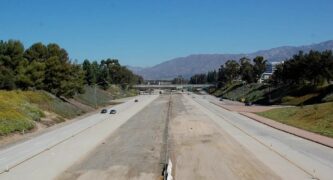
The recommendations move the city another step closer to transforming land that once divided neighborhoods into a mix of housing, public spaces, transportation connections and economic development.
Caltrans relinquished the former State Route 710 property in August 2022, giving the city legal ownership of approximately 50 acres. The City Council later appointed the Reconnecting Communities 710 Advisory Group to provide input on the city’s vision for the property.
The council approved the Reconnecting Pasadena 710 Vision Plan in April and accompanying restorative justice components in June. The plan is intended to serve as the foundation for additional work, including a Specific Plan, environmental review, creation of an Enhanced Infrastructure Financing District and development of a restorative justice work program.
As the vision plan developed, questions emerged over who should ultimately manage a project expected to unfold over decades.
City officials turned to the Urban Land Institute’s Los Angeles branch for recommendations. A nine-member technical advisory panel met for two days in March and included professionals in urban planning, real estate development, project financing and public-private partnerships.
The panel examined lessons from major redevelopment efforts around the country, including the Seattle Waterfront, Denver Union Station, Battery Park City, Nashville’s East Bank and San Francisco’s Presidio. Its completed report was submitted to the city in May.
The panel concluded that Pasadena needs a structure capable of maintaining the project’s goals through changes in city leadership and economic and political cycles. Its recommendations stress clear long-term goals, phased development, upfront public investment in infrastructure and a predictable development process capable of attracting private investment.
The panel also said restorative justice should be embedded in the project’s core processes and produce durable, measurable results.
The panel did not recommend a specific governance model. Instead, it identified characteristics it believes are necessary for success, including clear decision-making authority, sustained attention to the project and expertise in real estate development, economic development and private investment.
One possibility outlined in the report is an executive position outside the City Council structure focused solely on development and operation of the 710 property. The report notes Pasadena already has experience with separate governing bodies through the Rose Bowl Operating Company and Pasadena Center Operating Company.
The proposed implementation framework calls for the project to move through phases, beginning with establishing guiding principles and proceeding through technical studies, infrastructure planning, environmental review and creation of a development authority or equivalent structure. Later phases would include selecting development partners, beginning infrastructure work and overseeing long-term development and operations.
City officials visited San Francisco’s Presidio in July to study its governance structure and plan to visit Denver Union Station in early September.
Staff plans to return to the council this fall with a restorative justice work program. The Planning Department also expects to issue a request for proposals for the Specific Plan within weeks, while work continues on establishing the infrastructure financing district.
 Get our daily Pasadena newspaper in your email box. Free.
Get all the latest Pasadena news, more than 10 fresh stories daily, 7 days a week at 7 a.m.