






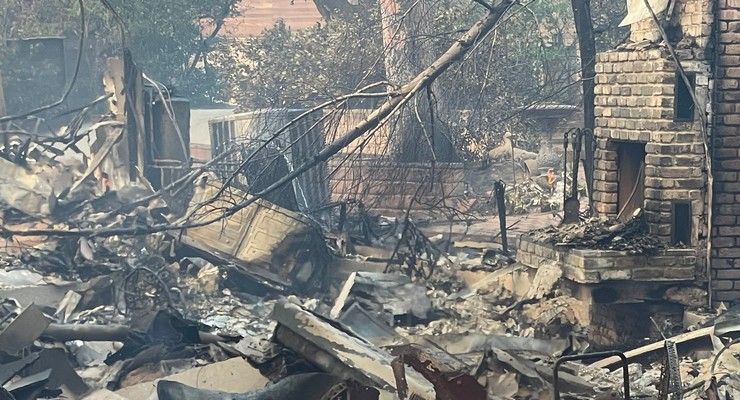
Under the proposed settlement, tenants in areas considered most likely to be affected by wildfire debris would receive expedited third-party inspections and, when necessary, remediation in their homes.
“The City conducts a thorough inspection for every resident tenant who complains of smoke, ash, or soot, and has done so throughout the litigation,” the City said in a statement outlining its approach to the case.
Officials said the City last year hired a contracted certified industrial hygienist to strengthen its wildfire inspection program and better equip staff to evaluate rental units.
The legal framework shifted in October with the passage of Senate Bill 610, which redefined wildfire debris violations. The law now classifies the presence of any ash—regardless of amount—as a violation and explicitly places responsibility for cleanup on landlords.
Before the law took effect, City officials said their authority to declare a violation based solely on ash and to compel remediation was unclear. They said the new statute removed that uncertainty and helped clear the way for settlement negotiations.
As part of the agreement in principle, landlords in designated areas would be required to retain certified professionals to inspect affected units and determine whether remediation or additional testing is necessary. The proposal includes a 75-day fast-track period aimed at accelerating inspections and cleanup.
Officials said the goal of the settlement is to ensure residents receive timely, independent assessments and remediation without prolonged litigation.
The agreement has not yet been finalized. City officials are expected to present additional details in future public proceedings.
“Tenants can’t be expected to diagnose toxic hazards on their own,” said Lena Silver, director of Policy and Administrative Advocacy at Neighborhood Legal Services of Los Angeles. “In this agreement, the City of Pasadena finally acknowledges the public health risks associated with wildfire contamination and creates clear paths to safe, habitable housing.”
 Get our daily Pasadena newspaper in your email box. Free.
Get all the latest Pasadena news, more than 10 fresh stories daily, 7 days a week at 7 a.m.