






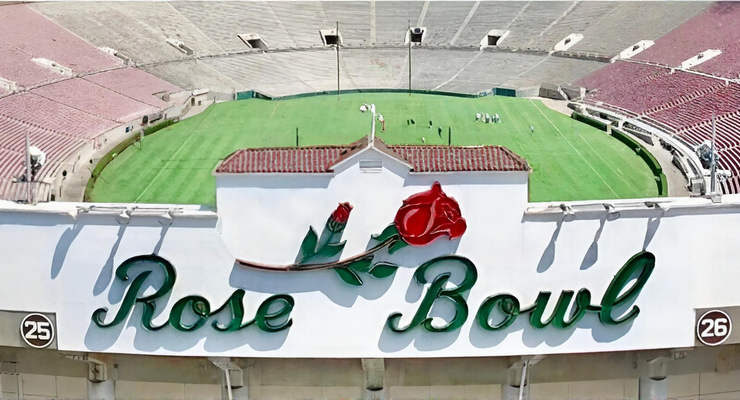
The City of Pasadena and the Rose Bowl Operating Company return to Los Angeles Superior Court on Monday to oppose UCLA’s latest attempt to pause the lawsuit that seeks to keep the Bruins playing football at the Rose Bowl through 2044.
The UC Regents, acting on behalf of UCLA, are asking Judge Joseph Lipner to stay proceedings while they appeal his February ruling that the dispute belongs in court, not in arbitration. It is the third time in five months that the defense has sought to halt the case, according to attorneys for the Rose Bowl Operating Company.
The hearing is scheduled for 8:30 a.m. in Department 72 of the County Courthouse at 111 N. Hill St. in Los Angeles.
The Rose Bowl Operating Company and the City filed suit on Oct. 29 in Los Angeles Superior Court, alleging UCLA has expressed its intent to abandon the Rose Bowl and relocate its home football games to SoFi Stadium in Inglewood. The lease, restated in 2010 and amended in 2014, runs through June 30, 2044, and contains a non-compete clause prohibiting UCLA from playing home games at any other venue in Los Angeles or Orange counties.
Pasadena officials say taxpayers have invested more than $150 million in Rose Bowl renovations, and the City recently refinanced an additional $130 million in bonds for capital improvements. The lawsuit contends that UCLA’s departure could cause harm to the City and its residents exceeding $1 billion, according to the complaint.
On Feb. 5, Lipner denied motions by UCLA and the SoFi Stadium defendants to compel arbitration, to stay the proceedings, and to quash deposition subpoenas. The judge found that the arbitration clause in the lease was limited to disputes over specific defects or deficiencies and did not cover UCLA’s alleged effort to terminate or abandon the contract.
“It would have been simple to require arbitration of lawsuits like the current one, including claims of anticipatory repudiation, if the parties had intended to do so,” Lipner wrote in his ruling.
The UC Regents have since appealed that decision and now argue that the case should be paused until the appellate court rules. Their attorneys contend the appeal raises “substantial or debatable” issues and that UCLA would be irreparably harmed if forced to continue litigating a case that appellate courts may ultimately decide should be heard only in arbitration.
“Moreover, there is no urgency in resolving this matter because UCLA confirmed that it intends to play its home football games at the Rose Bowl Stadium for the 2026 college football season,” the UC Regents contend in their court papers.
The Rose Bowl Operating Company’s attorneys counter that further delay would cause real prejudice to their clients.
“UCLA has attempted to stay this case three different times in the five months since plaintiffs City of Pasadena and Rose Bowl Operating Company brought suit and twice in the last month,” Rose Bowl Operating Company lawyers state in their pleadings. “All the while, plaintiffs have sought basic, reasonable discovery in the face of UCLA’s stonewalling.”
The Rose Bowl Operating Company argues that even if UCLA contends past breaches belong in arbitration, the plaintiffs’ claim for forward-looking declaratory relief — whether UCLA remains bound to perform for the full lease term despite what the Rose Bowl Operating Company calls UCLA’s “waiver of termination rights” — is not arbitrable and demands prompt resolution, according to the Rose Bowl Operating Company lawyers’ court papers.
The City and the Rose Bowl Operating Company contend the regents are focusing on an alternative dispute resolution provision in the contract that is “deliberately and particularly narrow” and is limited to resolving routine, curable performance disputes — not an attempt to leave the stadium entirely. The UC Regents’ lawyers counter that the plaintiffs are bound by the arbitration agreement and that “no exceptions apply to RBOC’s claims.”
UCLA confirmed in February that it would play the 2026 season at the Rose Bowl but made no commitment beyond that, according to Rose Bowl Operating Company attorneys.
“That agreement was the foundation for hundreds of millions of dollars in taxpayer-backed investments made to modernize and preserve one of the most iconic sports venues in the world,” said Nima Mohebbi, a partner at Sidley Austin LLP representing the City and the Rose Bowl Operating Company. “In return, UCLA made a clear and binding commitment to play its home football games at the Rose Bowl through 2044 and expressly waived any right to terminate that commitment early.”
The City and the Rose Bowl Operating Company later added Kroenke Sports & Entertainment LLC and Stadco LA LLC, entities affiliated with SoFi Stadium, as defendants, alleging the SoFi defendants knowingly participated in discussions intended to induce UCLA to leave its contractual home in Pasadena.
Under the lease, UCLA pays no rent. The Rose Bowl receives a percentage of ticket sales, concessions, and ancillary revenue. UCLA does not receive suite revenue at the stadium.
The Bruins have played at the Rose Bowl since 1982. UCLA averaged approximately 35,000 in announced attendance last season in the roughly 89,000-seat stadium, and the team went 3-9. Bob Chesney was hired as head coach in December after compiling a 21-6 record in two seasons at James Madison.
A case management conference is also scheduled for Monday’s hearing.
“Pasadena is excited about UCLA football at our beloved Rose Bowl stadium for generations to come and we continue to say Go Bruins,” Mayor Victor Gordo said after the February ruling.
 Get our daily Pasadena newspaper in your email box. Free.
Get all the latest Pasadena news, more than 10 fresh stories daily, 7 days a week at 7 a.m.