









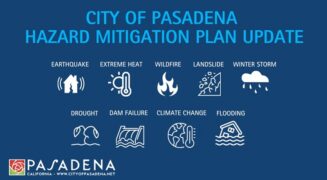


The Public Safety Committee will consider adopting the 2025 Local Hazard Mitigation Plan during its Wednesday meeting at City Hall.
The 233-page document represents Pasadena’s strategy for reducing risks from natural and human-caused disasters over the next five years.
A report by the Pasadena Fire Department said public surveys conducted during the planning process ranked earthquakes and wildfires as residents’ primary concerns. The findings align with recent events, including the January 2025 Eaton Fire that burned over 14,100 acres.
The plan examines 10 broad hazard categories. These include dam failure, drought, extreme weather, flooding and public health emergencies.
Climate change receives significant attention throughout the document. Officials note rising temperatures and changing weather patterns will likely increase wildfire frequency and severity.
The Fire Department coordinated development of the plan. Staff from multiple departments contributed, including public works, planning and information technology.
Federal law requires local governments to maintain current mitigation plans. Communities with approved plans remain eligible for hazard mitigation grants.
The previous plan dates to 2018. Federal regulations mandate updates every five years.
Pasadena’s planning team met three times between August 2024 and February 2025. Representatives from neighboring cities, CalTech and the Jet Propulsion Laboratory participated.
The strategy includes 41 specific mitigation actions. Projects range from seismic retrofits of city buildings to improved emergency communication systems.
Several actions target wildfire prevention. These include regular fuel modification projects and potential restrictions on development in high-risk zones.
The plan also addresses earthquake preparedness through building code enforcement and public education campaigns. Officials recommend promoting residential seismic retrofits.
Infrastructure improvements feature prominently in the strategy. Water system upgrades, power facility hardening and emergency backup systems rank as priorities.
Public outreach occurred throughout the planning process. City officials posted information online and distributed surveys at community events.
The Accessibility and Disability Commission received a presentation on the plan in November 2024. Officials sought input on protecting vulnerable populations during disasters.
A public comment period closed in June. The planning team received 23 responses and incorporated feedback into the final document.
The plan must receive approval from state and federal emergency management agencies. The City Council will vote on adoption following committee review.
The Wednesday meeting begins at 4 p.m. in the City Council Chambers at 100 N. Garfield Ave.
 Get our daily Pasadena newspaper in your email box. Free.
Get all the latest Pasadena news, more than 10 fresh stories daily, 7 days a week at 7 a.m.


