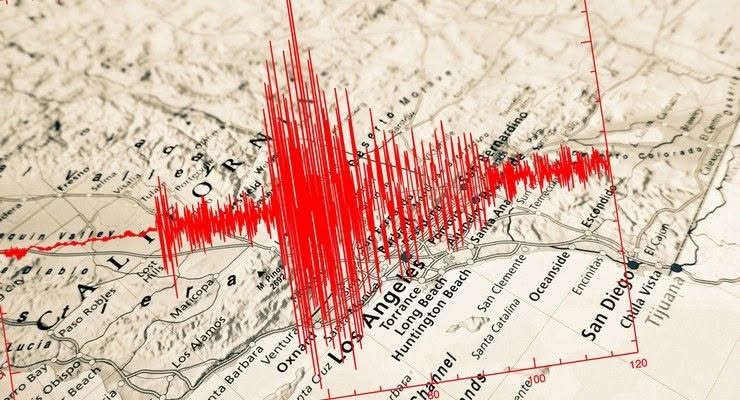






The County’s plan to find out whether it can survive the next big earthquake runs through Pasadena.
The Board of Supervisors voted Tuesday to require the County’s Office of Emergency Management to report back on September 29 with an assessment of Los Angeles County’s own earthquake readiness — its buildings, its staff, and its ability to keep serving residents after a major quake.
The motion, from Fifth District Supervisor Kathryn Barger, whose district covers Pasadena and Altadena, directs County officials to engage seismologist Dr. Lucy Jones and researchers from Caltech and UCLA.
Jones has held an appointment at Caltech’s Seismological Laboratory in Pasadena since 1984. She ran the U.S. Geological Survey’s Pasadena office and originated the ShakeOut drill. Three of the four County departments named for that presentation — Public Works, Fire and the Sheriff’s Department — are the first responders in unincorporated Altadena.
The board approved the motion unanimously and without discussion, according to City News Service.
The motion ran as Agenda Item 14, Board document 219520. It directs the emergency management office, working with the Chief Executive Office’s Countywide Communications, to build a public awareness program: an online “Know Your Risk” portal, a multilingual campaign timed to the Great ShakeOut on Thursday, October 15, and recommendations for year-round engagement.
The motion cites research published in June. A team led by Dr. Liliane Burkhard of the University of Bern modeled 1,000 years of earthquake history along the southern San Andreas and San Jacinto fault systems and concluded that stress near Cajon Pass has reached or passed anything in that record. The model puts the San Jacinto-Bernardino section at 3.6 megapascals and the Mojave South section of the San Andreas at 2.8. The team included researchers from the USGS Earthquake Science Center in Pasadena.
Burkhard said in a University of Bern release that “the system is critically stressed,” and that the study is not a prediction of when an earthquake will occur. The motion states, “These findings are not a prediction that a major earthquake is imminent.”
The faults under Pasadena and Altadena are different ones. The Raymond fault is 26 kilometers long, with probable magnitudes of 6.0 to 7.0, according to the Southern California Earthquake Data Center at Caltech. The Sierra Madre fault zone carries the same range, and Altadena is among the communities near it.
The motion measures against Northridge: a magnitude 6.7 quake in 1994 that killed roughly 60 people, injured more than 9,000 and left 20,000 residents homeless, causing $20 billion to $40 billion in property damage and another $40 billion in broader economic loss.
“Science is sending us a clear warning and we have a responsibility to listen,” Barger said in a news release issued by her office on July 29.
Pasadena runs its own emergency management program under a full-time emergency manager, Nallely Procopio, operates the Pasadena Local Emergency Alert System and designates every fire station as a Disaster Information Site.
“These are small steps towards a safer and more prepared Pasadena,” Procopio said in a city announcement of Pasadena’s ShakeOut participation last October.
Altadena’s position is different. It is unincorporated, so the County is its local government. The Eaton Fire destroyed or damaged County facilities there — including the Altadena Senior Center and the Eaton Canyon Nature Center building — and the County is rebuilding them.
 Get our daily Pasadena newspaper in your email box. Free.
Get all the latest Pasadena news, more than 10 fresh stories daily, 7 days a week at 7 a.m.