


Every year, the City of Pasadena spends $1.5 billion. Most of the attention goes to the General Fund—the quarter that pays for police, fire, libraries and parks.
But the biggest decisions—the ones that shape whether our city works or fails—are made in the Capital Improvement Program. And that’s where we pay the least attention.
The biggest chunk of City spending goes to the Capital Improvement Program or CIP. While the operating budgets pay for ongoing operations, the CIP represents tangible investments – from upgrading our electric grid to putting a new roof on a branch library to repaving your street.
The CIP represents nearly a third of all spending – but has long gotten only minimal attention. Instead, it’s largely been rubber-stamped – and that’s a problem for an older city.
For decades, we’ve underinvested in our City’s vital infrastructure. Unlike the generation of the Twenties, who built City Hall, the Central Library, the Rose Bowl, the Civic Auditorium and so much more that laid the foundation for Pasadena’s future greatness, recent generations have skimped on maintaining, let alone modernizing what we’ve inherited from our great-grandparents.
It’s costing us – literally. After years of failing to raise sewer, water, and electric rates, critical systems fell behind—putting reliability at risk and forcing us into costly catch-up investments.
So over the past two years, the Council has voted to substantially raise each of those rates to fund massive deferred investment — at a higher cost than if we’d kept up repairs and investment in the past.
It was the same with the Central Library. City officials suddenly realized that the building had never been retrofitted to meet today’s earthquake safety standards and abruptly shut it down. Then voters were asked to approve a $200 million bond issue to pay for the repairs.
The predictable is preventable and we’re all paying the cost for ignoring that lesson.. We can predict that unless we comprehensively plan for our future, our aging infrastructure is going to provoke a series of preventable costly crises and emergencies.
Last week, the City Council began hearing from each of our departments about their portion of the CIP spending plan. The focus was on the legitimate progress we are making in many areas. But largely missing was discussion of how we are going to pay for the Council’s budget priorities that were not funded in the plan: keeping up with repairing our streets and sidewalks; repairing or replacing our three outmoded and seismically unsafe fire stations; addressing $160 million in unfunded street safety projects; and investing in economic development improvements to spur business growth as an alternative to continually raising rates and taxes. The list goes on.
None of this can be solved overnight. But a consistent long-term approach to capital investment will ensure a future for Pasadena that’s safer, more sustainable and more prosperous than reactive single-year piecemeal budgeting.
Long-term thinking means favoring prevention over belated cures. It means sometimes investing in projects that grow our economy instead of always relying on higher taxes and fees. It means being skeptical of perpetuating “the way we’ve always done it” versus looking for more efficient and effective innovations.
A century ago, Pasadena’s leaders invested boldly in City Hall, the Central Library, the Civic Auditorium, the Rose Bowl, and the backbone infrastructure that made a growing city work.
In recent decades, we’ve generally done the opposite—deferring maintenance and delaying hard decisions.
We face a different challenge. It’s not so much building more as taking better care of what we have and investing in more efficient and environmentally sustainable approaches to energy, water, mobility and other community needs.
Only an informed public can support hard choices – and that starts with a public understanding of where we stand. Together, it’s time for the Council, City Commissions and the public to embark on a more transparent, in-depth examination of our community’s infrastructure to develop a clear, multi-year picture of our needs, what’s funded, what’s not, and how we plan to close the gap.
Putting off those choices won’t make them go away. It will simply make them more urgent and costly.
The question facing Pasadena isn’t whether we can afford to invest in our infrastructure. It’s whether we can afford not to.
If we want a Pasadena that works—for residents, for businesses, and for the future generations—we need to start treating the Capital Improvement Program like the priority it is.
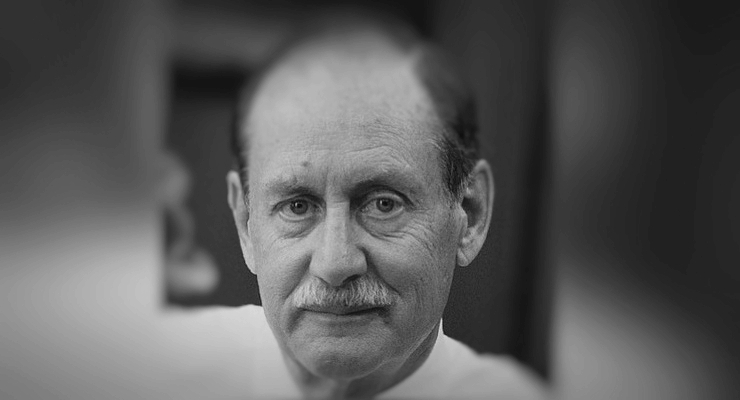
Rick Cole represents District 2 and serves on the City Council Finance Committee. He has a long history with addressing infrastructure issues as a former LA Deputy Mayor for budget, City Manager in three California cities and a Pasadena Planning Commissioner prior to being elected to the Council in 2024.
 Get our daily Pasadena newspaper in your email box. Free.
Get all the latest Pasadena news, more than 10 fresh stories daily, 7 days a week at 7 a.m.