










In a functioning school district, administration brings the board clear recommendations — supported by data, cost analysis and alternatives. The board questions them, weighs them and decides.
That is how governance is supposed to work.
Thursday night showed what happens when it doesn’t.
For roughly two hours, the Pasadena Unified Board of Education debated and line-edited a draft definition of “district transformation” — striking language, moving provisions and arguing over what belonged in the document.
No vote was taken. No date was set for one.
Yet Superintendent Elizabeth Blanco told the board the process is already “outlined in a resolution that the majority of the board passed” and can proceed alongside district goals through 2030.
If so, the obvious question is: Why did the board spend two hours defining it?
The problem was not simply that trustees disagreed. The problem was that they were left to work out basic questions of scope, process and direction in public, in real time.
The board was left to build the framework
Facilitator Natalia Guerra told a student board member she was not aware of a deadline for completing the definition. No one on the dais could provide one.
That matters.
Administration should bring the board a framework clear enough to evaluate. The board can then approve it, amend it or reject it. It should not have to construct the framework itself, line by line, during a public meeting.
Thursday’s discussion made that painfully clear.
The proposed five-to-10-year horizon disappeared. A reference to Assembly Bill 1912 — the law behind the equity metrics the board adopted for consolidation decisions — was removed while consolidation remained in the document in several places.
A trustee’s addition concerning consolidation was not read back during the final review, leaving its status unclear.
And after two hours, the board still had no final definition and no date for a vote.
That is more than a disagreement over wording. It is evidence of a process that was not sufficiently developed before it reached the dais.
Chaos is a leadership problem
When there is no clear framework, trustees can begin arguing not only about decisions, but about one another.
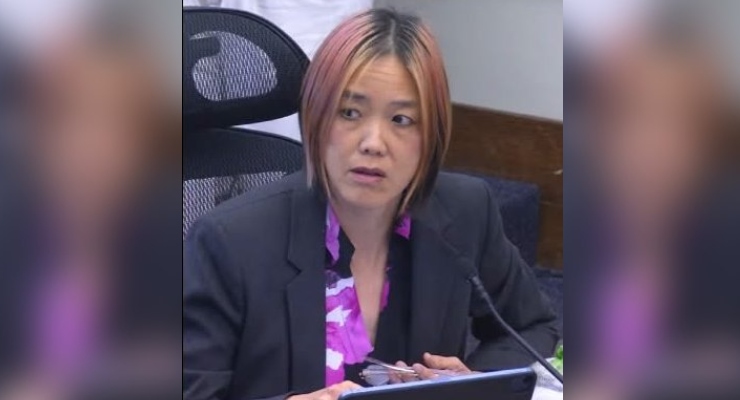
Thursday provided a glimpse of that dynamic when Trustee Jennifer Hall Lee said she would “not be pushed anymore by four people on this board.”
That moment matters—not because one trustee is the problem, but because it shows how quickly the discussion can shift from What should the district do? to Who is pushing whom?
That is when governance can turn into politics.
One trustee becomes associated with a proposal. Another becomes associated with opposing it. The public picks sides. Emails become evidence of intent rather than context. Personalities begin to overshadow the questions taxpayers actually need answered:
Who developed the recommendation? What data supports it? What alternatives were considered? What will it cost? What problem does it solve? And who is responsible for the recommendation?
Those questions should come before politics.
Instead, the public is left watching trustees debate while the underlying substance remains unsettled.
It is easy to look at that and conclude that the board is dysfunctional.
Maybe that is the wrong conclusion.
Maybe what Thursday demonstrated is what happens when leadership does not give an elected board enough direction to govern effectively.
The board’s job is to hold administration accountable — not to build the administration’s work product from scratch in real time.
And that distinction matters.
PUSD is facing consequential decisions about enrollment, finances and potentially school consolidation. Those decisions require more than carefully crafted language. They require evidence, analysis, alternatives and a clear recommendation.
Taxpayers should not have to watch the board spend two hours figuring out what the process is before the real work can even begin.
Public discussion and amendment are part of the board’s job. Transparency matters. But transparency should not mean watching elected officials spend two hours redlining and wordsmithing the basic definition of a process that could ultimately determine which schools remain open.
When the stakes are this high, the public deserves a different kind of transparency: clear recommendations, the data behind them, the costs, the alternatives considered, and an explanation of what problem each proposed action is meant to solve.
The board should be debating those choices — not trying to figure out what the process is supposed to mean.
So the question coming out of Thursday night is not simply whether the board is dysfunctional.
It is this:
What exactly was leadership asking the board to accomplish — and why wasn’t that framework ready before the meeting began?
Because what looked like two hours of transparency may have been something else entirely: a board left to improvise because leadership hadn’t given it something ready to decide.
 Get our daily Pasadena newspaper in your email box. Free.
Get all the latest Pasadena news, more than 10 fresh stories daily, 7 days a week at 7 a.m.