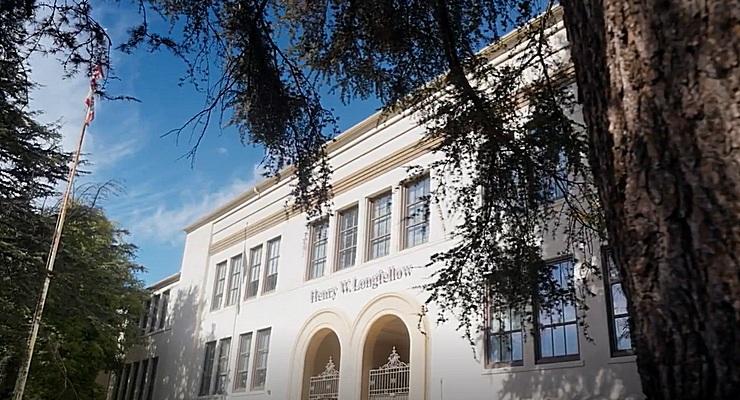





The Pasadena Unified School District Board of Education votes June 25 on its 2026–2029 accountability plan. The stakes are local, but the moment is national.
This week, the federal government shifted day-to-day management and administration of federal special education programs from the Department of Education’s Office of Special Education Programs to the Department of Health and Human Services, while statutory responsibility under the Individuals with Disabilities Education Act remains with the Department of Education. The move has prompted concern among advocates, former education secretaries from both parties, and members of Congress who argue that children with disabilities have a legal right to be educated, not simply treated.
That national debate arrives in Pasadena at exactly the right moment. Because embedded inside Pasadena Unified’s own accountability plan is a quieter version of the same risk: when students with disabilities are absorbed into broader goals, their outcomes become harder to see.
According to the district’s publicly posted proposed 2026–2029 Local Control and Accountability Plan, the four-year graduation rate reached 91.1 percent. That is genuinely good news, and everyone who contributed to it deserves recognition.
But the same proposed plan reports that only 49.1 percent of graduates completed the A-G coursework required to apply to a UC or CSU campus, down from 53.4 percent two years earlier. A high graduation rate tells one story. College readiness tells another.
For students with disabilities—nearly one in six students in PUSD—the picture is more urgent. Reading proficiency has declined. Mathematics proficiency has declined. Only 32.1 percent of graduates with disabilities completed A-G requirements. The proposed plan also reports declines in Career Technical Education pathway completion among several student groups, including students with disabilities.
These are not minor fluctuations. They are a direction.
These results do not reflect a lack of effort by educators. They reflect the need for clearer accountability—and a willingness to look directly at what the data reveal.
When outcomes are declining, embedding becomes invisibility.
During public discussion of the LCAP, it was noted that special education goals are embedded within broader district goals. Inclusion is important, but accountability requires more. Students with disabilities appear throughout the data tables, yet there is no dedicated goal that allows parents, Board members, or taxpayers to track what the district intends to improve and how success will be measured.
Federal protections for students with disabilities exist precisely because, without explicit requirements, schools have historically found it easier to educate students who are easier to educate. The moment accountability structures stop requiring specific attention to these students, that attention erodes—not through malice, but through the natural gravity of institutional priorities.
PUSD’s Board has an opportunity to resist that gravity, even as it is being yielded to nationally.
Before adopting the LCAP, the Board should consider two questions:
First, should students with disabilities have a dedicated goal with measurable outcomes tied directly to the district’s own data—outcomes that cannot be obscured by districtwide averages?
Second, what specific actions will be required to increase college readiness so that more than half of PUSD graduates leave high school eligible to apply to California’s public universities?
At a moment when federal oversight of special education is being reorganized in ways that concern advocates across the political spectrum, local accountability matters more, not less. The families of students with disabilities in Pasadena cannot wait for Washington to get this right.
The data are already in the district’s plan. The question is whether the plan addresses what the data reveal—and whether this Board is willing to make students with disabilities visible enough to be truly accountable for their outcomes.
Dianne Lewis is a community member and special education advocate based in Pasadena, California.
 Get our daily Pasadena newspaper in your email box. Free.
Get all the latest Pasadena news, more than 10 fresh stories daily, 7 days a week at 7 a.m.