










Our community is making an important decision this November about the future of our Fire Department. But, before we talk about Measure PFD, we should begin by acknowledging something we hear from many residents, particularly those who have watched taxes and the cost of living continue to rise.
Nobody wants to pay more.
We understand that before government asks taxpayers for another dollar, it should demonstrate that it is using the dollars it already receives responsibly. We agree with, and support this principle. Government has an obligation to scrutinize spending, find efficiencies, set priorities and live within its means.
That responsibility does not disappear because the need is important.
But, neither does the need disappear simply because paying for it is difficult.
That is the challenge we face today.
Pasadena is not a simple city to operate. We are home to major institutions, world-renowned events and venues, dense residential neighborhoods, hillside communities facing significant wildfire risk, a municipal electric and water utility, our own public health department, and infrastructure that in many places is generations old.
And consider one fact that puts the challenge facing our Fire Department into perspective:
Pasadena has fewer firefighters today than it did 75 years ago, while responding to roughly 10 times as many 911 calls.
The demands placed on our firefighters have changed dramatically as well. They respond not only to fires, but to medical emergencies, wildfires, earthquakes, hazardous materials incidents, rescues and major disasters. In 2025 alone, the Pasadena Fire Department responded to more than 22,340 emergency calls.
We are asking our firefighters and paramedics to meet greater and increasingly complex demands.
And, if there was ever a moment when Pasadena understood what preparedness means, it is now.
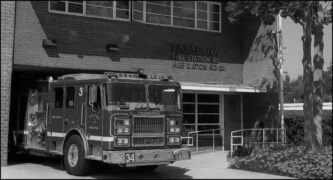
The Eaton Fire was not an abstraction or a warning from some distant community. It happened here. Our firefighters were among the first on the scene, protecting lives and property under extraordinary conditions. It reminded us that the strength of a fire department is not something we build after disaster strikes. It is something we invest in before the call comes.
We also recognize the argument that Pasadena should simply tighten its belt.
We should. Every budget should be examined for unnecessary expenditures and opportunities to operate more efficiently. City government should continually challenge itself to make every taxpayer dollar count.
But Pasadena already operates a relatively lean organization for a city of its size and complexity.
And our General Fund supports police, fire, parks, libraries, streets, housing programs and many of the everyday services residents expect. Cutting spending in one area often means reducing another service somewhere else.
There also is a difference between finding efficiencies and addressing long-term public-safety needs. Delaying the seismic retrofit of a fire station does not eliminate the cost. Keeping aging equipment longer does not eliminate the need to replace it. Postponing investments in wildfire preparedness does not make wildfire risk disappear.
Measure PFD asks voters whether to establish a dedicated source of funding for these needs.
The measure would levy 19 cents per square foot of improvements on developed property and is estimated to generate approximately $22.1 million annually. For a 1,600-square-foot home, that is approximately $304 per year, or $25.33 per month. It requires approval from two-thirds of Pasadena voters.
The revenue would be restricted to fire and emergency services, including firefighter and paramedic response, wildfire prevention and brush clearance, emergency communications and equipment, and construction or modernization of fire facilities.
The measure also includes a 14-year sunset, independent audits, public reporting and project monitoring. Those safeguards matter. Asking residents for additional money must come with accountability for how that money is spent.
So, this discussion should not be reduced to a choice between supporting firefighters and supporting fiscal responsibility.
We can demand both.
Residents have every right to ask what something costs, why existing revenues cannot cover it, what protections exist against waste and whether government is doing everything reasonably possible with the resources it already has.
Those are not inconvenient questions. They are the questions an engaged community should ask.
But emergencies have a way of reminding us that some investments cannot wait forever.
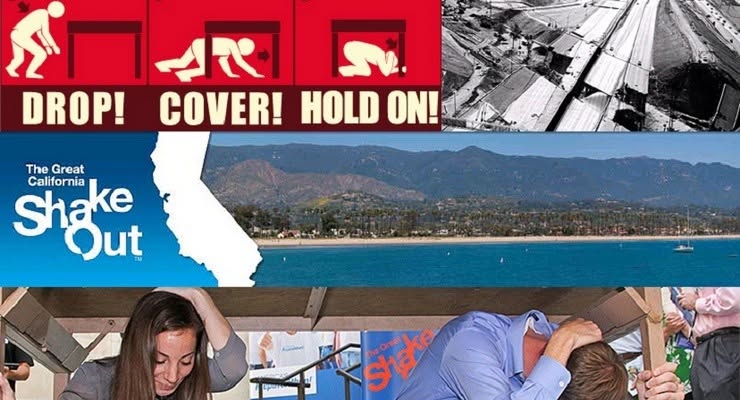
Wildfires do not examine a city’s balance sheet before they spread. A heart attack does not wait for a better fiscal year. And an earthquake will not give us time to retrofit a fire station after the shaking begins.
Measure PFD is not only about the emergencies we face today. It is about the Pasadena we are becoming.
As our city grows and changes, with more people, more buildings, and greater complexity, the demands on our emergency response system will grow with it. The threats to our health and safety will evolve as well. We cannot know exactly what the next emergency will look like. But we can decide whether and how we will be prepared for it.
That means planning deliberately today to ensure Pasadena has the fire stations, modern equipment and firefighters and paramedics necessary to respond quickly, save lives and protect property for years to come.
Ultimately, Measure PFD places that decision where it belongs—with Pasadena voters.
We encourage every resident to study the proposal, examine its costs and safeguards, ask hard questions about city finances and Fire Department needs, and make an informed decision on Nov. 3.
Because the larger question before us is not simply about a tax.
It is about whether the Pasadena of tomorrow will be prepared when the call comes.
 Get our daily Pasadena newspaper in your email box. Free.
Get all the latest Pasadena news, more than 10 fresh stories daily, 7 days a week at 7 a.m.