








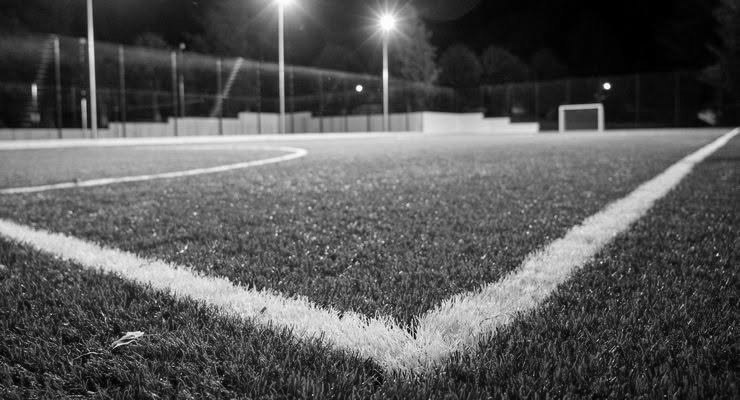
There is something we need to rethink about the way we build playing fields for our children. Artificial turf is often presented as a simple solution to a very real problem: We want more children and adults to play sports, but there are never enough fields. Synthetic turf doesn’t get muddy. It doesn’t go dormant. It can withstand enormous amounts of use. It can mean more practices, more games and fewer cancellations. Those are legitimate concerns. But before we conclude that the answer is to cover more of our playing fields with plastic, we need to ask a much bigger question:
More playing time, but at what cost?
As our climate becomes hotter and extreme heat becomes more common, the surface beneath our children matters. And the consequences of getting that decision wrong could last for decades.
Heat isn’t a theoretical danger
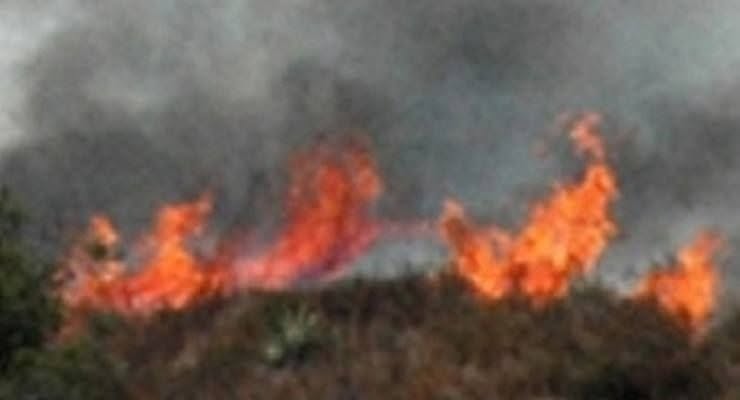
Artificial turf does not cool itself the way living grass does through transpiration. Studies cited by the Sports Field Management Association have found synthetic surfaces dramatically hotter than natural grass. In one field study, the synthetic surface averaged about 117 degrees Fahrenheit and reached 157 degrees, while the natural grass averaged about 78 degrees. In another set of measurements, synthetic surfaces were found to run 50 to 70 degrees hotter than natural grass under certain conditions. That should stop us in our tracks. Because we are not talking about adults sitting in the shade. We are talking about children running, sprinting, wearing protective equipment, playing soccer, football, softball and other sports, and sometimes spending hours on a surface that can become extraordinarily hot. Extreme heat does not care whether you live in Pasadena, Tennessee, Iowa or Missouri.
We have seen that this summer.
On September 4, approximately 600 students at Carter Middle School in Knox County, Tennessee, were evacuated to an artificial turf football field after a bomb threat. Temperatures were in the upper 90s. Twenty-one students were transported to hospitals with heat-related illnesses, including three who were initially reported in critical condition.
The Knoxville incident did not establish that artificial turf itself caused the illnesses. The students were eventually released from medical care, and the school district said it was reviewing its evacuation procedures. But think about what happened. These weren’t football players pushing themselves through a game. They were middle-school students simply standing outside during an emergency.
Within a relatively short period of time, 21 children became sick enough to require hospitalization.
That should make all of us think differently about heat, and about what we put beneath our children when they are outdoors. Now imagine combining extreme heat with vigorous exercise.
The warnings are coming from everywhere
On September 5, 20-year-old University of Iowa student Derek Phillips, a member of the Hawkeye Marching Band, suffered cardiac arrest shortly before the band’s scheduled halftime performance at a football game on an artificial turf field. Temperatures in Iowa City reached 94 degrees, making it one of the hottest games in the university’s history. Phillips later died after his family chose to remove him from life support.
The University of Iowa has not said that heat caused his cardiac arrest. That distinction matters. But it matters just as much that the university took extraordinary heat precautions that day, including changing the marching band’s uniforms and ultimately canceling its halftime performance because of the heat.
In Missouri, 20-year-old William Jewell College football player Micah Jo Barnett suffered a medical emergency during a game on an artificial turf field, August 29, and later died at a hospital. The Liberty Police Department said the medical examiner’s determination of the cause and manner of death was still pending.
Again, we should not claim that artificial turf or heat caused his death when investigators had not established that. But these tragedies should remind us of something fundamental:
Young, healthy people can suffer catastrophic medical emergencies in extreme heat.
And the problem is not going away. Climate change is making heat a bigger part of our everyday lives. The question is whether we are going to design our communities to make that problem better, or make it worse.
Pasadena is not immune
We don’t even have to look across the country. On September 11, Pasadena High School announced that it was ending the remainder of its 2026 varsity football season, citing player safety, health concerns, roster depth and the team’s young, inexperienced roster. According to Pasadena Unified School District, two players had been injured during the team’s first three games. During the August 28 game against Kennedy High School in Granada Hills, on their artificial turf field, an ambulance was called onto the field to treat an injured Pasadena player, and the game was delayed approximately 30 minutes while the player was transported to a hospital.
There is no evidence in the reporting that the Kennedy High School field caused either injury. I have also been unable to obtain additional information from the school about the circumstances surrounding the injuries. And that is precisely the point. The August 28 game occurred during a period when temperatures in Granada Hills approached 102 degrees.
Shouldn’t we be asking whether heat, field surface, equipment, hydration, playing conditions and other environmental factors are adequately considered whenever we ask young athletes to exercise in extreme temperatures? We should not have to wait for an injury to tell us that a field is too hot.
Artificial turf isn’t the same thing as sports
This is where I think the conversation in Pasadena needs to change. I love sports. I want our children to have places to run, kick a soccer ball, swing a bat, throw a football and simply be outside. I want adults to have those opportunities, too. Physical activity is essential to health, community and quality of life. But somehow we have allowed the discussion to become:
Artificial turf, or fewer opportunities for our kids to play.
That is a false choice. The real question is:
How can we create more safe, accessible, well-maintained playing fields without creating another environmental and public-health problem?
Pasadena’s own documents make clear why the argument for turf is so compelling. The City’s Robinson Park and Villa Parke fields were installed specifically to increase permitted playing hours and accommodate more youth sports. In 2025, those two fields served thousands of youth and adult participants. The demand is real. But demand for playing fields does not automatically answer the question of what those fields should be made of. Perhaps instead of assuming that more plastic is the answer, we should invest in better natural-grass management, more fields, field rotation, improved drainage, professional sports-field management, shade, cooling infrastructure and scheduling that takes extreme heat into account. There are people with expertise in maintaining natural athletic fields safely and efficiently. Perhaps we haven’t invested enough in that expertise.
What are we putting into our communities?
There is another issue we cannot ignore: the enormous amount of plastic involved. The Synthetic Turf Council estimates that an average athletic field uses approximately 40,000 pounds of synthetic turf carpet, in addition to hundreds of thousands of pounds of infill. The Los Angeles Times has reported that research has found artificial turf can shed thousands of pounds of plastic fibers over its useful life. Researchers have also identified concerns involving PFAS, phthalates and other chemicals in some synthetic turf materials. California itself is paying attention.
In February 2026, the California Department of Toxic Substances Control released a technical document examining PFAS in artificial turf. DTSC says people using artificial turf can potentially be exposed through inhalation, ingestion and skin contact, and notes that children and other sensitive populations warrant particular attention.
Shouldn’t we ask better questions before we spend millions of public dollars locking ourselves into another generation of plastic fields.
Pasadena is already facing that decision
The City is considering replacing the aging artificial turf at Robinson Park and Villa Parke with newer synthetic turf systems. City staff have argued that artificial turf is necessary to accommodate year-round recreational demand and that newer systems can address some of the concerns associated with older turf. The proposed systems are designed to be recyclable, “PFAS-free” and to use alternative infill materials. Those improvements deserve consideration. But they don’t make the larger question disappear. Even newer turf is still a manufactured plastic surface. It still has to be produced. It still gets hot. It still has a finite useful life. And it still represents a choice about what kind of environment we create in our parks. Pasadena should not make that decision based solely on how many hours a field can be used. We should consider the full life-cycle cost- environmental, financial and human.
And what about Muir High School?
John Muir High School presents another opportunity to ask these questions. PUSD accepted a $2 million donation from the Mamba and Mambacita Sports Foundation to rebuild Muir’s softball field. The existing field has serious problems: uneven grass, rocks and gopher holes have contributed to unsafe playing conditions and injuries. The proposed replacement is a “newer-generation” Pivot synthetic turf system. Although this system has significant improvements over some older turf systems, many questions remain:
How hot will the field actually become on a 100-degree Pasadena afternoon? How will heat be measured at the surface where an athlete’s body is actually making contact? How much cooling will be required? How will the field perform after years of intense Southern California sunlight? What happens to the material at the end of its useful life?
And could a properly designed and professionally managed natural-grass field provide the same athletic opportunities while helping cool the surrounding environment rather than contributing to the urban heat island? These aren’t anti-sports questions.
They are pro-kid questions.
We can do better than choosing between grass and sports
One of the most encouraging things I’ve learned from talking with natural-grass experts and certified sports-field managers is that natural grass does not have to mean an unusable, muddy, high-maintenance field. Proper field construction and management matter enormously. Aeration matters. Drainage matters. Soil health matters. Irrigation matters. Field rotation matters. And perhaps most importantly, expertise matters.
A larger grass field can allow different portions of the playing surface to rest. Proper drainage can reduce flooding and standing water. Aeration can relieve compaction. Organic management techniques can reduce dependence on synthetic fertilizers. There is an entire skilled workforce capable of doing this work. If California municipalities invest in natural athletic fields, we also invest in agricultural, horticultural, irrigation and sports-field-management jobs. Instead of sending our public dollars into a cycle of buying, replacing and disposing of plastic, we could be investing in people who know how to grow and manage living fields.
The climate question
This matters especially in Pasadena. We are already experiencing extreme heat. We are already talking about urban heat islands. We are already losing trees. We are already confronting the consequences of a changing climate. And yet we are considering replacing living landscapes with enormous sheets of fossil-fuel-derived plastic. We need to ask whether that makes sense. Grass is alive. It transpires. It cools the surrounding environment. Healthy soil absorbs and holds water. A living field can be repaired, reseeded, aerated and renewed. Plastic cannot. Artificial turf may solve one problem- field durability- but it can create another: a hot, impervious, plastic environment precisely when our communities most need cooling and living landscapes.
Wake up before we have to
I am not arguing that every artificial turf field is equally dangerous. I am not arguing that every chemical found in some turf products will harm every person who plays on them. And I am certainly not arguing that children should have fewer opportunities to participate in sports.
I am arguing that we should stop treating artificial turf as the obvious answer.
We are living through a climate emergency. We know extreme heat is dangerous. We know children need opportunities to be physically active. We know plastic pollution is growing. We know PFAS and other persistent chemicals deserve careful scrutiny. We know artificial turf can become extraordinarily hot. And we know that once we install these fields, replacing them again and again commits future generations to the same decision. So let’s broaden the conversation. Let’s ask whether Pasadena can create more athletic opportunities while investing in natural grass, shade, cooling, professional field management, better drainage, field rotation and heat-smart scheduling. Let’s ask whether our parks can be places that cool our neighborhoods rather than intensify the heat. Let’s ask whether our public dollars can support California workers and sustainable landscapes rather than perpetuating a cycle of plastic production and replacement. And let’s ask the most important question of all:
When our children walk onto a playing field, should the ground beneath their feet help protect them from the future we are creating, or contribute to it?
That is a decision Pasadena should not make casually. It deserves public discussion, good science, transparent information and meaningful community input.
Pasadena residents: ask questions. Make your voices heard.
If you are concerned about the future of Pasadena’s playing fields, contact your City Council representative and ask for the information you need to make an informed decision about artificial versus natural playing surfaces. Ask about actual field temperatures on Pasadena’s hottest days. Ask about the complete chemical composition of proposed turf. Ask how heat will be monitored. Ask about end-of-life disposal and recycling. Ask what a professionally managed natural-grass alternative would cost over 20 or 30 years.
And ask whether Pasadena has fully considered alternatives that could give our children more opportunities to play without adding more plastic to a warming city.
Our children deserve sports. They deserve safe places to play. And they deserve adults willing to ask difficult questions before today’s convenient solution becomes tomorrow’s environmental legacy.
To contact the mayor and your city council members:
https://www.cityofpasadena.
Department of Toxic Substances report on Artificial Turf:
https://dtsc.ca.gov/scp/
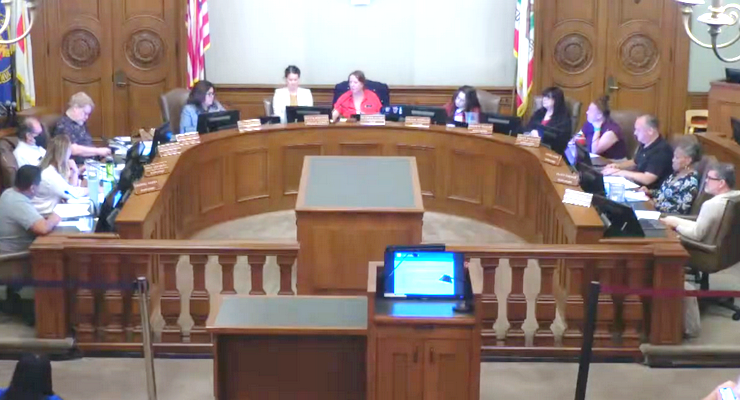
Artificial Turf will be on the City Council Agenda on October 13th, 6 pm. Please show up, if you can, to voice your opinion or send in a comment: https://ww2.cityofpasadena.
 Get our daily Pasadena newspaper in your email box. Free.
Get all the latest Pasadena news, more than 10 fresh stories daily, 7 days a week at 7 a.m.