









I was once a parent who came to board meetings to speak against school closures. Seven years later, I am the biggest proponent on the Board for school consolidation. Something happens when you get on the Board — you’re forced to make decisions that are best for the district as a whole, and you begin to see the district through a wider lens, rather than focusing on just one school.
Plain and simple: Pasadena Unified School District has been operating beyond its means. The main cause: declining enrollment, driven by demographic forces outside of the district’s control. Since its peak in 2000, PUSD student enrollment has declined by 38%, outpacing both state and county averages.
School consolidation is no longer a choice, but a necessity.
Between the administration, Board, and the public, nobody has presented an idea that addresses the loss of students and its effect on the district. A lot of people have suggested that the Board needs to come up with a better solution, but the solutions suggested would just require more layoffs every year and are unsustainable. The programs that opponents say will disappear because of consolidation, will eventually disappear if we don’t consolidate schools. They’ll disappear because the district will, ultimately, have to layoff the personnel who teach and administer those programs. The best hope for increasing the number of students in the district is to shore up the programs we have, which would engender confidence in families inside and outside the district.
Declining enrollment is not a reflection of the quality of education of PUSD schools. There are simply fewer and fewer school-aged children in the area to attend our schools, causing wide disparities in school enrollment among our schools resulting in inequitable funding.
The key predictor of declining enrollment is birth rate. Since 2013, district enrollment has declined on average by 450 students per year, and our enrollment is only expected to decline further. PUSD is projected to have only 10,664 students by 2035 – a drop of nearly 20% percent from PUSD’s current enrollment. [Student Population Forecast by Residence (May 2026) ]
Some of us have held out hope that we could increase our enrollment if we did a better job marketing or if the district came up with some new, ‘shiny’ program that would attract new students. However, in spite of our concerted efforts, PUSDs ‘capture rate’ – the number of students who live in our district who actually enroll in our district – has remained consistent at about 50% since 2016.
According to our 2023 Facilities Master Plan, 7 out of 21 – or one third of our PUSD schools – are sitting half-empty. Our current enrollment is 13,228 in a district with a capacity of 18,008, which means the district has 4,780 empty seats – the equivalent population of 4 California average-sized high schools. What are the chances that any new program will draw an extra 4,780 students to our district?
Unfortunately, as enrollment decreases, so does our funding. State funding formulas are based on student attendance. In California, most LEAs’ adopted general fund budget is allocated to salaries and benefits, and the statewide average is 86% for unified school districts. Yet only 70% of PUSD’s budget goes to pay for teachers and staff, which means we are undercutting the very people providing direct services to students by at least 16%. Declining enrollment translates to fewer teachers and support staff every year, so this will only get worse for our staff.
It costs a lot of money to keep the lights on, to run the air conditioning, to retain operational/support staff including librarians, nurses, custodians, counselors, office staff, principals, gardeners. What’s happening right now is that we are spending too much money operating too many schools. Do we continue to staff and upgrade all 21 schools?
School districts across the state are grappling with similar problems of declining enrollment – although PUSD’s declining enrollment numbers may be more extreme than the majority. Even so, according to the Public Policy Institute of California, roughly 62% of California school districts saw enrollment fall in 2025-26, and enrollment has declined in nearly three-quarters of districts since the pandemic. In the Southland, mega-school districts like LAUSD are looking at school consolidations, but so are many smaller districts as well.
You may not have kids or grandkids in the district or work for the district. Why should you care about consolidating schools? Chances are you voted YES on the parcel tax Measure EE and bond measures Measure O and Measure R in 2020 and 2024. Most likely you believe in public education because you yourself attended public schools. For your past and continued support, I am truly grateful. Your support has translated into significant improvements across all our school buildings the majority of which are 50 to 100 years old (some older). These improvements and upgrades include: improvements focused on student safety, campus accessibility, and playground enhancements; new staff parking lot improvements with solar-ready infrastructure and EV charging stations; shade structures above playground areas; major modernization projects at 10 schools; critical roofing replacements; installation of new locks and front entry camera system at school sites. With more improvements to come.
Your tax dollars have made a significant difference for students and teachers every day. But I believe there is room for improvement, room for the district to be more fiscally responsible with your precious tax dollars. Let’s avoid asking for another bond measure in four years. We can maximize our tax dollars by not spending money on half-empty schools that may eventually have to close. By making decisions now, we can begin making plans for transitioning programs and reinvesting bond funds to level up fewer schools with truly state of the art facilities. This is something I want to stress – Fewer schools will allow for higher investments at each remaining school site, which will translate to more opportunities to make our programs accessible to more students,
PUSD runs great programs, and we need to ensure that more of our students have access to them. Our International Baccalaureate (IB) Programs spanning K-12. Our Dual Immersion language programs. Our Dual enrollment programs with Pasadena City College, enabling students to graduate from high school with both a high school diploma and an AA degree. AP offerings. Robust sports and arts programs. Our Special Education programs that lend academic and emotional support. And so much more I’m leaving out here.
PUSD’s schools in the district just recently received both state and national recognition. Five PUSD high schools earned national recognition in the 2026 U.S. News & World Report Best High Schools rankings, placing them in the top half of public high schools nationwide. Four of our schools just received statewide recognition for its student-centered school culture and for positive school environments and social-emotional support. We need to build upon these successes and ensure that all of our students have the same opportunities.
The remedy is to act now – establish a plan to strategically phase out some schools. Without a plan, we risk burning out our teachers and staff. While we should not rush the process, there is some urgency. Students, teachers, and staff, right now, are feeling the impacts of the decisions we should have made years ago. Every year we lay off teachers and staff to address our shrinking budget. The only solution I see is to ensure that we maximize taxpayer funds and finite resources across fewer schools to enable all students to have a well-rounded educational experience, and that will mean making the hard decision to consolidate schools.
Against the odds, Pasadena Unified schools are succeeding. Let’s keep that momentum going by reimagining our district: fewer schools, stronger schools—a system that works for all students.
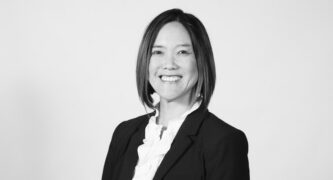
Tina Wu Fredericks is President of the Pasadena Unified School District Board of Education. The views expressed are her own and do not represent the position of the Board of Education or the District. She is a former high school math teacher and works full-time as a computer engineer.
 Get our daily Pasadena newspaper in your email box. Free.
Get all the latest Pasadena news, more than 10 fresh stories daily, 7 days a week at 7 a.m.