






I am a native Angeleno, born at the Good Samaritan Hospital in Los Angeles. high school, college, law school, all in the city of my birth. Although I now live in Pasadena, the City of the Angels is where my roots will always be. That is why the sight of my Marine and Guard comrades on the streets of my original hometown has given me great pause. The views expressed here are my own and not those of the California Military Department or the Los Angeles County District Attorney’s Office.
President Trump has authorized the federal deployment of several thousand servicemembers from the California National Guard and a battalion of United States Marines to Los Angeles. This action was taken despite opposition from both the Governor of California and the Mayor of Los Angeles, in response to protests related to immigration enforcement actions. The Los Angeles Police Department has assured the community that it can control the protests without federal intervention. What is the basis in law for this?
The Posse Comitatus Act, 18 U.S.C. § 1385, prohibits our Armed Forces from acting as a domestic police force unless doing so is “expressly authorized by the Constitution or Act of Congress.” The Insurrection Act, 10 U.S.C. § 253, gives limited authority to the president to deploy federal troops to quell “any insurrection, domestic violence, unlawful combination, or conspiracy” against the United States government and to execute federal civil rights laws when they are obstructed. That authority has seldom been used in our nation’s history. Past deployments of federal troops for domestic law enforcement purposes have happened when state governors have defied federal authority or where state officials asked for federal assistance: President Eisenhower’s federalization of National Guard troops to enforce the Supreme Court’s order in Brown v. Board of Education to desegregate schools; and President Johnson’s federalization of Guard troops to protect civil rights marchers in Selma, Alabama.
The last major deployment of federal troops domestically occurred here in Los Angeles during the 1992 riots, at the request of California Governor Pete Wilson, and pursuant to the Insurrection Act. That deployment followed widespread violence and looting of businesses, the burning of entire blocks of homes and businesses, and many civilian fatalities. Notwithstanding reports of property damage and violence, the current situation in Los Angeles has been limited in scope and appears to have ended. There have been no reported deaths, and protest activity was mostly in the civic center area of Los Angeles.
Deployments over the objections of state officials have been when local officials defied court orders. Here, the Los Angeles Police Department and the state of California have not only not asked for outside assistance to control the protests but have even suggested that the deployment of military troops would be more likely to exacerbate, rather than lessen, the risk to the community.
President Trump has not invoked the Insurrection Act. Instead, he has relied on 10 U.S.C. § 12406, a law enacted in 1903 that allows the president to call up the National Guard if there is “a rebellion or danger of a rebellion against the authority of the Government of the United States” or if “the President is unable with the regular forces to execute the laws of the United States.” Other presidents have relied on § 12406 as the call-up authority that accompanies the Insurrection Act’s substantive grant of power.
In federalizing and deploying the California National Guard to Los Angeles, President Trump is relying on § 12406 as authority to deploy troops to protect federal personnel, property, and functions. And in also authorizing deployment of active-duty armed forces, he relies on a claim of inherent constitutional power, given that § 12406, unlike the Insurrection Act, does not authorize deployment of active-duty servicemembers.
Under the Insurrection Act, the president may federalize National Guard forces without state consent. A president has the power to send federalized National Guard forces from one state into another state. Federalized National Guard forces temporarily become a part of the federal armed forces.
The application of § 12406, is not as clear. The first part of the law, enacted in 1903, gives the president authority to call the National Guard into federal service. The second part, however, provides that “[o]rders for these purposes shall be issued through the governors of the States.”
Both the Insurrection Act and § 12406 are written in broadly enough to give the president significant discretion to deploy troops to quell civil unrest or to enforce the law.
The deployment of the California National Guard and active-duty military personnel as domestic law enforcement should be in compliance with the Posse Comitatus Act. More than that, domestic deployments that fail to observe these limitations undermine the Guard’s and the active-duty military’s core national security and disaster relief missions.
Allowing our military to be used for law enforcement is fraught with peril. It should seldom be called upon to serve as a domestic police force. Soldiers are trained to fight and destroy the enemies of our country. Most receive minimal training in enforcing the law while respecting constitutional rights. Deploying them to incidents of civil unrest creates risks for both civilians and soldiers. It lessens the focus on their core missions, including defending the country against threats from hostile foreign powers and, in the case of the California National Guard, responding to natural disasters.
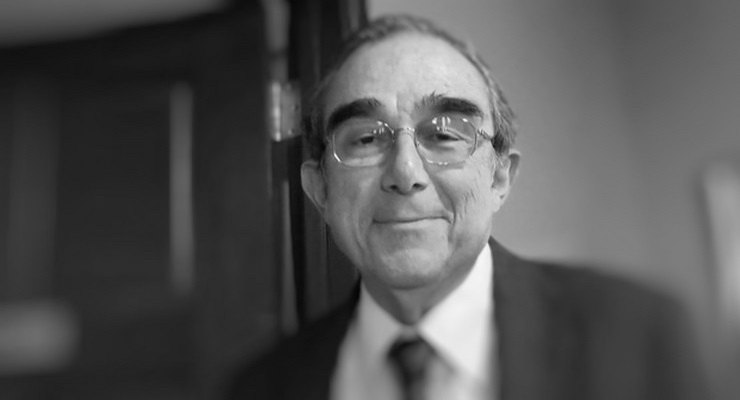
Former Pasadena Mayor William Paparian served on active duty in the Marine Corps during the Vietnam War and continues to serve as a Captain (CA) Judge Advocate in the California State Guard and as a Los Angeles County Deputy District Attorney.
 Get our daily Pasadena newspaper in your email box. Free.
Get all the latest Pasadena news, more than 10 fresh stories daily, 7 days a week at 7 a.m.


