









Last week, the Solicitor General of the United States, representing Secretary of Homeland Security Noem, petitioned the U.S. Supreme Court to immediately grant an administrative stay of the July 11th District Court order, which enjoins federal agents from conducting investigative detention stops within the Central District without reasonable suspicion. The court held that agents may not base their actions solely, whether individually or collectively, on factors such as perceived race or ethnicity, use of Spanish or accented English, or presence at a specific location or engagement in a particular type of work.
If the Supreme Court grants the Solicitor General’s request for an administrative stay, this will temporarily permit immigration agents to resume stops previously enjoined by the District Court, pending a final resolution. Such a decision could reshape the standards by which federal agents may base their reasonable suspicion, especially in the context of immigration enforcement, and would signal the Court’s willingness to revisit or clarify the scope of constitutional protections under the Fourth Amendment. On the other hand, if the Court denies the stay, the injunction will remain, limiting federal enforcement practices and potentially prompting broader questions about the balance between individual rights and government interests in the realm of national immigration policy.
This sweeping prohibition has prompted intense debate over the limits of federal authority and the protections afforded by the Fourth Amendment. Legal experts have noted the unprecedented scale of the district court’s order, which now effectively bars agents from using a range of common law enforcement indicators that, historically, have informed investigative stops related to immigration. At stake is not only the ability of federal agents to perform their duties within established legal frameworks, but also the potential consequences for civil liberties and the precedent set for future cases involving the intersection of constitutional rights and immigration enforcement.
As the case proceeds, both sides have marshaled previous Supreme Court decisions to bolster their arguments, pointing to the delicate balance the judiciary must maintain between safeguarding individual rights and ensuring effective enforcement of federal law.
The Solicitor General presents three arguments in support of his request. First, he contends that there is no standing to seek the injunction because no individual faces an imminent risk of being stopped based on the prohibited factors. Second, he asserts that the court order conflicts with Fourth Amendment precedent by restricting permissible inferences of reasonable suspicion and determining that the four factors, even collectively, cannot establish reasonable suspicion. Third, he argues that the court order contravenes Supreme Court precedent prohibiting universal injunctions.
In support of his standing argument, the Solicitor General cites the 1983 decision of the Supreme Court in City of Los Angeles v. Lyons where the police had stopped a motorist for a traffic violation and placed him in a chokehold. The Court held that the motorist could make a claim for damages for his injury, because he could not show the likelihood of a similar injury in the future, he lacked standing.
Regarding his Fourth Amendment argument, the Solicitor General cites the 1975 decision of the Supreme Court in United States v. Brignoni-Ponce that held that an officer may conduct an investigative stop of an individual suspected of being in the United States illegally based on reasonable suspicion that a person is an illegal alien based upon “specific articulable facts, together with rational inferences from those facts.” The Solicitor General uses the example of officers knowing that a particular business has a history of employing undocumented immigrants, officers may have reasonable suspicion to stop people gathering there to seek employment. He goes on to argue that the court’s injunction precludes reasonable suspicion to stop an individual speaking Spanish, wearing the uniform of an employer known to hire undocumented immigrants, and shopping at a business known to be patronized by undocumented immigrants.
The Solicitor General contends that the court’s order is inconsistent with the Supreme Court’s recent decision in Trump v. CASA, which restricts universal, non-party injunctions. The order, according to this argument, effectively prohibits investigative immigration stops for any of the approximately 20 million individuals within the Central District of California. He further clarifies that an injunction is limited in scope and may only be enforced against the plaintiffs present before the court, rather than all individuals potentially affected by the alleged unlawful conduct.
The Supreme Court is being requested to provide emergency relief as it deliberates whether the matters raised by the Solicitor General merit its review, whether the order issued on July 11th results in irreparable harm to the government, and whether the balance of equities favors the government’s position. The Solicitor General concludes his request with this statement:
“Every day that the district court’s order remains in effect, law-enforcement officers throughout the most populous district in the country are laboring under the threat of judicial contempt, daunted by the prospect that their good-faith efforts to enforce federal law will be retrospectively deemed to violate a far-reaching, unlawful, and ill-defined injunction.”
As legal scrutiny intensifies, the implications of this case extend far beyond the immediate boundaries of the Central District. Legal scholars and civil rights advocates warn that, should the Supreme Court grant the administrative stay, it may signal a shift toward expanded latitude for law enforcement in immigration settings nationwide. Meanwhile, opponents of the Solicitor General’s petition emphasize the potential for increased profiling and constitutional infringement, raising concerns about the erosion of safeguards designed to protect against arbitrary or discriminatory treatment.
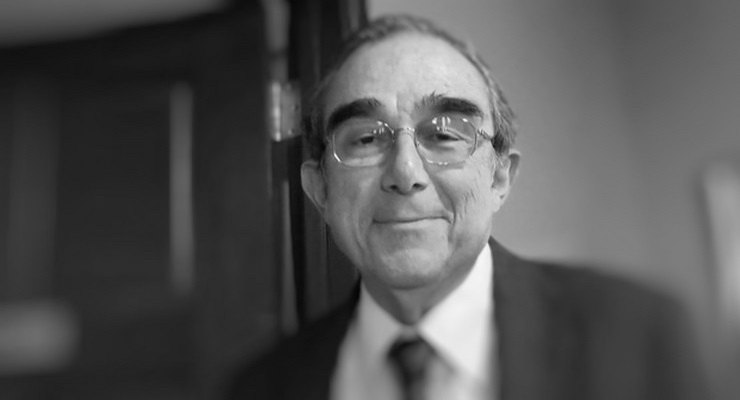
Former Pasadena Mayor William Paparian is a Captain (CA) Judge Advocate in the California State Guard and a Los Angeles County Deputy District Attorney. The views expressed here are his own and not those of the California Military Department or the Los Angeles County District Attorney’s Office.
 Get our daily Pasadena newspaper in your email box. Free.
Get all the latest Pasadena news, more than 10 fresh stories daily, 7 days a week at 7 a.m.


