





The designation caps a process that began in 2019, when Robert Bullock, co-chair of the Historic Highland Neighborhood Association’s Altadena Landmark Districting Committee, submitted a request for fee relief on a nomination application. Because the county had no fee-waiver program, its Historical Landmarks and Records Commission nominated the district itself in August 2021.
The boundary grew to 77 parcels after a 2019 evaluation by ASM Affiliates, a consulting architectural history firm, recommended expanding the district to match the original Pasadena Highlands Tract line rather than a smaller area initially discussed.
The designation gained new urgency after last year’s Eaton Fire destroyed 9,419 structures elsewhere in Altadena, though the Historic Highlands neighborhood itself was not touched by the flames.
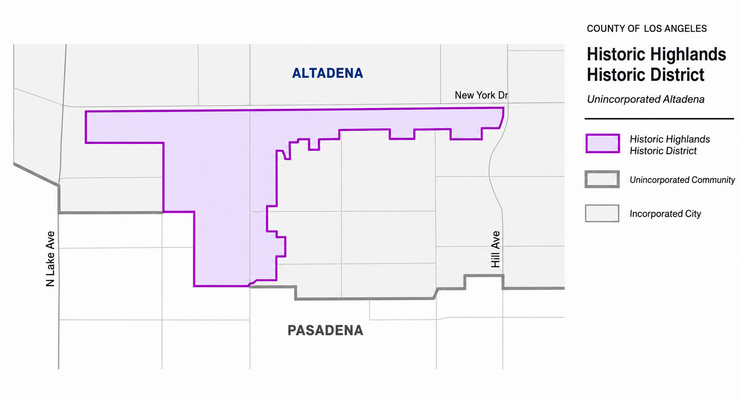
The ordinance amends Title 22 of the county code to add the district under the county’s 2015 Historic Preservation Ordinance. It covers homes built between 1905 and 1959 in Craftsman, American Foursquare, Tudor Revival, Spanish Colonial Revival and several other early-20th-century styles, on East Woodbury Road, New York Drive, Atchison Street, North Mar Vista Avenue and North Catalina Avenue, in the unincorporated northern half of the Historic Highlands neighborhood.
The southern half sits inside the Pasadena city line and remains under Pasadena’s own preservation rules, which have covered that portion since 2008.
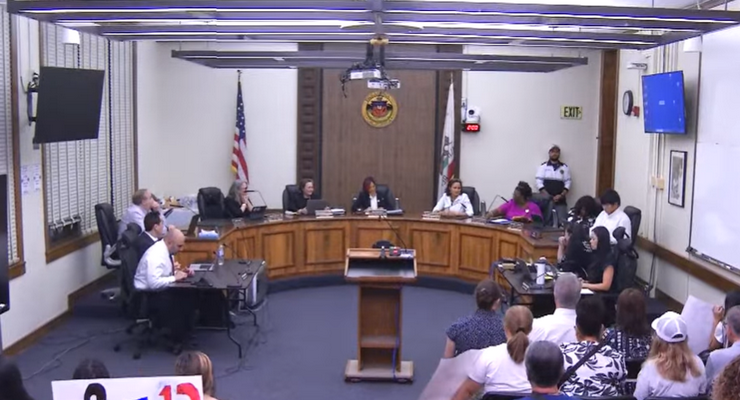
Fifty-two percent of affected property owners had consented when the county nominated the district in 2021; that support grew to 55 percent by the time the Historical Landmarks and Records Commission held its public hearing in September 2022, exceeding the threshold required under county code. The commission recommended the district 3-0, with two members absent. The Regional Planning Commission followed with a unanimous 5-0 vote in January 2023, over one written objection submitted to that commission. The Board of Supervisors approved the ordinance on July 22, 2025, then directed County Counsel to complete legal review before taking a final administrative step on or about June 10, 2026 — setting the 30-day countdown to Thursday’s effective date.
The project carries no fiscal impact to the county, according to the Board’s staff report, and was categorically exempt from environmental review under a state exemption for historic-resource preservation projects.
Most exterior changes to homes in the district will now require a county Certificate of Appropriateness before a building permit can be issued, though routine work such as painting, landscaping and rear-yard tree pruning is exempt. Owners of contributing properties are eligible to apply for Mills Act contracts, which can reduce property taxes in exchange for maintaining a home’s historic character. Dean Edwards, a senior planner with the county’s Department of Regional Planning, has served as the project’s staff contact throughout the process.
The county will notify the district’s 77 property owners now that the designation is in effect, and the district will be entered into the county’s historic register.
 Get our daily Pasadena newspaper in your email box. Free.
Get all the latest Pasadena news, more than 10 fresh stories daily, 7 days a week at 7 a.m.