













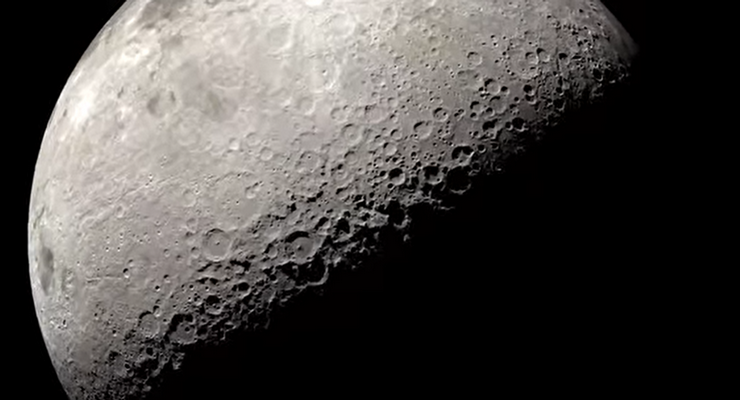
“MoonFall mission will blaze a path for future science and human exploration of the Moon by sending four JPL-built propulsive drones to survey the lunar surface at potential Artemis landing sites in unprecedented detail,” NASA said in its mission overview.
The MoonFall mission is classified as airborne, with Earth’s Moon as its target. Its current status is future, as the program is still in development and scheduled for deployment later this decade.
MoonFall is part of NASA’s initial phase of its Moon Base initiative — a rapid series of robotic missions to scout, experiment, and prepare for astronaut surface operations. Managed by JPL, the mission aims to land near the lunar South Pole by 2028.
After launch, the drones will be carried from Earth orbit aboard Firefly Aerospace’s Elytra spacecraft, which will deploy them mid-descent. Each drone will land individually and operate independently, using propulsion systems to make multiple flights over the course of a single lunar day, equivalent to 14 Earth days.
Each drone will weigh about 550 pounds, including propellant. The vehicles will measure approximately 7 feet in diameter and 4 feet tall. They will be equipped with as many as 10 high-definition optical cameras designed to capture imagery and video of hard-to-reach terrain on the lunar surface.
MoonFall’s Lunar Dashcam imaging system will produce digital terrain maps at significantly higher resolution than current satellite imagery. The drones will also carry a laser retroreflector array for navigation and geophysical experiments, a neutron spectrometer to measure subsurface water abundance, and a radiation spectrometer to characterize the lunar environment for future human explorers.
As lunar night freezes remaining fuel, each drone will activate a long-duration payload and remain operational at its final landing site. Able to wake up and communicate with Earth during subsequent lunar daytime periods, this survive-the-night payload will mark a sustained U.S. presence at the South Pole and in the area of operations for Moon Base missions.
MoonFall builds on the success of NASA’s Ingenuity Mars Helicopter, particularly its autonomous takeoffs and landings. MoonFall will leverage commercial electronics that enable low-cost future production by industry.
 Get our daily Pasadena newspaper in your email box. Free.
Get all the latest Pasadena news, more than 10 fresh stories daily, 7 days a week at 7 a.m.

