









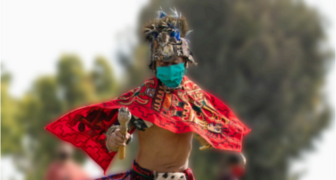

Los Angeles County’s Native American tribes are enlisting youth to help safeguard their cultural heritage against the threats posed by urbanization and rising real estate costs. The San Gabriel Band of Mission Indians has launched initiatives like a youth tribal land stewardship program to pass down traditional knowledge and practices to the next generation.
“We now have a youth tribal land stewardship crew that is working on ethnobotany and preserving the land and learning our indigenous ways of stewarding Mother Earth,” said Kimberly Morales Johnson, Tribal Secretary of the San Gabriel Band of Mission Indians.
The tribe’s efforts come as part of a broader push to preserve Native American cultural heritage across Los Angeles County.
Indigenous Peoples’ Day is celebrated in California and across the U.S. on Monday, October 14. Events highlighting youth-led initiatives in cultural preservation are planned.
“Right now it’s the same that’s been happening to our tribe for multiple generations, and that is erasure due to the high cost of real estate where we live, as well as the encroachment of the federally recognized tribes onto our ancestral homelands,” Johnson said.
To combat this, the San Gabriel Band of Mission Indians is working with the Los Angeles Unified School District to train teachers in unerstanding accurate tribal history. This collaboration seeks to expand cultural education in public and private schools, helping to ensure both indigenous and non-indigenous youth learn about the rich heritage of the region’s original inhabitants.
Los Angeles County officially recognizes five tribal affiliations: Tongva, Tataviam, Serrano, Kizh, and Chumash. The County has adopted a land acknowledgment recognizing these tribes as the original stewards of the land. Native American presence in the region dates back 7,000 to 10,000 years, with Los Angeles now home to the largest indigenous population of any U.S. city.
Johnson co-founded the Tongva Taraxat Paxaavxa Conservancy to further preservation efforts. The tribe has also made strides in government relations, with the tribal chairman meeting President Biden for the signing of the San Gabriel Monument.
Despite these preservation efforts, many challenges remain.
Johnson highlighted concerns about potential development in Jurupa Valley that could impact a 13,000-year-old oak tree (the third oldest known living organism on Earth) and possibly lead to the removal of ancestral remains. The tribe is advocating for stronger government-to-government relationships to protect ancestral homelands from further development.
The complexities of tribal recognition pose additional challenges, particularly with the emergence of multiple tribal groups following gaming compacts.
Andrew Salas, another tribal leader, emphasized the historical context: “Through our lifetimes, ever since the coming of the Spanish Europeans, the Mexican government and the Spanish government, every one of those governments that arrived here all the way to the American government, has taken our people, and taken your people, and taken today’s people, to schools to learn one way of life and one way of history.”
Johnson pointed to the importance of the governor’s ethnic studies bill in expanding cultural education.
Looking to the future, Johnson aims to complete her dissertation, focusing on documenting tribal histories from the elders’ perspectives.
My goal is to finish my dissertation. So to write … our histories from our elders’ point of view is really imperative because they’re the ones who have the lived experience,” she said.
 Get our daily Pasadena newspaper in your email box. Free.
Get all the latest Pasadena news, more than 10 fresh stories daily, 7 days a week at 7 a.m.


