




The City of Pasadena has postponed the removal of 17 non-native trees in the Lower Arroyo Seco until at least September after an environmental consultant observed a pair of owls roosting near an old nest in the Canary Island Pines scheduled for removal.
The delay, required under federal and state nesting bird protections, pushes the removals to early fall — when city officials aim to complete the work ahead of dry, windy fire weather.
The trees have been the subject of some debate since 2020, when the city’s Urban Forestry Advisory Committee initially spared the pines from a habitat restoration plan; last May, the committee reversed course and voted to support removal after residents raised fire safety concerns following January’s Eaton Fire.
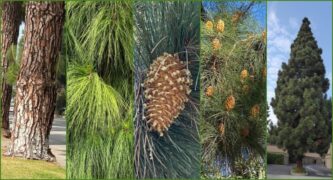
Pasadena-based consultant Psomas conducted a visual assessment of all 17 trees — 11 Canary Island Pines and six Red Gum Eucalyptus — located just north of the John K. Van de Kamp Bridge, according to a statement from the city’s Parks Director.
The owls were spotted in a smaller group of pines north of the trail fork. No nesting behavior was observed in the larger pine cluster or in the eucalyptus trees near the bridge, the statement said.
Required nesting buffer zones would make removals problematic during active nesting season, which runs through mid-August under California Department of Fish and Wildlife guidelines, according to the Parks Director.
The federal Migratory Bird Treaty Act prohibits disturbing nests containing birds or eggs, and California Fish and Game Code Section 3503.5 provides additional protections for raptors, including owls.
The trees had already been posted for removal before the owls were observed, and will need to be re-posted in August or September, according to the city. Both the Urban Forestry Advisory Committee and City Council had previously approved the removals, the Parks Director’s statement said.
The 17 trees are part of the Lower Arroyo Seco Habitat Restoration Project, a capital improvement effort aimed at replacing non-native species with indigenous plants. Both species possess allelopathic properties that inhibit the growth of nearby native plants.
Red Gum Eucalyptus sheds resinous bark and dry leaf litter that can increase fire risk, and Canary Island Pines produce slowly decomposing needle litter also prone to flammability, according to city documents.
Following the Eaton Fire, residents adjacent to the Arroyo renewed concerns about the trees’ flammability and asked staff to revisit removal, city documents record. At a May 14, 2025, committee meeting, a majority of public comments supported removal, and the committee voted to back staff’s recommendation, according to city records. At the November 24, 2025, City Council meeting, several residents expressed concern about the proposed removal, city documents state.
The Arroyo Seco Foundation, a nonprofit that has long advocated for native habitat in the Lower Arroyo, supported full removal when the project was first proposed. “Those trees are not well-adapted to the local climate and have serious pest problems that can spread to native trees and plants,” Tim Brick, the foundation’s managing director, has said of the Canary Island Pines.
The city plans to replace the removed trees at a one-to-one ratio with 24-inch box native species, planted within the restoration area’s existing irrigation system, according to city documents.
Psomas will continue monitoring the owls’ behavior while maintaining the adjacent habitat restoration area, and the city plans a follow-up inspection at the end of nesting season with removals planned for early September, according to the Parks Director’s statement.
 Get our daily Pasadena newspaper in your email box. Free.
Get all the latest Pasadena news, more than 10 fresh stories daily, 7 days a week at 7 a.m.