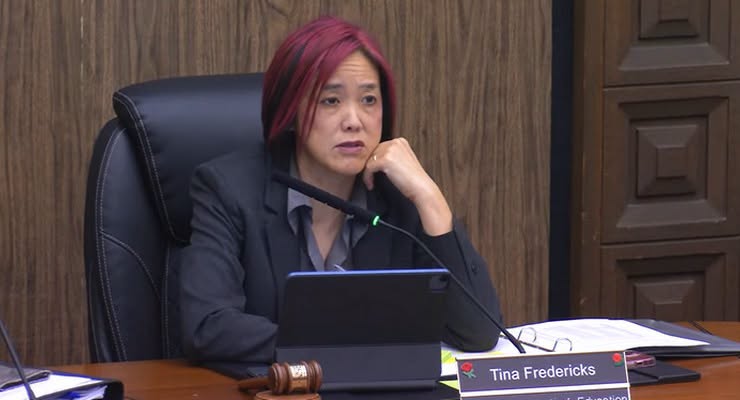










At a March 11 study session on the East Pasadena Specific Plan, concerns over parking spillover, traffic congestion and neighborhood safety emerged as one of the sharpest points of conflict, with residents warning that low-parking and no-parking apartment projects near Rosemead Boulevard and Colorado Boulevard are already straining nearby streets and could intensify those problems as more housing is proposed.
Several speakers told members of the Planning Commission that the debate over density in East Pasadena had become, for them, less an abstract zoning question than a day-to-day quality-of-life issue involving blocked streets, speeding cars, backed-up intersections and fears that nearby residential blocks will absorb the overflow from larger projects. Others urged the city not to lose sight of what some speakers described as a housing crisis and argued that more homes near transit remain necessary even if the parking issue is contentious.
Michelle Black, who said she lives in a 24-house neighborhood on Green Street near East Colorado and Rosemead, described an existing 100-unit apartment building that she said charges tenants $100 a month for parking, leading some residents to leave their cars on neighborhood streets instead. She said neighbors sometimes cannot park near their own homes and that traffic tied to the project has created safety concerns on the area’s small streets.
Black told commissioners that drivers were “going down our small streets, going fast and whipping into the apartment complex,” and said her son was almost hit the night before by a driver who was not careful in the neighborhood. She also said residents had to paint curbs red near fire hydrants because people were parking in front of them.
Black said those pressures could worsen with additional projects already in the pipeline. She pointed to a planned 87-unit complex at 50 South Rosemead with 17 parking spaces and another project she said would include 193 units across from the DMV, arguing that the cumulative impact would fall on Green and Mohawk streets and nearby residential blocks.
She also argued that the area is about 0.8 miles from the Metro station, not the half-mile many residents associate with transit-oriented development, and described the walk to the station as unpleasant and unsafe along a heavily trafficked corridor where cars back up through the Rosemead–Colorado intersection during evening rush hour. Black asked the city to conduct a traffic analysis of the area and invited commissioners to visit the neighborhood and see the conditions firsthand.
Other speakers echoed similar concerns about parking and congestion.
Scott Shimamoto said that in Southern California residents generally must have a car and argued that housing developments with little or no parking amount to “substandard housing.” He said the city should require developers to provide parking spaces as part of their projects.
Gary Kazarian pointed to another East Colorado project with 88 units and 20 parking spaces, saying nearby residential streets already become difficult to navigate, particularly on trash collection days when cars line the roadway.
Andreas Koese, who said he lives next to the proposed 600 North Rosemead project, warned that a development with 132 units and 55 parking spaces would push vehicles into surrounding neighborhoods and nearby shopping-center parking lots. He estimated that the project could house roughly 250 to 300 residents, far exceeding the available parking supply, and argued that many residents would still rely on cars.
Koese also said there were no elementary or middle schools within walking distance and that there was no school bus service in the area, meaning families would likely need to drive children to school.
The testimony came during an early study session on the city’s update to the East Pasadena Specific Plan, which planners said would unfold across multiple meetings. The area around the Sierra Madre Villa A Line station has long been envisioned for higher-density mixed-use development, but staff said recent state housing laws have limited the city’s ability to reduce residential capacity in some circumstances.
City staff told commissioners that under state law parking cannot be required for projects that are 100 percent affordable. Staff also said developments located within a half-mile of what state law defines as a major transit stop may qualify for additional height and density allowances, and in some cases may not be subject to a maximum residential density under state density-bonus provisions.
That explanation became especially relevant to discussion of the proposed 600 North Rosemead project. Staff said that although the site is not within a half-mile of the rail station itself, it is within a half-mile of what state law considers a major transit stop because of bus service near Foothill Boulevard and Halstead Street.
Staff said that classification would allow the project, as a 100 percent affordable development, to add three additional floors and eliminate parking requirements.
Supporters of additional housing told the commission that the city should not let neighborhood concerns overshadow broader housing needs.
Michael Canavan said Pasadena faces a housing crisis reflected in rising rents, high home prices and homelessness. While acknowledging residents’ concerns as understandable, he said parking waivers for affordable housing exist because parking structures are expensive and can reduce the number of units that can be built.
Another speaker, Sam Alcorn, said he had walked to the meeting and taken the train to work that day, arguing that not every resident relies on a car for every trip and that more housing near transit can help address Pasadena’s housing challenges.
Planning commissioners indicated that the March 11 discussion was only an initial step in reviewing the East Pasadena Specific Plan. City staff said future study sessions will address additional topics including building heights, setbacks and stepbacks, as well as elements of the district’s public realm as the planning process continues.
 Get our daily Pasadena newspaper in your email box. Free.
Get all the latest Pasadena news, more than 10 fresh stories daily, 7 days a week at 7 a.m.