









Miguel Márquez presented his final annual report as Pasadena’s city manager on Thursday.
“Pasadena is remarkable—not because it is free from challenges, but because of the way we face them together: with courage, generosity, and hope,” Márquez wrote in his opening letter, reiterating his earlier retirement announcement after guiding the city through what he called “one of the most challenging years in recent memory.”
The Eaton Fire dominates the 25-page report with a thoroughness that reveals an organization still processing collective trauma.
Every city department is reported —from libraries to parking enforcement—and includes a section detailing its emergency response. The implicit message is unmistakable: the institutions held when it mattered most.
Beneath the positive narrative lie fiscal warnings and unanswered questions that Márquez’s successor will inherit along with the recovery effort’s unfinished work.
The numbers suggest just how close to the edge the crisis pushed many city operations. The City Service Center, Pasadena’s primary point of contact for residents, experienced a 125 percent surge in call volume during the fire, with staff working extended emergency hours for seven consecutive days.
Sixty-nine city employees lost their homes, yet the report notes that departments continued functioning—a testament to institutional resilience that also hints at the personal toll extracted from the workforce.
Pasadena’s fire personnel were first to arrive at the Eaton Fire, the report notes, and “worked tirelessly for weeks to save lives, property, and combat one of the most devastating urban conflagrations in California’s history.”
Parks department crews removed and reinstalled 150 tons of sand from playgrounds. The public health department coordinated care for over 1,100 evacuation shelter residents, including 400 from long-term care facilities requiring high-acuity medical attention.
It is, by any measure, an extraordinary story of emergency response.
Yet the report’s finance section strikes a notably different tone from the upbeat tone elsewhere—one that suggests some difficult tests may lie ahead.
Property tax revenue growth has declined for the third consecutive year, according to the report. Sales tax revenue “remained flat due to overall economic conditions.” And federal grant funding, a traditional supplement for community services and infrastructure, faces what the report calls “continued decline.”
The document prominently displays a breakdown showing that Pasadena receives only 21.1 cents of every property tax dollar paid by residents, with schools and Los Angeles County claiming the larger shares. The inclusion portends budget constraints yet to come.
The city’s adopted budget for fiscal year 2026 totals $1.51 billion, with a general fund of $337.4 million covering core services including police, fire, and parks. The report does not project how fire-related expenses and potential revenue disruptions might affect future budgets, though it notes that the Finance Department’s emergency operations team is coordinating with FEMA on cost recovery.
What the report does not address may prove as significant as what it celebrates.
There is no discussion of the fire’s cause or questions of responsibility. The Prevention Bureau’s pre-fire inspections of 4,000 residential properties in the Very High Fire Hazard Severity Zone are mentioned as an accomplishment, but no assessment appears of whether those inspections translated into actual protection. Total fire losses within city limits go unquantified.
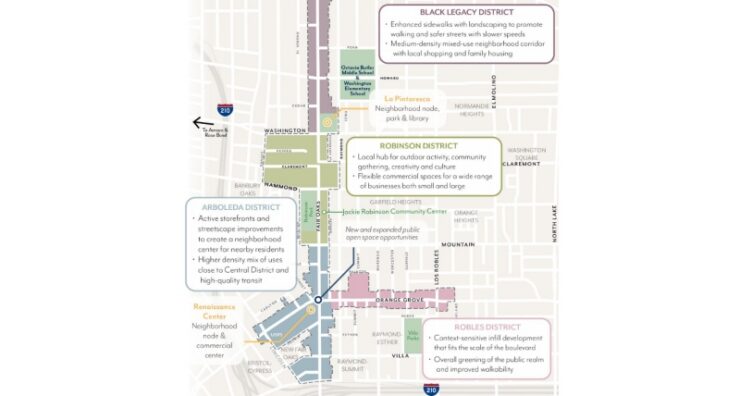
The report also provides an update on the 710 freeway stub, a prime piece of real estate that California relinquished to Pasadena in August 2022. The city’s two-year vision plan to recommend uses and development strategies for the property is nearing its conclusion, though specific recommendations are not detailed in the report.
Meanwhile, the city’s newest department offers an unexpected coda. Rent Stabilization, created in December 2023 to regulate landlords under a voter-approved charter amendment, found itself thrust into disaster response. Staff worked 12-hour shifts in the emergency operations center and helped open an emergency purchase order to bring in a relocation agency specializing in assisting displaced city employees with temporary housing. A department born of housing policy debates became, briefly, a housing crisis responder.
The report is available online by clicking here.
 Get our daily Pasadena newspaper in your email box. Free.
Get all the latest Pasadena news, more than 10 fresh stories daily, 7 days a week at 7 a.m.