



The Pasadena City Council on Tuesday approved a new police drone policy 7-1 but limited its operational use to the department’s SWAT team for now and required any vendor testing to take place outside the city. The change came after councilmembers learned during debate that officers planned to try vendors’ drones on calls for service.
Vice Mayor Jess Rivas, who chairs the council’s Public Safety Committee, cast the lone dissenting vote. Councilmember Jason Lyon made the motion, and Councilmember Tyron Hampton seconded it.
The policy the council approved, Police Department Policy 622, sets the framework for how officers may use drones. It was one of six recommendations tied to the department’s state-mandated annual military equipment report. The agenda asked the council to authorize updated drone use for public safety operations under that policy.
Lt. Anthony Russo said Policy 622 is new. He said drone use had previously been covered by one paragraph of the SWAT policy that allowed only indoor flights. He said the new policy is meant to put guardrails in place before any broader aerial response program is launched. A separate recommendation approved the same night confirms that buying drones beyond scheduled replacements requires council approval.
The trial plan came up when Hampton asked that the motion include a pilot and said the staff report he was reading did not mention one.
“No, it doesn’t specifically address the pilot program,” Russo said.
He added that the policy would guide a pilot and that the department would still have to come back to the council before buying anything.
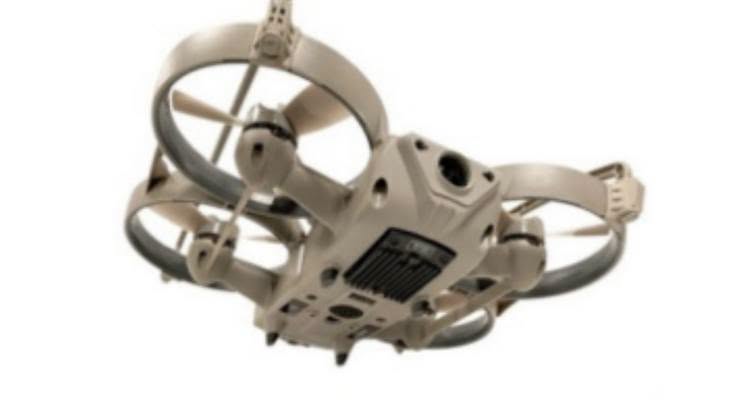
Lyon asked what would happen after approval. Russo said the department has received a Federal Aviation Administration waiver to operate drones in the city. He said three vendors, Flock, Brink and Skydio, would each bring a system for a day and let the department’s trained pilots fly it. He said police would also visit agencies that use the vendors.
“So how is all of that different from a trial period that we’re not authorizing tonight?” Lyon asked.
He said what Russo described sounded like a trial and was what would come next. Lyon later asked whether the tests would use real-time or mock scenarios. Russo said Flock and Brink offer one-day evaluations in which drones would likely launch from the Police Department and respond to calls for service in “real world scenarios.”
He said Glendale, one city police would visit, recently chose Skydio.
Earlier, Lyon said he had struggled to figure out what the policy changed. He said he found a markup he thought showed what changed only “way back in the report behind someone else’s email.”
Councilmember Steve Madison, who had moved to approve the recommendation, said the plan was not what he understood at the Public Safety Committee.
“What I’m hearing now is we’re actually going to borrow some and use them on our community, and I think that puts the cart before the horse,” Madison said. He said he did not think the committee had been told drones would be used on residents.
He also said he suspected he would still be supportive, citing what he has seen drones do in recovering stolen cars, preventing crime, apprehending suspects and protecting officers. His proposal to allow research but no use on residents until the council approved it drew no second.
Russo then offered a narrower path.
“If the big concern is the testing, we don’t have to do the testing right now,” he said, adding that the department could review the technology offsite.
He said the policy was still needed for SWAT and recalled a situation “where we didn’t have a drone available to get eyes in a building and a man almost lost his life.” He said the incident put the team in danger but gave no date or other details.
Lyon moved that approach. His motion allows operational use for SWAT only and requires any testing to take place offsite and outside the city. It calls for more data from other cities and a return to the council, and it continues discussion with the Community Police Oversight Commission, known as CPOC.
Rivas said she supports drones on SWAT calls but knows of no data or peer-reviewed studies showing that expanded drone use improves outcomes. Citing privacy concerns and costs identified by the department, she said, “I believe the bracket was 200,000 to 400,000 for this expanded drone program.”
Russo also cited an August 2026 peer-reviewed study in which drones reached 73 percent of 650 calls before an officer did. [Simpson, Rylan. “Drone as First Responder (DFR): A Short Report on a DFR Program in an American Police Agency.” American Journal of Criminal Justice, published August 22, 2026. https://doi.org/10.1007/s12103-026-09944-w ]
Councilmember Rick Cole said his larger concern was the vendors, particularly Flock. He described Flock as an $8 billion company backed by venture capital funds whose leaders, he said, have articulated disturbing goals for technology. He said the company is controlled by people who have spoken about moving past democracy. Citing information he said he found using AI on his phone, Cole said all three companies are privately held. He asked for another stage of review before drones are tested in the community.
Lyon asked whether vendors would have access to the data their drones collect. Russo said the department could not save or store information during a limited trial. He said vendor access to evidence from a crime in progress would have to be discussed with each company. He also said the department has not had robust policies for drone data and that Policy 622 sets out retention rules.
The council did not settle the extent of the oversight commission’s role. Rivas said her understanding is that the city’s Community Police Commission can comment only on policy, not on whether the city should acquire a technology. She said she wants its view on whether drones are worth the investment. The city attorney said the commission can give recommendations. Madison said CPOC had agreed to the current process and cautioned against pushing it further. Rivas said a commission representative told her it had not considered whether it supports the technology.
Mayor Victor Gordo said the question would go to the Public Safety Committee.
The council approved the other five recommendations without objection, including SWAT use of energy-assisted breaching.
It also asked police to report back to CPOC and the Public Safety Committee on operational training.
City Clerk Mark Jomsky’s office reported receiving four letters opposing or raising concerns about the drone and breaching recommendations. Another 18 letters distributed at the Public Safety Committee meeting are also part of the record. Under a separate agenda item, the Fair Oaks Orange Grove Specific Plan, the clerk reported 16 letters raising concerns about Flock cameras in that corridor.
Before the change, Russo said the goal was to return to the council in January with test results and costs. In offering the narrower approach, he gave no new timeline, saying he would come back with more information. He had said the process would include a community meeting at Washington Park. No date was announced.
 Get our daily Pasadena newspaper in your email box. Free.
Get all the latest Pasadena news, more than 10 fresh stories daily, 7 days a week at 7 a.m.