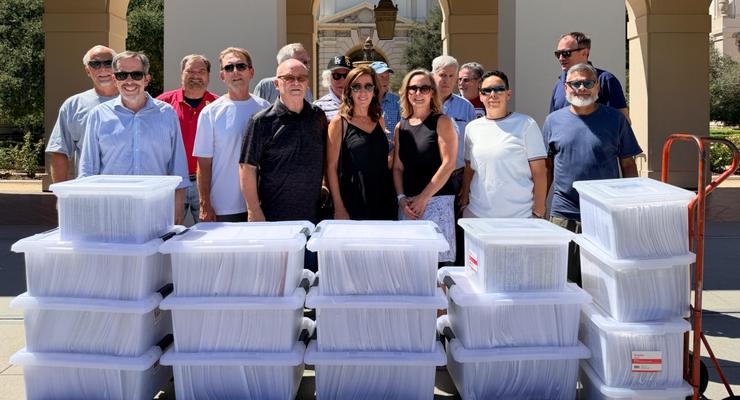







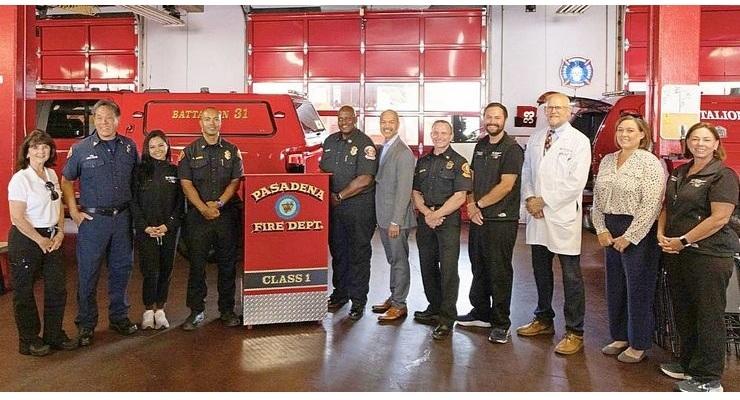
The department is joining LA-DROP, a prehospital blood transfusion program that the Los Angeles County Fire Department launched April 1, 2025, through a partnership with Huntington Health and Houchin Community Blood Bank, the program’s regional blood provider.
The Pasadena City Council authorized the blood supply contract last Monday. The county Fire Department says the program reduces the time to treatment for severe hemorrhage by approximately 20 to 25 minutes — which carries huge lifesaving implications.
Under the program, the Pasadena Fire Department Battalion Chief vehicles will carry low-titer O-positive whole blood in specialized temperature-monitored coolers, which would be administered to patients using a rapid infusion system, according to Huntington Health.
In addition to trauma patients, the initiative will support patients experiencing severe hemorrhage, including women suffering from postpartum hemorrhage.
Huntington Health President and Chief Clinical Officer Dr, John M. Corman said that “when every minute counts, early blood transfusion can be lifesaving for patients experiencing profound blood loss. Expanding this capability into Pasadena extends our regional ability to deliver the right treatment at the right time, before patients even reach the emergency department.”
Pasadena Fire Chief Chad Augustin told the City Council on Aug. 17 that the program would compress the interval between injury and transfusion.
“On average, it’s about 35 minutes from time of injury until arrival to hospital and blood administration,” he said. “We’re going to cut that down to about 16 minutes. So if you increase that chance of survival 2% for every minute, you’re talking about significant outcomes and improvement that really will impact lives.”
The Fire Department staff report said a hospital partner is required because of regulations governing blood products and the need to manage unused units, and that Huntington must hold its own contract with the supplier for the department to participate.
A Huntington Health statement reported the hospital already maintains a blood supply agreement with Houchin.
Blood that Pasadena crews do not use within a specified time period will be transferred to Huntington Health, where, tge hospital said, the blood can immediately support critically ill patients.
The city staff report describes Houchin as a California nonprofit public benefit corporation that has supplied blood and blood components to hospitals and trauma centers in Kern County since 1951 and provides low-titer O whole blood to Kern Medical, that region’s designated trauma center.
The county Fire Department renders LA-DROP as the Los Angeles Development and Rapid Operationalization of Prehospital Blood program; the Huntington Health release renders it as the Los Angeles Prehospital Blood Transfusion Program. The county Fire Department launched the program in Gardena, Hawthorne and Lawndale and the unincorporated communities of Del Aire and El Camino Village, funded in part by a $380,000 Productivity Investment Fund grant awarded in December 2024 by the county Quality and Productivity Commission.
The Huntington Health release, which described LA-DROP as having launched in 2025 as California’s first coordinated prehospital blood transfusion program, said participating agencies have administered more than 70 prehospital blood transfusions and safely managed more than 350 units of blood.
Patients retain the right to decline blood products consistent with their personal, religious or medical preferences, according to a Huntington Health statement, which said the Fire Department and its health care partners follow established consent and emergency care protocols, including recognition of advanced directives and documented patient wishes.
Under the contract the City Council authorized Monday, the city will pay $675 per unit of whole blood, compared with Houchin’s non-contract price of $820 per unit, plus a $65 handling charge per order, according to the Fire Department staff report presented to the council. The staff report puts the term at 12 months with options to extend up to 36 months and a not-to-exceed amount of $300,000, and estimates the overall program will cost about $100,000 a year, with the blood supply portion at about $50,000, funded through the department’s Emergency Medical Services operating budgets.
“By bringing blood directly to patients in the field, our firefighter paramedics can begin critical treatment sooner and improve outcomes for people experiencing life-threatening emergencies,” Augustin said.
 Get our daily Pasadena newspaper in your email box. Free.
Get all the latest Pasadena news, more than 10 fresh stories daily, 7 days a week at 7 a.m.