



The lawyers who have been fighting in federal court to protect the legal status of hundreds of thousands of immigrants work out of an office on South Arroyo Parkway. The courthouse where much of that fight has played out is on South Grand Avenue. And for the second consecutive week, the people those lawyers represent have gathered on its steps.
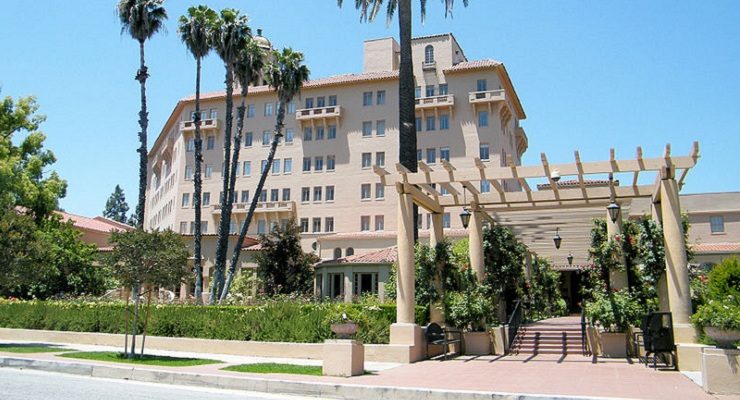
Six days before the U.S. Supreme Court hears arguments that could determine whether the federal government can strip legal status from approximately 1.3 million immigrants, TPS holders and advocates staged a second week of demonstrations Wednesday at the Richard H. Chambers U.S. Court of Appeals for the Ninth Circuit at 125 S. Grand Ave. in Pasadena.
The rallies are organized by a coalition that includes the National Day Laborer Organizing Network — headquartered at 1030 S. Arroyo Pkwy. in Pasadena — whose attorneys are counsel of record in the very litigation now heading to the nation’s highest court.
The two consolidated Supreme Court cases, Trump v. Miot and Mullin v. Doe, directly concern the Trump administration’s termination of Temporary Protected Status for approximately 350,000 Haitian nationals and approximately 7,000 Syrian nationals. But the National TPS Alliance, a co-organizer of the Pasadena rallies, says the Court’s ruling on the administration’s core legal theory — which seeks to make TPS terminations unreviewable by federal courts — could reach all 1.3 million TPS holders from 17 countries. Oral arguments are scheduled for April 29, the final day of the Court’s current argument session.
“If the Administration wins, nothing would stop it from going all the way,” José Palma, coordinator of the National TPS Alliance, said in a statement issued ahead of the rallies. “Every TPS holder could suddenly and permanently lose legal status — including many who have built lives here over years or even decades. It would amount to the largest ‘de-documentation’ of lawful immigrants in U.S. history.”
TPS — Temporary Protected Status — is a humanitarian immigration designation created by Congress in 1990. It allows nationals from countries experiencing armed conflict, natural disasters, or other extraordinary conditions to live and work lawfully in the United States. It does not provide a path to permanent residence or citizenship.
NDLON attorney Jessica Bansal is counsel of record for TPS plaintiffs in National TPS Alliance v. Noem, which was litigated through the Pasadena courthouse where demonstrators gathered Wednesday. The Ninth Circuit affirmed the district court’s ruling against the TPS terminations in a 48-page decision in January 2026 and denied rehearing en banc in March 2026.
“Despite the Ninth Circuit affirming — again — that Secretary Noem violated the law when she revoked TPS for 600,000 Venezuelans, TPS holders still face detention and deportation because a Supreme Court shadow docket order lets the revocation take effect anyway,” Bansal said following the January ruling. “The extent of lawlessness in our immigration system right now is truly difficult to comprehend.”
The Trump administration has pressed a different case. In a March 11, 2026 application to the Supreme Court, Solicitor General D. John Sauer argued that “lower courts are again attempting to block major executive-branch policy initiatives in ways that inflict specific harms to the national interest and foreign relations.” The administration argues TPS decisions fall within executive authority.
The Pasadena demonstrations are part of a national mobilization organized by the National TPS Alliance, CARECEN-LA, and NDLON ahead of the April 29 hearing. Events are taking place in cities across the country, with a major gathering planned in Washington, D.C. on the day of the argument. A Facebook livestream of the Pasadena rally is available at facebook.com/TPSAlliance.
NDLON, at (626) 799-3566, and CARECEN-LA, at (213) 385-7800, are available for further information.
The Pasadena courthouse on South Grand Avenue has hosted TPS arguments before. Eight years ago, advocates marched from All Saints Church in Pasadena to the same building for a Ninth Circuit hearing in an earlier TPS challenge during Trump’s first term. That challenge ultimately ended not through a Supreme Court ruling but with a Biden administration restoration of TPS protections — the central legal questions left unanswered.
This time, the Court has agreed to answer them.
 Get our daily Pasadena newspaper in your email box. Free.
Get all the latest Pasadena news, more than 10 fresh stories daily, 7 days a week at 7 a.m.