









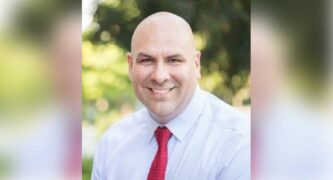

Carmona told the committee the department expects a 13.8% drop in revenue in Fiscal Year 2027, to about $15.7 million, while appropriations are expected to fall 14.3%, to about $17.7 million. Personnel costs are projected to drop nearly 16%, and services and supplies by 19.5%, even as internal service charges rise 4.6%, Carmona said.
“Health and safety programs are really under threat,” Carmona said, adding that the city needs a long-term plan to maintain core public health services as costs rise and revenues stagnate or decline.
The department plans to reduce its workforce by 21.54 full time employees positions, including the elimination of 18 filled positions. Carmona said 15 of those positions are term-limited and three are regular positions. The reduction also includes what Carmona described as five field positions totaling 0.64 full time employees, elimination or reduction of five vacant positions totaling 4.25 full time employees, and a 0.25 full time employees increase to one vacant position. Ten of the 18 affected employees are expected to remain with the city after being offered opportunities for reassignment, voluntary demotion or transfer.
The reductions come as the department faces the expiration of grants supporting homeless outreach, including encampment resolution work; justice-involved homelessness outreach through a Proposition 47 grant; mental health promotion work; nutrition education; epidemiology and lab capacity; H5N1 surveillance and response; promotoras and community health workers; and sexually transmitted disease intervention.
Asked whether the grant losses were primarily federal or also state-related, Carmona said the reductions were “a combination, but the bulk of it this year is federal.”
Carmona said the department is refocusing its Fiscal Year 2027 priorities on public health emergency preparedness, infectious disease prevention and control, food safety inspections, and maternal, child and adolescent health. He said Pasadena recently dealt with pertussis outbreaks at two schools, underscoring the need to maintain disease-response capacity.
The department also is relying heavily on grants to sustain its work. Carmona said about 46% of the health fund’s revenue comes from grants, while 19% comes from health realignment, 19% from charges for services, about 8% from the general fund, 6% from miscellaneous funding and just under 2% from property rental income. Because the health fund is a special revenue fund, he said, the money is restricted and can only be used for specified purposes.
Carmona said grant funding limits department activities to those required by the grants’ scopes of work. He said health realignment funding is restricted to core public health services, including vital records, immunization services and communicable disease prevention.
“The grant opportunities are very slim,” Carmona said, adding that the department must be aggressive in pursuing grants that align with Pasadena’s public health priorities.
The department also is consolidating its organizational structure. Carmona said the department eliminated its community health services division in Fiscal Year 2026 and, going into Fiscal Year 2027, plans to reduce its total divisions from five to four by consolidating the social and mental health services division into the epidemiology and disease control division.
Carmona said the Public Health Department reached a peak of 144.7 full time employees in Fiscal Year 2024 but has since experienced a 43% workforce reduction. He said local health jurisdictions often go through periods of strong investment followed by reductions in funding.
The reductions also leave a funding gap for the Pasadena Outreach Response Team, or PORT, which responds to homelessness-related calls and connects unhoused residents to services. Carmona said the program’s two teams historically had two firefighters, but Fiscal Year 2027 firefighter costs are projected at about $552,000 and only $237,000 is funded in the recommended budget, leaving about $315,000 unfunded.
Carmona said the department has been discussing possible funding with the Housing Department, but public health grants cannot currently be used to cover the cost, and no other grant funding is available within the Health Department.
The issue drew concern from Councilmember Justin Jones, who questioned earlier in the meeting why PORT remains dependent on volatile grant funding. Jones said the team is “a very important team in our city” and helps unhoused residents, and he asked whether the city could prepare options for more stable funding.
Finance Director Karen Schneider said the city will continue pursuing grants first, but said the City Council can decide whether to use general fund money. Schneider said sworn or badged portions of such programs are increasingly not being funded by grants, while non-sworn personnel continue to be more successful in receiving grant support.
The department is proposing to generate some new revenue by offering Public Health Department community engagement services to other city departments, including Pasadena Water and Power, rent stabilization and transportation. Carmona said the proposal is not currently reflected in the recommended budget but would extend the department’s promotora team to support community engagement work and would support 3.5 full time employees positions with about $560,000 from public benefits, rent stabilization and transportation funds.
The recommended budget also includes a funded $350,000 enhancement request for internal service costs that are ineligible for grant reimbursement. Carmona said that amount would build on $750,000 in general fund commitments expected to be sustained in Fiscal Year 2027, with total recommended general fund support in the budget of $2.5 million.
Carmona also identified unfunded staffing needs, including increasing the city health officer from a 0.75 position to a full-time position and maintaining a community service representative position focused on long-term care facilities. He said the health officer exercises state-delegated public health authority, serves as medical director for department clinical programs and acts as the city’s tuberculosis controller.
The department is proposing to eliminate its director of nursing position and assign those duties to the health officer, Carmona said, making the increase “absolutely critical” if the city proceeds with that cost-saving move. The long-term care position, which would cost about $101,000, supports infection-control guidance, patient advocacy and coordination with agencies including state licensing, Pasadena Fire and the long-term care ombudsman.
Carmona said the department expects to begin Fiscal Year 2027 with an approximately $6 million negative fund balance. He said much of that is tied to the city’s COVID-19 response, which cost $4.15 million, while the city and department collected only $644,000 through the federal reimbursement process.
The department also plans to introduce two new performance measures in Fiscal Year 2027: having at least 85% of participants indicate they are satisfied with services and responding to at least 90% of state-mandated reportable disease cases within 24 hours of notification by a health care provider. Carmona said the goal is to reduce the spread of infectious diseases through timely investigation and control measures.
Councilmember Tyron Hampton said the city should find a way to fund the unfunded public health positions, including PORT, the health officer and the long-term care position.
“Our community’s health is number one,” Hampton said. “We are not a community if we don’t have people, and if our people aren’t healthy, then it’s really hard to have a community.”
Jones also said he would support finding a way to fund the positions, “especially the PORT position,” while Councilmember Steve Madison said he was proud Pasadena has its own health department and said he believes the council is committed to keeping it.
Madison asked whether the department’s recommended budget assumes revenue from Measure ER. Carmona said it does not. He said the measure language would provide that the Long Beach Health Department and Pasadena Public Health Department split $10 million based on expenditures for core public health services, and estimated Pasadena could potentially receive between $1 million and $2 million if the measure passed, though he said the estimate was difficult because the city did not have Long Beach’s data.
The department also is recommending an end to cross-connection fees for single-family residential properties. Carmona said a recent review found those properties pose a low risk and require minimal staff time. The fee is $97 annually and applies to about 500 properties, meaning the department would lose about $50,000 in revenue.
 Get our daily Pasadena newspaper in your email box. Free.
Get all the latest Pasadena news, more than 10 fresh stories daily, 7 days a week at 7 a.m.