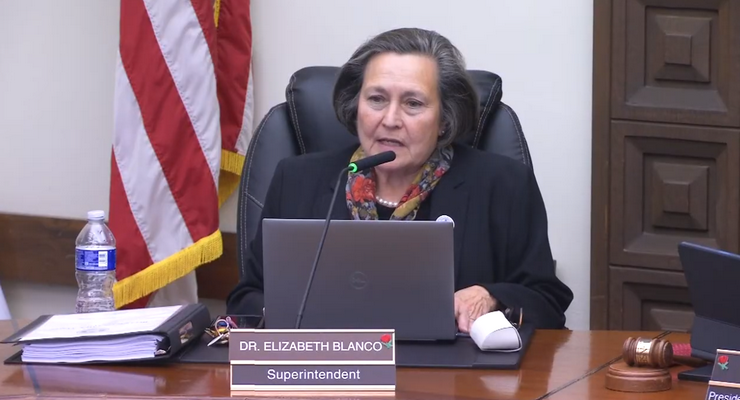







The Pasadena Unified School District Board of Education voted 7-0 Thursday to approve a resolution endorsing Proposition 3, the Nov. 3 statewide measure that would make higher state income tax rates on high-income earners permanent, after the District’s business chief put its current share of that money at about $34.5 million.
Chief Business Officer Arik Avanesyans said the District’s share of the Education Protection Account, the state account created under Proposition 30 to receive revenue from the higher rates, is $34,451,000 this year, based on the District’s state funding formula calculator. He said the amount fluctuates each year, mainly with state capital gains tax collections. For most districts, that money offsets other state aid under the funding formula, according to the California Department of Education.
“For us it would be devastating,” Avanesyans said of losing the money, adding, “that’s unrestricted money.”
He was answering Trustee Kimberly Kenne, who said she did not think the proposition defined its impact on Pasadena Unified and noted United Teachers of Pasadena had cited $27 million. Earlier, a union representative told the Board the District could lose as much as $27 million a year if the rates expire without Proposition 3.
The rates apply to income above about $371,000 for single filers and $742,000 for joint filers at 2025 levels, according to the attorney general’s ballot summary. The analyst’s office estimates the measure would maintain $5 billion to $15 billion a year in state income tax revenue, with roughly 40 percent going to schools and community colleges and the rest to other state programs.
McKenzie, who made the motion, said, “These would not be new tax dollars. These are dollars that are already being paid.” Trustee Scott Harden seconded. No public comment was offered on the item.
Opponents argue in the state voter guide that Proposition 3 turns income taxes voters were told would be temporary into permanent ones. The argument against it is signed by leaders of the California Taxpayers Association, the Family Business Association of California and the California Hispanic Chambers of Commerce.
They argue that California has a spending problem rather than a revenue problem and that higher income taxes add to the state’s cost of living. A rebuttal signed by Howard Jarvis Taxpayers Association President Jon Coupal and two others says the measure would cost taxpayers up to $15 billion a year.
Voting on Proposition 3 ends Nov. 3.
 Get our daily Pasadena newspaper in your email box. Free.
Get all the latest Pasadena news, more than 10 fresh stories daily, 7 days a week at 7 a.m.