








For more than four decades, UCLA football Saturdays have helped define the Rose Bowl not only as a stadium, but as one of Pasadena’s civic institutions — a place where sports, city finances, local pride and public memory have long converged.
Now, a Los Angeles County Superior Court judge has allowed the heart of Pasadena’s legal fight over that relationship to continue.
In a ruling filed June 4, Judge Joseph Lipner denied UCLA’s request for leave to file a late anti-SLAPP motion, finding it untimely and unsupported by sufficient cause, and allowed nearly all of the claims brought by the City of Pasadena and the Rose Bowl Operating Company to proceed.
The ruling does not decide whether UCLA breached its agreement with the Rose Bowl, nor does it decide whether the university may ultimately move its home football games elsewhere.
But it keeps alive Pasadena’s core allegations that UCLA’s alleged effort to leave the Rose Bowl violated a long-term agreement and that the stadium-related defendants interfered with that contractual relationship.
The decision marked a significant procedural victory for Pasadena and the Rose Bowl Operating Company at an early but important stage of the case.
“SLAPP” stands for Strategic Lawsuit Against Public Participation — a lawsuit filed primarily to intimidate, silence, or financially burden someone for exercising their free speech or petition rights, rather than because it has genuine legal merit.
UCLA and the stadium defendants had asked the court to narrow or dismiss major portions of the lawsuit before the case moved deeper into litigation.
The judge declined to do so on all but one claim.
Lipner denied UCLA’s request for leave to file an anti-SLAPP motion, finding that the request was “untimely and unsupported by sufficient cause to permit late filing.” The court said it was making no ruling on the merits of UCLA’s anti-SLAPP arguments themselves.
The court also sustained UCLA’s demurrer to one claim, promissory estoppel, without leave to amend. In practical terms, that claim is out of the case at the trial court level.
But the court overruled UCLA’s and the stadium defendants’ demurrers to every other cause of action.
That means Pasadena and the Rose Bowl Operating Company may continue to pursue claims for breach of contract, anticipatory repudiation, declaratory relief, breach of the implied covenant of good faith and fair dealing, and tortious interference with contractual relations.
In plain English, the court did not say Pasadena has won. It said Pasadena has alleged enough to keep fighting.
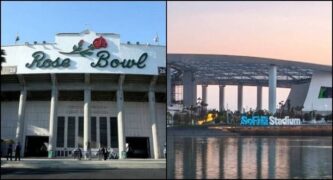
The dispute centers on the Restated Rose Bowl Agreement, which Pasadena and the Rose Bowl Operating Company say requires UCLA to play its home football games at the Rose Bowl through 2044. Pasadena and the operating company contend that UCLA’s alleged move toward playing at SoFi Stadium in Inglewood violated that agreement and created uncertainty affecting the Rose Bowl’s finances, operations, vendor relationships and long-term planning.
UCLA has disputed the claims.
The university has argued, among other things, that Pasadena’s lawsuit improperly relies on privileged settlement communications and that the claims are not legally sufficient. The stadium defendants, Kroenke Sports & Entertainment LLC and Stadco LA LLC, also sought dismissal of the tortious interference claim against them.
The June 4 order followed a May 19 hearing at Stanley Mosk Courthouse, where the court heard the demurrers and the anti-SLAPP matter before later denying UCLA leave to file the motion late, without reaching the merits. The court took the matters under submission that day, meaning Lipner would issue a ruling later rather than decide the matter from the bench.
The court also continued the case management conference to July 21.
The anti-SLAPP portion of the ruling was especially important because such motions can offer defendants a powerful early route to dismissal when claims are based on protected speech or petitioning activity. UCLA sought to invoke that procedure, but the judge concluded the university had not shown enough justification for filing it late.
Because the court denied leave to file the motion, it did not reach the deeper question of whether UCLA’s anti-SLAPP theory was right or wrong.
On the demurrers, the judge’s ruling was more direct. A demurrer tests whether the claims, as pleaded, are legally sufficient. It does not resolve disputed facts or determine which side’s evidence is stronger.
By overruling most of the demurrers, the court allowed Pasadena and the Rose Bowl Operating Company to continue trying to prove their central theories. That keeps the case moving toward discovery and further factual development.
The survival of the tortious interference claim also keeps the SoFi-related defendants in the case. Pasadena and the Rose Bowl Operating Company allege that those defendants interfered with the Rose Bowl agreement by participating in efforts to move UCLA home football games. The court’s ruling means that claim was sufficiently pleaded to continue.
The order narrows the lawsuit only by eliminating the promissory estoppel claim. That claim generally applies when one party argues it reasonably relied on another party’s promise, even outside the strict terms of a contract. Lipner concluded that claim could not proceed, and did not allow Pasadena and the operating company to amend it.
Still, the central contract dispute remains intact.
That distinction matters. Pasadena’s lawsuit is not merely about a football schedule. The city and the Rose Bowl Operating Company have framed the case as a fight over public investment, stadium debt, long-term planning and the civic value of a partnership that has tied UCLA football to Pasadena since the early 1980s.
The Rose Bowl, owned by the city, has long occupied an unusual place in Southern California sports. It is at once a national landmark, a major entertainment venue, a college football symbol and a public asset intertwined with Pasadena’s finances and identity.
The lawsuit places that institution in the path of the modern economics of college sports, where media contracts, conference realignment, stadium amenities and revenue pressures increasingly shape decisions that once seemed rooted in tradition.
For Pasadena, the court’s June 4 ruling preserves the chance to test its claims in court. For UCLA, it means the university must continue defending against most of the lawsuit. For the stadium defendants, it means they remain exposed to a claim that they interfered with the Rose Bowl relationship.
The next scheduled court marker is July 21, when the case management conference is set to resume. By then, the parties may be moving closer to the next phase of litigation: the exchange of evidence, the testing of allegations and the fuller airing of what UCLA and the stadium defendants did or did not do.
For now, the legal question that matters most to Pasadena remains unresolved. But after the June 4 ruling, it remains alive.
 Get our daily Pasadena newspaper in your email box. Free.
Get all the latest Pasadena news, more than 10 fresh stories daily, 7 days a week at 7 a.m.