







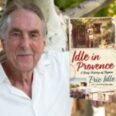


Most people think of Southern California as beaches, podcaster and new Sierra Madre neighbor Phil Hendrie said, but it is the mountains that actually frame the place, the ridge above every valley town doing more to define the landscape than any stretch of coastline ever has. He came to that conclusion on a wrong turn, driving back into Los Angeles for a role earlier this year, his GPS routed off the freeways and through canyon roads he had never taken, coming out onto New York Drive past the Altadena burn scars with the San Gabriels standing over the whole scene. He said it again sitting on Baldwin Avenue, pointing up at the same range from a sidewalk table.
He ordered a bowl of albondigas, with corn tortillas on the side. I had the chicken quesadilla. It was, by his estimate, the cheapest lunch he’s bought in years, as we sat a few miles from Arcadia, where he grew up.
Hendrie is 73, back in the San Gabriel Valley after a stretch in Florida that he never quite settled into. He moved out for a relationship, and by his own account never made peace with the state itself. He put it plainly: Florida is not California, and that dislike may have been the one thing the arrangement could not survive. He is careful not to lay the ending at anyone’s feet, and mostly declines to elaborate beyond that, but the discomfort with the place itself was not something he hid.
His audience noticed the move before he ever explained it. Listeners who follow the show daily had questions about the relocation, he said, though most were careful not to pry too far into it.
The pull back to California came through work as much as anything, alongside a piece of news he still seems slightly stunned by. Last year, Hendrie was inducted into the Radio Hall of Fame, an honor he said caught him as off guard as anyone. He talks about it with a kind of amused disbelief, as though the industry had been quietly keeping score on him the whole time without his noticing.
Two years ago also saw the release of a documentary, “Hendrie,” which also raised his profile significantly.
The acting work followed a similar pattern. Two episodes of a new pilot came in, with a co-star he studied closely from across the set, someone whose technique, he said, never looked like acting so much as an automatic click into whatever the scene required. A Grey’s Anatomy episode came in. Then a Rick and Morty booking, and a role opposite Kevin Hart, kept drawing him west until the back-and-forth no longer made sense. He trained formally over the years with Darryl Hickman and Robert D’Avanzo, both of whom taught him the same lesson in different ways: stay authentic, know the character, then just play the scene honestly.
That instinct for authenticity runs straight through to Chris Norton, one of his oldest recurring characters, a hyper-sexed porn actor, producer, and director who, longtime fans know, is cursed, in his own words, with a “very high sess drive,” his mispronunciation intentional and permanent.
At a recent comedy benefit with James Adomian in Hollywood, in a room full of stand-up comics, Hendrie begged off doing jokes. He did Chris Norton instead: a rambling pitch for financing on an animated feature called “Daffy Dick,” about a wandering, independent-minded body part and the exasperated man forced to follow it around. There was no punchline built into it, no setup and release, just the free-associating logic of the character running loose in front of a crowd that did not usually see that kind of material. It worked anyway, better than jokes might have, because the room responded to the improvisation and the storytelling rather than waiting on a laugh line.
He settled this spring in a canyon just below the San Gabriel Mountains, a short drive from where he grew up, and is thrilled to be back. He marvels most at Sierra Madre’s two main streets, which have blossomed considerably since he last lived in the area decades ago, filling in with restaurants and nightlife that were never there before, while somehow keeping the small-town character intact.
The Big Five on the corner of Rosemead and Colorado is still there. So is the Jack in the Box down the block. Taylor’s Market, the small grocery he remembers as rustic and unglamorous, is still standing, though it prices itself now like a boutique. Happy’s Liquor kept its name through every other business on the block changing hands. He found a barber a few blocks from the restaurant, a woman who turned out to have graduated from a nearby Catholic girls’ school two years after he graduated from La Salle, and whose family has been cutting hair in Sierra Madre for decades. The Buccaneer, where he used to hang, is still open. The Sierra Madre Playhouse, once a place he never had reason to walk into, now books touring comedians. A gallery down the street displays work he first noticed while having a drink nearby with an old friend.
The radio show, meanwhile, keeps running underneath all of it. He built the Phil Hendrie Show over nearly two decades, starting on the overnight shift in Winter Park, Florida, in 1973 and not settling into the format audiences know until 1990, once he landed at KFI in Los Angeles. It now runs on iHeartPodcasts, where an executive there has set a target of half a million downloads a month, pushing him to release more archive material free and lean harder on advertising than subscription revenue. He still runs it largely alone, sketch to sketch, with a tech and a webmaster on call. Everybody, he said, is a subcontractor now, including him.
The voice work remains the foundation underneath everything else. Hendrie spent years perfecting a female register he calls upper chest, distinct from falsetto, coached into him by a speech therapist named Dr. Nefler who drilled him on pushing the pitch up without cracking. It is how Margaret, one of his longest-running characters, came to sound less like a bit and more like a person, and it is the same discipline, he said, that carries into every new set he walks onto now that the work has widened well past radio.
It was just a voice. And then it was a face. And now it’s both, but he reassures us that nothing will replace sitting in a darkened studio, alone at the mic, creating an audio world of sublime insanity every afternoon. He is building a library and archive worthy of any documentarian, no matter how “sessy” they might be.
 Get our daily Pasadena newspaper in your email box. Free.
Get all the latest Pasadena news, more than 10 fresh stories daily, 7 days a week at 7 a.m.