California lawmakers this week approved a state audit of how Caltrans has managed, maintained and attempted to sell hundreds of homes along the former State Route 710 freeway corridor — properties that sit in Pasadena, South Pasadena and El Sereno and have been a source of tenant grievances for decades.
The Joint Legislative Audit Committee voted March 24 to direct the California State Auditor to investigate Caltrans’ Affordable Sales Program, which was designed to sell surplus homes to long-term tenants at below-market prices after the 710 extension was officially canceled in 2019.
The audit was requested by Senator Sasha Renée Pérez (D-Pasadena) and Assemblymember Mike Fong (D-Alhambra). The committee is chaired by Assemblymember John Harabedian (D-Pasadena), whose district includes many of the affected properties.
Residents say shifting rules, opaque pricing formulas and years of deferred maintenance have blocked many from buying — even as the City of Pasadena recently sold 13 vacant Caltrans homes for a combined $19.6 million to market-rate buyers. A 2012 state audit found Caltrans missed roughly $22 million in rental income over four years because it charged most tenants well below market rate and spent more on repairs than it collected in rent. Lawmakers say many of those problems remain unresolved.
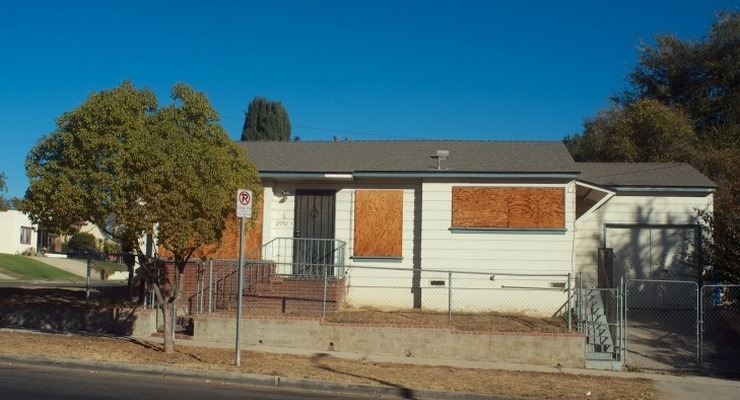
“My constituents have shared with me alarming examples of neglect and mismanagement, including ongoing pest issues, serious mold problems, and unresolved structural hazards,” Pérez said in a statement, according to a press release from her office. She called the audit necessary to hold Caltrans accountable.
Fong said his office had repeatedly sought answers from the agency without success. “The level of frustration from residents is undeniable,” he said in a statement. “This audit is critical to restoring accountability.”
The audit will examine how Caltrans calculates property values and affordability, whether tenants are treated consistently and in accordance with state law, the extent of deferred maintenance and vacancy across the portfolio, and whether the agency should continue overseeing residential housing, according to a statement from Pérez’s office.
Caltrans began acquiring properties for the 710 extension in the 1950s, displacing families across Pasadena, South Pasadena and El Sereno over the following decades. The planned freeway faced sustained community opposition, led by what became known as the “freeway fighters,” and was formally abandoned in 2019. Under the Roberti Act, passed in 1979, Caltrans is required to offer surplus homes to qualifying tenants at affordable prices.
The agency began sending purchase offers to tenants in late 2022. Caltrans has told the California Transportation Commission that 58 properties have been sold to housing-related entities, that 96 affordable transactions are in escrow and that municipalities in the corridor have also purchased properties, according to Caltrans presentations to the commission.
But tenants have described a different experience. Page Phillips, a South Pasadena resident who has lived in a Caltrans-owned home for more than three decades, said her family fears losing their home. “We respectfully call for an independent audit of Caltrans to bring transparency and accountability to this process, and to address the clear inequities facing families like ours,” Phillips said at a March 20 press conference in South Pasadena, according to a press release from Pérez’s office.
South Pasadena Mayor Sheila Rossi, who traveled to Sacramento to testify when the audit was approved, said families along the corridor had been promised stability but were instead met with uncertainty. “We owe them a process that is clear, accountable, and grounded in the public purpose these properties were meant to serve,” Rossi said, according to the same press release.
Pasadena City Councilmember Steve Madison also supported the audit, noting that previous reviews had found mismanagement and that Caltrans, as a transportation agency, is not equipped to serve as a residential landlord, according to the press release.
Harabedian, who as JLAC chair will oversee the audit process, said tenants in the corridor had contacted his office seeking help. “The numerous tenants in SR 710 properties who have reached out to my office for help aren’t asking for much, just a safe and dignified place to live and a clear path to affordable homeownership they have been promised under the law,” Harabedian said in a statement. He added that Caltrans has a duty to maintain the properties and provide transparency, calling anything less “simply unacceptable.”
The 13 Pasadena homes sold between December 2025 and February 2026 fetched prices ranging from $750,000 to $3.4 million. Those sales were made possible by SB 959, a 2022 law that allowed Pasadena to buy vacant surplus properties from Caltrans at the original acquisition price and resell them at market value, with proceeds required to fund affordable housing at a three-to-one ratio. The city netted $18.47 million, according to Pasadena Now, and must deploy those funds toward affordable housing by December 31, 2026.
Meanwhile, three tenants filed suit against Caltrans in 2025, alleging the agency used an unauthorized pricing formula to disqualify them from buying their homes at affordable prices. The lawsuit, brought by Pasadena resident Julia Cox and South Pasadena residents Priscela Izquierdo and Joseph Becerra, is pending in Los Angeles County Superior Court.
The California State Auditor’s investigation is expected to take at least six months. The audit will mark the second formal state review of Caltrans’ management of the SR-710 properties, following the 2012 report that documented millions in financial losses and recommended the agency explore alternatives to managing the homes itself.
“I heard from all sides from those living in the 710 homes about how difficult it was to be a tenant of the Caltrans homes,” Pérez said in a recent interview with Pasadena Weekly. “I heard how much these folks invested in order to take care of these homes since Caltrans was unresponsive to their needs.”
 Get our daily Pasadena newspaper in your email box. Free.
Get all the latest Pasadena news, more than 10 fresh stories daily, 7 days a week at 7 a.m.