











Pasadena officials will present continuing electrical equipment shortages, updated traffic collision figures, and street safety improvements to the City Council’s Municipal Services Committee on Wednesday, Oct. 21.
The meeting comes as Pasadena works toward its goal of eliminating traffic fatalities by 2035.
Meanwhile, city departments are managing supply-chain constraints that could affect electrical infrastructure projects.
The committee will meet at 5 p.m. in the City Council Chamber at City Hall, 100 N. Garfield Ave.
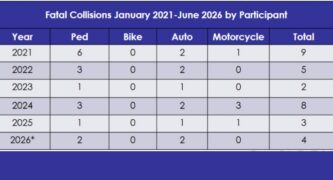
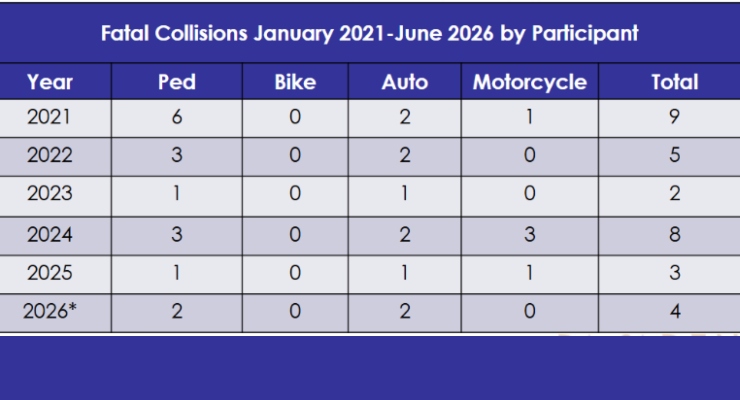
According to figures prepared by the Pasadena Department of Transportation and Police Department, the city recorded four fatal traffic collisions during the first six months of 2026, involving two pedestrians and two vehicle occupants.
The city recorded three fatal collisions during all of 2025 and eight in 2024.
Pasadena adopted its Focused Local Roadway Safety Action Plan on Oct. 27, 2025, establishing a goal of zero traffic fatalities by 2035. The plan also designated safety corridors where state law permits additional speed-limit reductions of 5 mph.
Transportation Director Joaquin T. Siques will present an update covering collision trends, roadway improvements and police enforcement.
Recently completed projects include pedestrian improvements near the Metro A Line’s Allen Avenue station, speed tables along Mountain Street, speed humps on Paloma Street and centerline modifications at Orange Grove Boulevard and Lincoln Avenue.
Additional projects include flashing pedestrian crossing signals planned for Green Street at Chester and Michigan avenues, along with pedestrian hybrid beacons at Lincoln Avenue and Toolen Place and at Lake Avenue and Elizabeth Street.
The Pasadena Police Department began a targeted enforcement operation in July, focusing on locations identified through collision histories, community complaints and officers’ observations.
Police figures show 5,563 traffic citations issued between January and August, including 4,132 by the Traffic Section and 1,431 by patrol officers.
The committee will also examine an unrelated but significant infrastructure issue: the availability and cost of equipment used in Pasadena’s electrical distribution system.
Pasadena Water and Power General Manager David M. Reyes reports that supply conditions have improved since the widespread disruptions of 2023 and 2024. However, specialized electrical equipment remains difficult to obtain.
Supplier estimates indicate delivery lead times of 80 to more than 260 weeks for large power transformers and 75 to more than 250 weeks for certain transmission and substation circuit breakers. Those ranges are market planning estimates, not confirmed delays on individual Pasadena orders.
The department also identifies continuing cost pressures associated with tariffs and imported materials.
Industry estimates reviewed by the utility indicate tariff exposure could increase costs for certain transmission and distribution equipment by up to approximately 12%, with a modeled impact of approximately 8% for substations. Those figures are industry scenarios rather than projected Pasadena-specific cost increases.
Pasadena Water and Power is responding with earlier procurement planning, strategic inventory management, additional supplier coordination and reviews of tariff-related price adjustments.
The electrical supply-chain report carries no direct fiscal impact, although equipment shortages and pricing changes could affect future project schedules and budgets.
Both presentations are listed as informational items. The committee may take action within its authority following discussion.
Residents may attend in person or participate remotely through the city’s public meeting system. Public comments may be submitted before the meeting or during the designated comment period.
 Get our daily Pasadena newspaper in your email box. Free.
Get all the latest Pasadena news, more than 10 fresh stories daily, 7 days a week at 7 a.m.

