








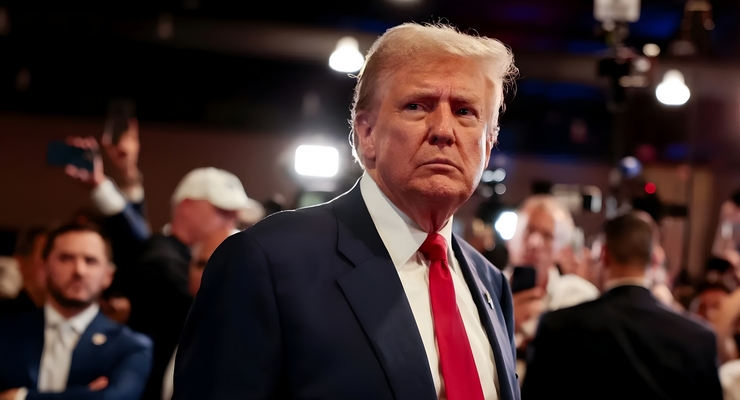
President Donald Trump announced early Wednesday that his administration will move to strip federal funding from sanctuary cities and states, escalating his crackdown on jurisdictions that limit cooperation with federal immigration authorities.
“Effective Feb. 1, no more payments will be made by the federal government to states for their corrupt criminal protection centers known as sanctuary cities,” Trump wrote in a post on Truth Social.
“All they do is breed crime and violence,” he added. “If states want them, they will have to pay for them.”
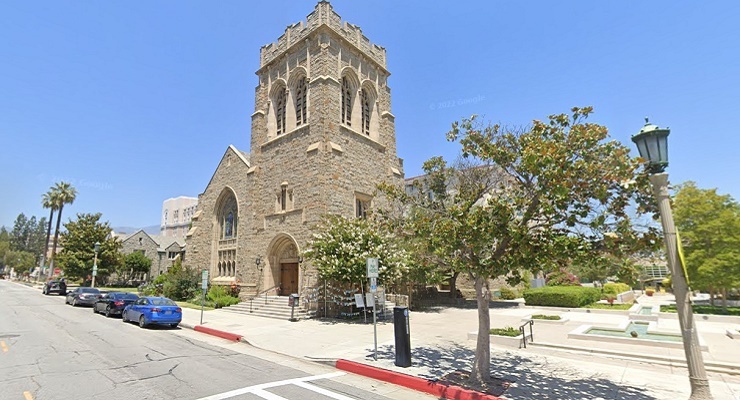
Pasadena is not officially a “sanctuary city,” though it has adopted policies limiting local police cooperation with federal immigration enforcement, focusing on community safety rather than formally declaring sanctuary status.
In 2017, the City Council approved a resolution stating that local governments should not enforce federal immigration laws and adopted a policy prohibiting City employees from assisting Immigration and Customs Enforcement. The city stopped short of formally declaring itself a sanctuary city, as some advocates had urged.
The City receives roughly $60 million annually, according to Assistant City Manager Matthew Hawkesworth, who was formerly the City’s Finance Director. Hawkesworth told Pasadena Now last week that these funds are important to many City programs.
However, Hawkesworth said the federal government is still without a budget and is operating on a continuing resolution. City officials continue to watch for changes to its federal funding.
“There is no specific City program or funding source that has been identified as being in jeopardy if the state were to lose federal funding as of Feb. 1,” Hawkesworth told Pasadena Now.
Trump’s threat followed remarks at the Detroit Economic Club, where he said sanctuary cities “do everything possible to protect criminals at the expense of American citizens.”
However, there is no legal definition of a sanctuary city.
Cities using that term generally limit local law enforcement’s cooperation with federal immigration authorities. Some also provide certain social services to immigrants who lack legal status.
In August, Attorney General Pam Bondi sent letters to 32 so-called sanctuary jurisdictions that the administration said were not complying with federal immigration laws.
The states named included California, Colorado, Connecticut, Delaware, Illinois, Minnesota, Nevada, New York, Oregon, Rhode Island, Vermont and Washington.
Bondi urged the jurisdictions to comply with the administration’s immigration enforcement efforts or risk losing federal funding, citing an executive order Trump signed in April.
The order directed Bondi and Homeland Security Secretary Kristi Noem to identify federal grants and contracts that could be suspended or terminated.
The administration’s latest move comes after a federal judge ruled that the executive order aimed at cutting off funding to sanctuary jurisdictions was likely unconstitutional.
U.S. District Judge William Orrick extended a preliminary injunction in August blocking the policy, and also barred federal officials from imposing new conditions on certain grant programs that fund what he described as “a variety of critical needs.”
Despite the ruling, the Department of Homeland Security has increased public pressure on local governments by releasing a list of more than 500 so-called sanctuary jurisdictions, including cities, counties and states, arguing they obstruct immigration enforcement and put lives at risk.
Trump’s immigration push has also sparked protests nationwide. Tensions have risen following the fatal shooting of a woman in Minneapolis by an Immigration and Customs Enforcement officer last week and another shooting involving Border Patrol agents in Portland, Oregon.
Administration officials have said both incidents involved self-defense, a claim that has drawn public criticism.
 Get our daily Pasadena newspaper in your email box. Free.
Get all the latest Pasadena news, more than 10 fresh stories daily, 7 days a week at 7 a.m.