


Tempe, Arizona, became one of several Arizona jurisdictions to shut down its network of automated license plate readers last week, citing concerns about privacy and the potential for misuse.
Tempe turned off 33 Flock Safety cameras Wednesday, Aug. 26, and plans to terminate its contract with the company. Tempe officials said the system will not be replaced with license plate-reading technology from another provider. The town of Cave Creek announced it was terminating its own Flock contract the same day, and Chandler discontinued use of its cameras after an audit turned up an unexplained anomaly.
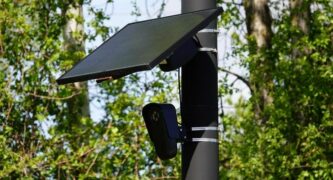
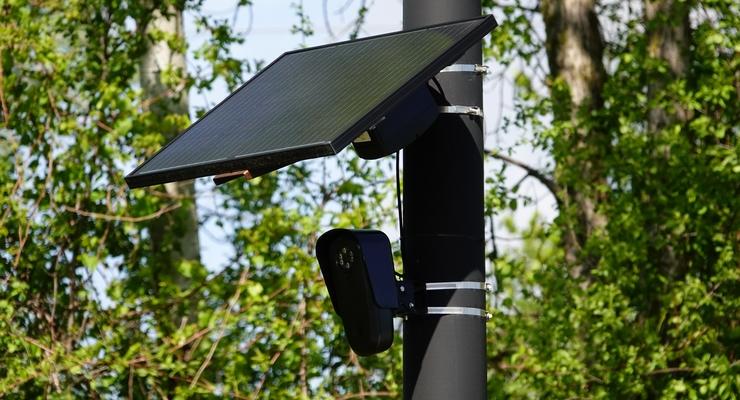
Flock’s pole-mounted cameras photograph the rear of every passing vehicle and log the plate number, color, make and model. Software the company has marketed as Vehicle Signature uses artificial intelligence to catalog further details, including bumper stickers and body damage, allowing investigators to search by vehicle characteristics without a visible plate.
The Los Angeles Police Department let its three-year Flock agreement expire in July, citing concerns about privacy and who controls the data collected by the cameras. A city inspector general audit had found the department investigated 161 car owners over a two-month period whose vehicles Flock wrongly flagged as stolen. LAPD has since said it is renegotiating with the company.
Local Probe
Locally, a review conducted by Independent Police Auditor Teresa Magula and presented in July to the Community Police Oversight Commission (CPOC) concluded the department’s automated license plate recognition (ALPR) program is being used primarily to support criminal investigations and includes safeguards designed to limit access, document searches and protect against misuse.
Locally, 61 cameras are installed in Pasadena.
“The use of technology in law enforcement and in society in general has its supporters and detractors,” said Lisa Derderian, chief communications officer.
“Pasadena is always open to hearing both sides of every issue, as it makes us a better city. While there are horror stories about the use of technology elsewhere, we can point to the use of this technology locally to solve a number of crimes. Nonetheless, we encourage those critical of this technology to continue to raise their voices so that we can understand and address their important concerns about privacy and misuse of technology.
“We place the well-being and safety of our residents first and foremost and will use every tool reasonably available to protect our residents while safeguarding and honoring privacy rights.”
Last week, Councilmember Tyron Hampton asked city staff to suspend the city’s use of the Flock cameras pending further discussion.
“Our police department talks about community policing. Community policing, community policing,” Hampton said at the Aug. 24 City Council meeting. “We seem a little tone deaf to the community because this is a national issue and this company is a national problem.”
The item appeared at the City Council’s Public Safety Committee earlier this year. The committee’s next regular meeting falls on Sept. 16.
Hampton supported removing the cameras, but supports automatic license plate readers (ALPR). Councilmember Justin Jones expressed concerns about the proliferation of the cameras in the Northwest Pasadena district he represents and immigration officials’ access to the data. Jones also said he also was open to replacing them.
Vice Mayor Jess Rivas wants the cameras removed and no ALPRs to replace them. Steve Madison expressed support for the cameras. Madison also said he was open to adjusting data sharing and retention time.
Three failures, three successes
Critics have raised concerns about immigration officials’ access to the data, and police officers in some jurisdictions using the data to stalk their ex-partners.
CNN reported last week that a police officer in Kentucky was arrested after he used Flock a whopping 2,048 times to track his ex-girlfriend.
In Louisiana, a Jefferson Parish sheriff’s deputy was fired this month after admitting he searched his former fiancée’s license plate more than 3,200 times over several years.
In Norfolk, Virginia, the top three search reasons: “cj,” “stolen,” and “inv,” accounted for nearly one third of 230,000 searches over two years. One officer repeatedly wrote “la la la la,” and it went unnoticed.
There have been success stories also.
Lorain, Ohio, police credited Flock license plate reader cameras with helping officers capture a 16-year-old murder suspect less than 30 minutes after discovering 67-year-old Robert Lewis fatally shot in his home.
Police said the teenager later confessed and was charged with murder. Lorain police acknowledged concerns about license plate reader technology but said the case demonstrated its potential value in quickly locating suspected violent offenders.
In Pinebluff, North Carolina, authorities said Flock cameras helped identify and arrest a 40-year-old man accused of killing his mother, his stepfather and his niece.
Investigators said Flock data placed a vehicle linked to Demetrius Aggelis traveling toward the home minutes before an armed person was seen entering, and leaving the area shortly afterward, contradicting his account of where he had been. Aggelis was arrested and charged with three counts of murder and one count of first-degree burglary, and is being held without bond.
In Central Texas, Killeen police said Flock license plate reader cameras helped investigators track down a suspect in the fatal shooting of a 29-year-old woman in Copperas Cove.
After the victim was found suffering from a gunshot wound and later died, a witness identified the shooter as someone known to her and gave officers a description of his vehicle. Copperas Cove investigators passed a partial license plate number and vehicle description to Killeen police, whose real-time crime center entered the information into its Flock system. The system flagged a possible match, and officers arrested the suspect after a short pursuit.
Change on the Way
Flock CEO Garrett Langley said earlier this month that optional guardrails will become mandatory for its users to implement by Jan. 1.
All law enforcement customers will have to implement an audit tool that’s intended to flag abnormal search behavior. According to Langley, when the system detects abnormal behavior, the user would be locked out pending an internal review.
The standard data retention window will be shortened from 30 days to seven. Data could be preserved longer when it is evidence tied to a case number.
Law enforcement users will now also be required to enter a code tying each search to a specific investigation before the data can be viewed, something Langley said civil liberties advocates, like the American Civil Liberties Union, have long been calling for.
However, the system would still allow for overrides, which would be automatically flagged for review, according to the company.
According to the Associated Press, outside agencies would still be allowed to perform outside searches.
But now, customers will be allowed to decide which offense types outside agencies can search their data for, which would allow a customer to block outside searches related to immigration enforcement.
Langley said that change will give individual cities and departments control to use the system in a manner “consistent with community values.”
“While Flock has not shortened the default retention period to the ACLU’s recommended 48 hours, its proposal may be a step in the right direction,” the group said on its website. “Whether this is a real change or just another Flock PR move, however, will depend on how its ‘Evidence Mode’ operates.”
According to the ACLU, if “Evidence Mode” only retains hit result data that police determine may be evidence in an active investigation of a specific case, then the change may be a positive one.
“But if ‘Evidence Mode’ triggers the retention of any ALPR data that is searched, then the new mode could indefinitely retain all the ALPR data Flock collects and shares nationally. This would make Flock’s data retention problem even worse,” the group said.
 Get our daily Pasadena newspaper in your email box. Free.
Get all the latest Pasadena news, more than 10 fresh stories daily, 7 days a week at 7 a.m.