










In written comments submitted ahead of Wednesday’s Housing, Homelessness and Planning Committee meeting, a group of residents urged the city to proceed cautiously on data centers, citing concerns ranging from increased greenhouse gas emissions and water use to potential catastrophic accidents.
The correspondence comes as city officials begin early discussions on whether to allow data centers as a new land use in Pasadena, where such facilities are currently not permitted under the zoning code.
The letter, signed by several people, outlines a broad set of environmental concerns tied to the rapid expansion of data centers nationwide, including increased reliance on fossil fuels to generate electricity, rising greenhouse gas emissions, and strain on water resources in arid regions like Southern California. They also warned that the facilities could contribute to higher electricity costs and increased air pollution from backup diesel generators.
A data center is a facility that houses computer servers and networking equipment used to store, process and transmit digital information, forming the backbone of internet services such as cloud computing, streaming and online communications. These facilities typically require large amounts of electricity to power equipment and cooling systems, and often rely on backup energy sources to maintain operations during outages.
The concerns raised mirror a growing national debate over the environmental and infrastructure impacts of data centers as demand surges with the rise of cloud computing and artificial intelligence.
Across the country, cities and states are grappling with how to regulate the facilities’ heavy energy and water use, potential safety risks, and land use impacts while balancing the economic benefits tied to the rapidly expanding tech sector.
Beyond environmental impacts, the letter raises alarms about potential safety risks associated with emerging technologies, particularly quantum data centers that rely on cryogenic cooling systems.
“While cryogenic cooling is used in a variety of settings without incident, when accidents … do occur, they can be catastrophic,” the correspondence states, citing multiple incidents involving liquid nitrogen and other gases that resulted in fatalities, injuries or large-scale evacuations.
The correspondence was signed by William J. Kelly, Humaira Afzal, Bonita Rosenstein, Raoul Cansino, Joanne Long, Emily Berry, Cheryl Davis, Alise Sochaczewski, Joe Parker, Donna Thomas, Carlos T. Navarrette, Sherien Sobhy and Soozy Rios Bellenot.
The group is urging the City to expand its regulatory framework to specifically address those risks by creating a separate zoning category for quantum data centers, in addition to broader definitions already under consideration.
The letter also highlights concerns over large-scale battery backup systems commonly used at data centers, noting they can contain significant quantities of lithium, cobalt and other metals and have been linked to fires and explosions.
Residents pointed to documented incidents, including a prolonged data center fire and a major battery facility blaze that released toxic materials into surrounding areas.
Local concerns are further heightened by reports that a property in the Pasadena Technology Center has been acquired by Amazon Web Services, where a data center could potentially be developed.
According to the correspondence, the site is located adjacent to a very high fire hazard zone and near Pasadena High School and residential housing, raising concerns about the potential spread of toxic materials in the event of a wildfire or industrial accident.
Amazon has stated there are no plans to build a data center at the site.
“If a data center … were to burn in a wildfire … it would spread ash laden with toxic metals downwind,” the letter states.
The residents conclude by urging city officials to fully evaluate the environmental and safety implications of data centers and to engage the community before moving forward with any zoning ordinance.
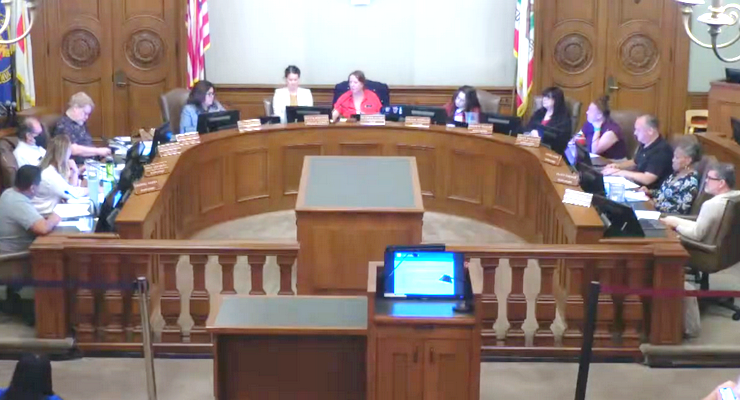
The committee is expected to receive an informational presentation on the issue Wednesday, with no immediate vote scheduled.
The committee meets at 5 p.m. in Council Chambers.
 Get our daily Pasadena newspaper in your email box. Free.
Get all the latest Pasadena news, more than 10 fresh stories daily, 7 days a week at 7 a.m.