










The lithium-ion battery is everywhere — in the phone in your pocket, the laptop on your desk, the electric car in your neighbor’s driveway. But the chemistry that makes it work depends on minerals that are expensive, difficult to extract, and finite.
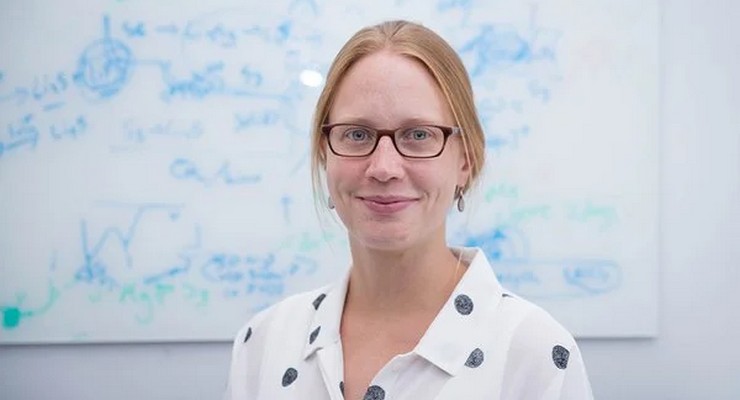
Kimberly See wants to change that. A professor of chemistry at Caltech, See leads a lab developing battery chemistries built around materials like magnesium, calcium, and zinc — elements that are orders of magnitude more abundant than lithium and found across the globe. She will explain that research, and the basic science behind how batteries store energy, in a free Watson Lecture at Beckman Auditorium on Wednesday, February 25, at 7:30 p.m.
The talk, titled “Chasing Sustainable Battery Chemistries for the Future,” comes as demand for better energy storage is accelerating. Electric vehicles, renewable power grids, and the growing energy appetite of artificial intelligence data centers all depend on batteries — and current lithium-ion technology was not built for all of those tasks, according to a Caltech press release announcing the lecture.
“Batteries aren’t fully optimized devices for the applications we need them for tomorrow,” See said in a statement released by Caltech. “We need sustainable batteries for electric cars, grid storage, and even electrifying airplanes, which is a really, really hard problem. In order to do all of those things, it’s the chemistry inside of the battery that needs to change.”
Lithium-ion batteries were first commercialized in 1991 and won their inventors the 2019 Nobel Prize in Chemistry. But See has noted that the technology relies on elements like cobalt and nickel that raise concerns about cost, supply chains, and environmental impact.
“Lithium-ion batteries contain resources that are somewhat problematic,” See said in an interview published by the Caltech Science Exchange. “They aren’t the most sustainable elements to have in a technology that’s going to be widespread across the world, so my group is trying to use materials that are more abundant and more sustainable and less expensive than what’s currently used.”
See grew up in the mountains of Colorado, where an early fascination with plants and photosynthesis drew her toward chemistry. She earned her bachelor’s degree from the Colorado School of Mines in 2009, her doctorate from UC Santa Barbara in 2014, and completed a postdoctoral fellowship at the University of Illinois at Urbana-Champaign before joining Caltech’s faculty in 2017. Her work has earned a Packard Fellowship, a Sloan Research Fellowship, and a Camille Dreyfus Teacher-Scholar award, among other honors.
Before the lecture, visitors can build their own lemon batteries using copper wire, zinc nails, and more than 100 lemons set up outside Beckman Auditorium. Members of See’s lab will be on hand starting at 6 p.m. to answer questions about their research. Food, drinks, and books will be available for purchase.
The Watson Lecture Series, which has brought Caltech research to the public since 1922, is free and open to all. Registration is available online through the Caltech events website. A recording of the talk will be posted to the Caltech YouTube channel. For ADA seating or other questions, contact the Caltech Ticket Office at 626-395-4652 or events@caltech.edu.
Beckman Auditorium is at 332 S. Michigan Ave., Pasadena. Doors open at 7 p.m.
The chemistry that powers daily life was built for the 1990s. See is working on what comes next.
 Get our daily Pasadena newspaper in your email box. Free.
Get all the latest Pasadena news, more than 10 fresh stories daily, 7 days a week at 7 a.m.


