








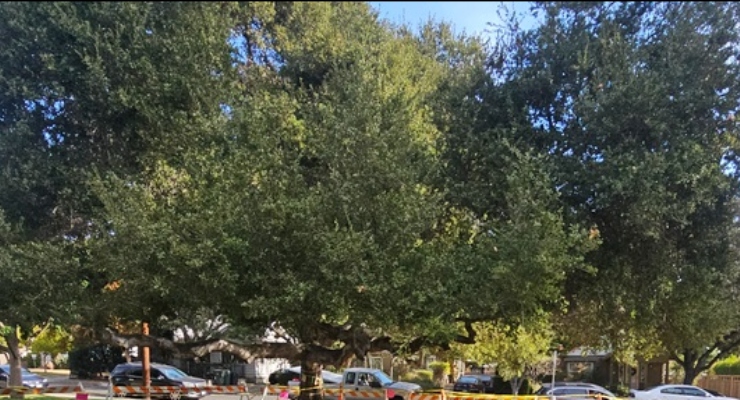
Pasadena officials are considering changes to the city’s Master Street Tree Plan that would swap out fire-prone species and give urban foresters more flexibility to diversify the city’s canopy.
On Tuesday, the city’s Design Commission will review amendments recommended by the Department of Public Works. The proposal would replace Italian Cypress trees with Noble Laurel trees along Fairfield Circle after residents raised safety and shade concerns, and create a new “Alternative Tree Species List” to guide plantings citywide.
Public Works Director Greg De Vinck said in a staff report that the changes are aimed at promoting public safety, climate resilience, and biodiversity. The amendments are exempt from the California Environmental Quality Act because they qualify as minor alterations to landscaping, he said.
The Fairfield Circle changes stem from a March request by neighbors who said the tall, narrow cypress trees provided little shade and posed a fire hazard. After meetings with city staff, residents voted to support the Noble Laurel as a replacement species. The Urban Forestry Advisory Committee backed the recommendation unanimously in May.
The broader amendment would allow city staff to deviate from the decades-old Master Street Tree Plan when safety or ecological concerns arise. For example, if a designated species is considered highly flammable, or if too many of one species already dominate the canopy — violating the “10-20-30” rule designed to prevent widespread die-off — staff could choose alternatives from the new list.
The Urban Forestry Advisory Committee also voted unanimously earlier this month to support the general amendment. If approved by the Design Commission, the City Council will make the final decision.
Officials emphasized that adopting the amendments will not trigger immediate removal of healthy trees. Replacement species would only be planted as existing trees die or meet removal criteria.
The Master Street Tree Plan dates to 1940 and was last significantly updated in 1976. The proposed changes, De Vinck said, respond to community concerns while positioning Pasadena’s urban forest for long-term health.
 Get our daily Pasadena newspaper in your email box. Free.
Get all the latest Pasadena news, more than 10 fresh stories daily, 7 days a week at 7 a.m.


