








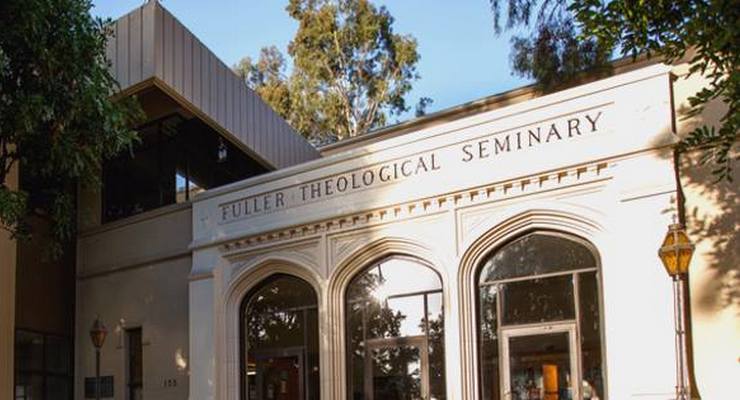
Fuller Theological Seminary, the international, multi-ethnic seminary that has spent recent years consolidating its Pasadena campus, is seeking up to $22 million in tax-exempt financing for student dormitories at four adjacent properties on North Madison Avenue — a deal that places no financial or legal obligation on the City of Pasadena but requires the City Council to hold a federally mandated public hearing.
The hearing is set for Monday evening, June 8.
A spokesperson representing Fuller told Pasadena Now that the agenda item tonight with City Council is purely a refinancing of the existing Chang Commons apartment building.
“There is no new construction. There is no new development. It’s purely refinancing the existing housing unit,” the spokesperson said.
The borrower is technically not the seminary itself but CGF Properties LLC, a single-member limited liability company. The staff report confirms that “Fuller Theological Seminary, a California nonprofit religious corporation, is the sole member of the Borrower.”
The bonds would be issued by the California Enterprise Development Authority, known as CEDA, a joint powers authority of which Pasadena is an associate member.
Proceeds, according to the agenda report, would “finance, refinance and/or reimburse the borrower for the cost of acquisition, construction, improvement, furnishing and equipping of dormitory facilities” at 261, 271, 281 and 291 North Madison Avenue, and pay issuance costs.
The staff report describes the project as providing “critical below-market and convenient dormitory facilities for students attending the Seminary.”
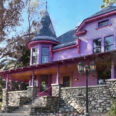
The four-property cluster sits within the historic Ford Place neighborhood near North Madison Avenue and Walnut Street.
The seminary has been pursuing campus consolidation; the City Council previously approved an amendment to Fuller’s master plan and the subdivision of a parcel at 261 North Madison Avenue, allowing portions of the seminary’s real estate to be converted and rezoned to residential use as on-campus enrollment has declined, according to media reports.
Fuller, the agenda report states, “is an international and multi-ethnic institute, which trains pastors, missionaries, psychologists, educators, and community leaders.” All of its degrees and certificates are accredited by the Western Association of Schools and Colleges Senior College and University Commission (WSCUC).
For Pasadena, the financial exposure is none, and the income is modest.
“There is no fiscal impact as a result of this action nor will it have any indirect or support cost requirements,” the staff report states. “The City will have no financial or legal obligation for the tax-exempt status of the Obligations, the debt service on the Obligations nor any other matter related to the proposed Obligations.”
CEDA and CGF Properties LLC will indemnify the City, which will collect $10,000 — described in the staff report as “the standard TEFRA fee on such transactions.”
The hearing itself is required. Internal Revenue Code Section 147(f) requires a public hearing and approval by an elected representative of the geographic jurisdiction whenever tax-exempt private-activity bonds are issued for a project sited within that jurisdiction.
The session, the report notes, gives “members of the community an opportunity to speak in favor of or against the use of tax-exempt obligations for the financing of the Project.”
CEDA was established by the California Association for Local Economic Development under the Joint Exercise of Powers Act, originally by the cities of Eureka, Lancaster and Selma, and now includes more than 250 cities and counties as associate members, including Pasadena. The authority exists to issue “tax-exempt and taxable conduit revenue bonds to fund commercial and industrial development projects within member jurisdictions,” the staff report says.
The action is not a “project” subject to the California Environmental Quality Act (CEQA), per State CEQA Guidelines Section 15378(b)(4), which excludes government funding mechanisms that do not commit a school to any particular project.
The Fuller hearing is one of two TEFRA matters on Monday’s agenda. The Council will separately consider $50 million in tax-exempt financing for the Colorado Grand Oaks apartment project at 2155–2193 East Colorado Boulevard (see separate article).
The hearing is scheduled for 6 p.m. Monday, June 8, in the Council Chamber, Pasadena City Hall, 100 North Garfield Avenue, Room S249.
 Get our daily Pasadena newspaper in your email box. Free.
Get all the latest Pasadena news, more than 10 fresh stories daily, 7 days a week at 7 a.m.