








On Sunday, all of these elements will come together when Neighborhood Unitarian Universalist Church in Pasadena dedicates “Free Them All,” a permanent collaborative art installation by artist Jasmine Baetz that confronts the legacy of state-sponsored forced sterilization in California — and, more specifically, the church’s own connection to the man who championed it.
Robert Millikan, the Nobel Prize-winning physicist and longtime chairman of Caltech, was a member of Neighborhood Church from 1925 until his death in 1953, serving on its board for more than half that time. He was also a prominent advocate of white supremacy and eugenics, and his advocacy helped enable the policies under which thousands of Californians — disproportionately people of color, the poor, immigrants, and the disabled — were sterilized against their will.
The church’s Truth and Reconciliation Committee has spent years grappling with that history. Renaming the room once dedicated to Millikan was one step. Commissioning an artist to create a permanent work of reckoning inside it was another — one that, in Baetz’s view, sets Neighborhood Church apart from institutions that stop at symbolic gestures.
“Changing the name is one thing and an important thing,” Baetz said in an interview. “But the really amazing thing about Neighborhood Church is that they wanted to take more steps to really grapple with what it meant to honor him and have him in this privileged place, given his material impact on the world.”
A Gesture of Pain and Power
Baetz, who was commissioned by the church but is not a member of the congregation, has built a career around what she calls reparative art — work created in the context of historical trauma, racial violence, and institutional complicity, made collaboratively with broad constituencies of people connected to that history.
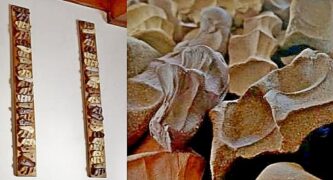
For “Free Them All,” she devised a deceptively simple act: each participant would press a piece of clay into their palm and squeeze it in a clenched fist. The gesture was deliberate.
“Holding your fist tightly is often a gesture people make when they’re under duress,” Baetz said. “I was trying to think through an expression or a manifestation of pain. But I also wanted something that didn’t feel disempowered. I liked the gesture of the fist because it can also be turned upright into a power fist — invoking Black Power, Chicano power, whatever sort of power movement the fist can contain.”
After a Sunday service, the church’s Truth and Reconciliation Committee provided historical context, Baetz spoke about her research, and then the congregation made the work together. People of all ages participated, some talking quietly with each other about the history, others working in focused silence.
“It was a really intentional space,” Baetz said.
The Kid Who Broke the Rules
Baetz had come to the workshop with a specific vision. She wanted similarity in the fist forms — enough uniformity to reveal the subtle differences among hands of different sizes and shapes. She coached the volunteers carefully.
Then a child did something unexpected.
“One of these kids just did these really wonderful — they totally followed the directions, but they’d give the piece an extra squeeze at the end,” Baetz recalled. “The results were very sculptural and they were much more interesting than the ones I had been making.”
The experience, she said, loosened her up. The finished installation includes pieces that are, in her word, “gnarlier” than anything she had originally envisioned — and better for it.
Wood From the Shadow of Millikan
The material choices in “Free Them All” carry their own histories. Baetz, who was teaching a class at the Hives in Claremont, went into the facility’s wood shop looking for salvaged material — something that looked like it had already lived a life. She found a set of warped planks in the scrap pile.
Trevor, who works in the wood shop, told her they were from the old outdoor tables on the patio. Baetz walked outside, looked at those tables, and then looked across the street — directly at the former Millikan Laboratory, an institution that had itself grappled with the physicist’s legacy by changing its name.
“They’re so close to this place where there was a similar question,” Baetz said. The coincidence was too resonant to ignore. She asked if she could use the wood. Trevor said sure.
Even the screws are intentional. Baetz initially tested uniform, high-shine metal fasteners, but they made the piece feel mechanical and repetitive. She switched to mismatched screws with patina — screws that looked like they’d been used for something else before — and arranged them in a deliberate zigzag across the planks rather than in straight lines. Each one, she said, could “fit or not fit” with the clay fist form in a different way, creating “more formal opportunities to play around with the balance and content of each plank.”
A Whistleblower’s Hands
The installation draws a line from California’s eugenics-era sterilizations to the present day — and not as metaphor.
One of the first people Baetz thought of when she began the project was Dawn Wooten, a nurse at the Irwin County Detention Center in Georgia who blew the whistle in 2020 on forced sterilizations being performed on detained immigrants. The revelation came amid widespread Immigration and Customs Enforcement (ICE) detentions, family separations, and the onset of the COVID-19 pandemic.
“That was one of the times in my life that I relearned about eugenics in the United States,” Baetz said, “because even if we learn about these things, they can recede to the background as we go on with our lives — especially if you’re not someone who’s been directly impacted.”
Baetz reached out to Wooten, consulted with her on the project, and then mailed her clay so she could make fist forms of her own. They held a session together remotely, shaping the pieces at the same time from opposite ends of the country. Wooten mailed the pieces back. Baetz fired them and folded them into the installation alongside the forms made by Neighborhood Church’s congregation.
“They’re supposed to pull together this idea of solidarities across space and time,” Baetz said. “The very fact that in 2020, and then for all we know still now, there are folks in immigrant detention who are not able to consent to things that are happening to them.”
Baetz also cited the work of scholar Jess Watcot, who has theorized the concept of “carceral eugenics” — the idea that beyond forced sterilization, the act of detention itself constitutes a form of reproductive and bodily control. And she recommended the documentary “Belly of the Beast,” available free on Canopy with a public library login, as essential viewing on the subject.
What Institutions Owe
Baetz speaks about Neighborhood Church’s initiative with something approaching awe — in part because she has experienced how hard it can be to get institutions to act.
While at Scripps College in Claremont, she spent years working to remove a sculpture by George Kolbe, a German artist whose work was tied to the Nazi regime. She assumed a small liberal arts college would readily agree to put the piece in storage where it could be studied in proper context. Instead, she and her students had to, as she put it, “play chicken with the college.”
They brought in Wolfgang Brauneis, a German art historian who had done a major exhibition at a national museum in Germany about the afterlives of Nazi-era artists, as a visiting scholar. The college removed the sculpture the night before Brauneis gave his talk.
“It wasn’t what they would have maybe chosen to do on their own,” Baetz said.
Neighborhood Church, by contrast, initiated its own reckoning. The congregation did not merely rename the room once dedicated to Millikan — they commissioned an artwork to ensure the history stayed visible, permanent, and unavoidable. Baetz was careful to call the result not a memorial but a “memory project”: a work designed to honor survivors and, as she put it, “make sure they don’t stay out of our minds.”
A Visual Stumbling Block
The installation now lives permanently in the church’s Remembrance and Renewal Room. Baetz designed it to mirror the existing architecture — placing clay fist forms above each of the room’s wooden beams, creating a rhythm that echoes the interior paneling while subtly disrupting it.
She wants the work to function as what she called “a little visual stumbling block” — something that pulls a visitor in, then raises questions.
“What is this room? What’s the history of this room? Who was it named for? Who was he? Who are we? What are we doing in this space?” Baetz said. “What are the values we have, and what are we promoting here?”
And if some visitors simply see a curious addition to the room’s interior and move on, she said, that’s fine too.
“Anytime there’s a little question mark,” she said, “that can be an opening for something more.”
IF YOU GO
The dedication of “Free Them All” takes place Sunday, March 29, at Neighborhood Unitarian Universalist Church, 301 N. Orange Grove Blvd., Pasadena. Artist Jasmine Baetz will be in attendance.
 Get our daily Pasadena newspaper in your email box. Free.
Get all the latest Pasadena news, more than 10 fresh stories daily, 7 days a week at 7 a.m.