







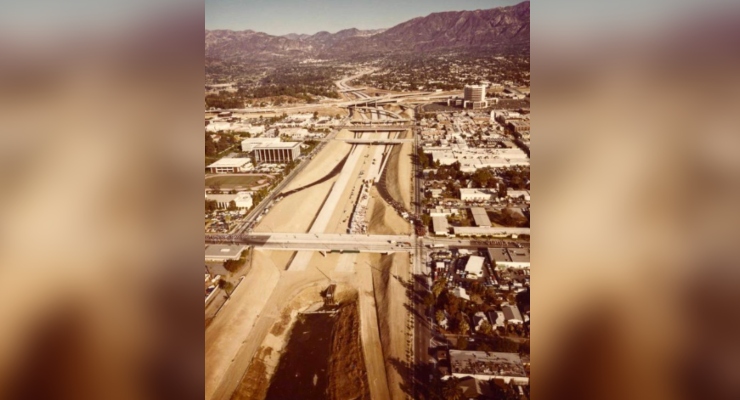
The city’s Environmental Advisory Commission is calling for enforceable climate commitments in the city’s Reconnecting Communities 710 Vision Plan for the 710 freeway “Stub” in West Pasadena, cautioning that strong sustainability goals could be undermined without clear accountability.
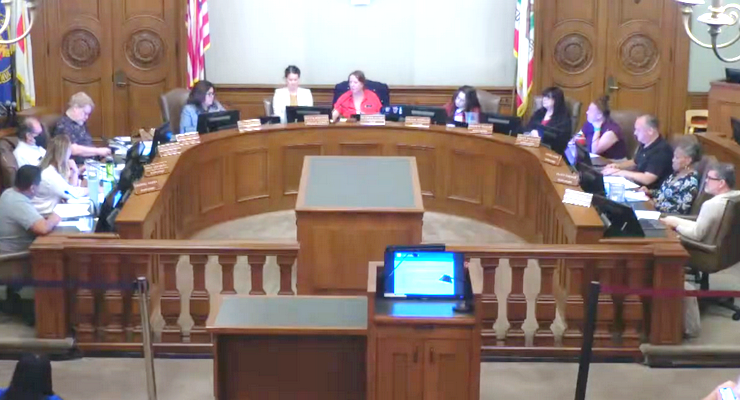
The commission will present its recommendations Tuesday at a 6:30 p.m. meeting in City Hall’s Grand Conference Room.
While praising the vision plan as thoughtful and forward-looking, the commission emphasizes implementation over aspiration. The panel wants sustainability requirements codified into zoning standards and development agreements.
“Without clear accountability, even strong sustainability goals risk being diluted over time,” the commission said in its memorandum to the mayor and City Council.
The commission proposes six major recommendations for transforming the former freeway stub into what it calls “a model 21st century sustainable community.”
Water takes center stage in the commission’s vision. The panel wants the 710 area to become a climate-adaptive district featuring greywater reuse, stormwater capture and groundwater recharge to the Raymond Basin Aquifer.
Green infrastructure would be treated as essential public infrastructure, not an optional amenity. The commission calls for measurable tree canopy targets and continuous shaded networks connecting housing, transit, schools and public spaces.
Heat mitigation strategies would include high-albedo surfaces, extensive tree coverage and layered landscaping. All primary pedestrian and bicycle routes would require shade coverage.
The commission pushes for net-zero energy goals with no new natural gas infrastructure. District-scale battery storage, microgrids and possible geothermal systems would provide resilience during outages.
Innovation spaces could tap talent from Caltech, JPL, ArtCenter, Huntington Hospital and the city’s biotech sector. Workforce pathways would train Pasadena residents in clean energy and green infrastructure.
Air quality protections would include WELL v2 Certification at Silver level minimum. Clear targets would address pollution and freeway noise through building envelopes, vegetation buffers and indoor air strategies.
The commission wants annual public reporting on climate, health and equity outcomes. It recommends assigning departmental ownership for each sustainability objective and funding early implementation actions.
The 710 Vision Plan aligns with Pasadena’s Climate Action Plan and Resolution 9977. The commission sees the corridor as a chance for Pasadena to lead by example nationally.
The commission views water features as functional tools for cooling and habitat, not just aesthetics. Visible “living laboratory” elements would showcase climate-resilient systems.
Organic waste facilities and a site-wide compost hub round out the recommendations. Data-driven metrics would track environmental and public health outcomes over time.
The panel emphasizes that planning leadership must be matched by enforceable implementation. It urges the City Council to ensure the vision plan functions as a binding framework.
 Get our daily Pasadena newspaper in your email box. Free.
Get all the latest Pasadena news, more than 10 fresh stories daily, 7 days a week at 7 a.m.