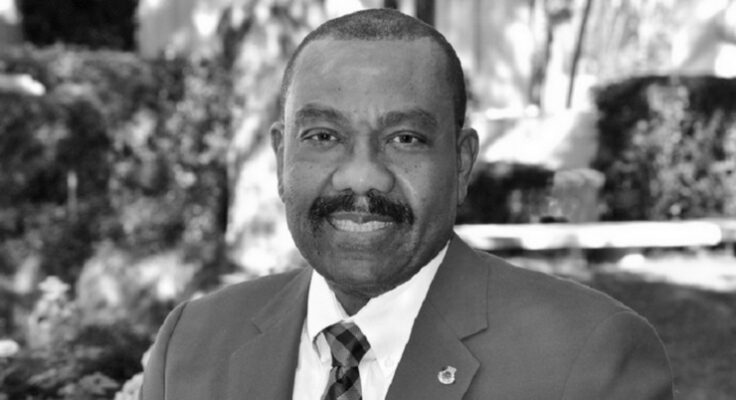








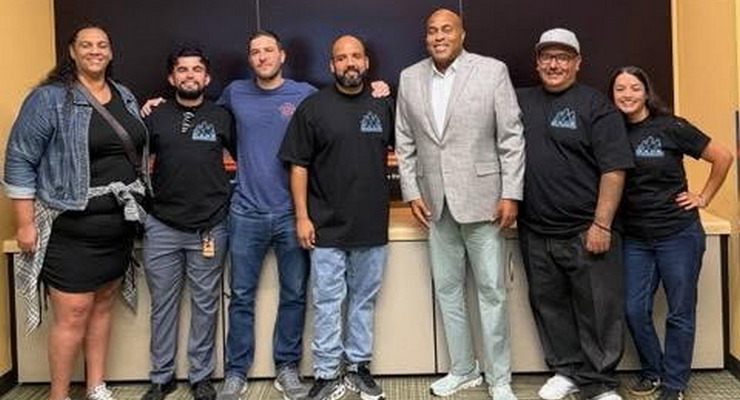
“When we invest in fathers, we invest in families,” said Pasadena Police Chief Gene Harris at the event, drawing a line between family stability and neighborhood safety. The Pasadena Police Department congratulated the graduates and thanked the center.
The nonprofit hosting the program has a formal standing with the city. In 2010 the City Council named Flintridge Center the City of Pasadena’s Institutional Home for Violence Prevention and Intervention and Positive Youth Development, a designation it still holds. It serves as convener and coordinator of reintegration services across Pasadena and Altadena, working with the Pasadena Police Department, the Pasadena Public Health Department and nine other community-based organizations.
Its reported outcomes are the reason that role matters. Of the formerly incarcerated people the center serves, 7% return to incarceration, against a Los Angeles County rate of 30%, according to the Flintridge Center. More than 1,100 people use its services each year.
The center grew out of the Flintridge Foundation, which closed its grant making in 2007. The remaining assets were used to form a nonprofit that would keep services running in Northwest Pasadena and West Altadena, and the organization has worked in those communities for more than 30 years. Youth programs stay focused on Pasadena and Altadena, while almost half of the adults served come from elsewhere in Los Angeles County.
Fatherhood work sits alongside the center’s larger reentry operation. In 2017 it obtained funding from the California Board of State and Community Corrections under Proposition 47 to strengthen reintegration services. Its Apprenticeship Preparation Program runs 240 hours over 10 weeks, preparing formerly incarcerated community members for union construction careers, with a curriculum built over 13 years, a 16-hour life skills component, field trips to construction sites and union training centers, and case management and job development that continue for up to a year afterward.
Reintegration services connect people to mental health and substance use treatment, housing, transportation, legal support and employment development. One participant described the support in a testimonial posted by the center: “It’s a really good support system.” Mentoring and after-school programs reach more than 150 young people a year who are at risk of dropping out of school or joining gangs.
The center is a partner in the HireLAX Apprenticeship Readiness Program, and longtime partner 2nd Call provides trauma-informed life skills sessions to workforce development participants.
Flintridge Center is at 236 W. Mountain St., Suite 106, in Pasadena, and can be reached at (626) 449-0839. Program information is posted at https://www.flintridge.org/
 Get our daily Pasadena newspaper in your email box. Free.
Get all the latest Pasadena news, more than 10 fresh stories daily, 7 days a week at 7 a.m.