




Women being treated for metastatic breast cancer should ask their oncologist what their blood pressure ought to be, according to Reina Haque, a senior cancer epidemiologist with Kaiser Permanente Southern California’s Department of Research & Evaluation in Pasadena, and the researchers behind a new Kaiser Permanente mammography study want every woman who checks in for a mammogram to be handed a short form asking whether she has ever smoked.
As Breast Cancer Awareness Month gives way to Lung Cancer Awareness Month, researchers at Pasadena’s Kaiser Permanente Bernard J. Tyson School of Medicine say two of the gaps in cancer care sit inside appointments patients already keep. In one study, women with metastatic breast cancer who were treated with more than one class of blood-pressure medication had a 38% lower risk of death than those taking a single class of the drugs. In another, of 19 mammography patients who qualified for lung cancer screening under federal guidelines, seven had no record of lung cancer screening in their electronic health records.
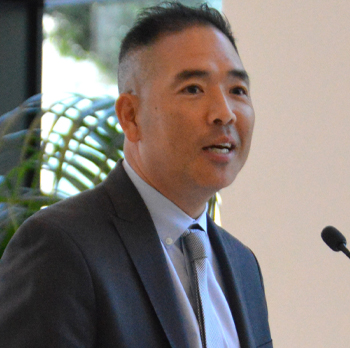
Haque said her team has not tracked whether practice has shifted since the study appeared. “Our research team has not specifically examined changes in clinical practices across Southern California since our February publication,” she wrote in response to questions. Asked whether Kaiser now asks about smoking at mammogram check-in in Pasadena or elsewhere in Southern California, Dr. Jeffrey Velotta, a clinical professor at the medical school, said, “Well, that’s in discussion right now.”
The blood-pressure study, published Feb. 26 in the journal Cancer Medicine, followed 1,332 women diagnosed with metastatic breast cancer at Kaiser Permanente Southern California from 2008 to 2020, tracking them through the end of 2021. Nearly half, 48.4%, had high blood pressure when their cancer was diagnosed, a rate that reached 64.6% among Black women.
Among the 704 women treated with blood-pressure medication, deaths ran at 21.4 per 100 person-years for those on more than one class of drug, compared with 28.5 for those on a single class. The association was strongest, and statistically significant, among Hispanic women.
The paper acknowledges other possible explanations, including that sicker women with more advanced disease may have had lower blood pressure and stayed on one drug, and that women on several drugs may have been monitored more closely. Haque wrote that the analysis accounted for the number of doctor visits. “However, the study was observational. A clinical trial might help resolve this issue, but trials are costly and may be too short to assess long-term outcomes,” she wrote.
Haque’s advice for the next appointment starts with a number. “Hypertension is called a ‘silent killer’ because few people experience symptoms from high blood pressure, so it is important to monitor blood pressure,” she wrote. She suggested patients ask what their ideal blood pressure should be and whether any of their breast cancer medications can affect blood pressure or long-term heart risk. “And if their blood pressure has been high for several readings, patients should ask their oncologist to coordinate with a primary care provider for hypertension monitoring or treatment.”
Staying on the pills is its own problem. Only 22.3% of the women treated with blood-pressure medicine kept their prescriptions filled at least 80% of the time; among them, women on more than one class had a 58% lower risk of death than women on one. “It’s hard to stay on these medications because some women have side effects like dizziness,” Haque wrote. “Other times, women may miss taking the blood pressure medications because they are feeling fine, so they miss a dose.”

Moira-Cecily Brady-Rogers, a co-author of the study and founder and executive director of Alive & Well Women, said the strain of a diagnosis can push daily medicine aside. “Under the stress of diagnosis and treatment a patient’s overall functioning takes a big hit, so things fall through the cracks,” wrote Brady-Rogers, a licensed marriage and family therapist. She said specialists treating other conditions are often not in direct contact with the cancer team, and she urged women to bring a spouse, friend or relative to appointments to help keep track of their care. She pointed to the Cancer Support Community, which she said offers free counseling and support groups in the San Gabriel Valley.
Haque tied the advice to recovery at home. “In Pasadena and Altadena, breast cancer survivors who are rebuilding after the fires may be tempted to postpone visits to their primary care doctor,” she wrote, adding that routine checkups remain vital.
Haque said Kaiser Permanente’s electronic medical record already alerts a breast cancer survivor’s primary care team to blood pressure readings outside the healthy range. “Medical histories may be less integrated in other healthcare settings, so patients should ask their oncology team to coordinate with their other healthcare providers,” she wrote. Every woman in the study was insured, and the paper notes its results may not apply to uninsured women; Haque wrote that uninsured women may be able to get hypertension care at community health clinics and free clinics at little or no cost.

The second study began at a front desk. Elaine Liang, a third-year student at the medical school and the paper’s first author, said women at the breast clinic at Kaiser Permanente Oakland Medical Center were handed a short paper questionnaire about smoking at check-in between May and November 2025. “So we built it into the check-in process basically to keep it as easy as possible for patients to fill it out,” Liang said.
The study, published in the Annals of Thoracic Surgery Short Reports, included 1,299 women. Using the 2021 criteria of the U.S. Preventive Services Task Force, 19 qualified for lung cancer screening based on their survey answers, and 12 of them had documentation of prior screening in their electronic health records.
Liang said the standard smoking field in the record is too blunt for histories that start and stop. “It only literally has a single entry where you can talk about average packs per day over an average number of years,” she said. Old notes can also be carried forward unchanged: “So that same note could be copied forward for the next eight years.”
Eligibility turns on those details. Under the task force criteria a former smoker must have quit within 15 years, Velotta said. “If you quit 16 years ago, you will not qualify,” he said. The American Cancer Society dropped the years-since-quitting requirement in its 2023 guideline, but Velotta said insurers, including Medicare and Medi-Cal, follow the task force criteria.
Velotta said the women in the study who qualified but had no screening record were not contacted, because the survey was anonymous and reaching them would require a modified research approval.
He said the fix could fall to the front desk. “And literally it’s the receptionist,” Velotta said, describing a two-question form that staff would enter into the record at the end of the day. He said the plan is for medical school faculty who practice at Kaiser in Southern California to bring it to their mammogram clinics. “So it would be something that is our future plan.”
Velotta said breast cancer survivors also carry a higher risk of lung cancer, and that they should make sure their history is noted in their chart. “But people need to know first that personal history of breast cancer does increase your risk of lung cancer,” he said.
“I think we need a lot more touch points to ask about it regularly,” Liang said. Velotta said the team is “currently working on implementing this as a routine.”
 Get our daily Pasadena newspaper in your email box. Free.
Get all the latest Pasadena news, more than 10 fresh stories daily, 7 days a week at 7 a.m.