








Measles has not reached Pasadena in 2026, but the virus has been reported close to the city’s doorstep.
Los Angeles County and Orange County confirmed five cases in the past week, part of a national outbreak that has already infected 588 people in January alone — the highest total for that month since the disease was declared eliminated in the United States in 2000. As cases multiply across the region, Pasadena Public Health officials are asking residents to check their vaccination status and get the MMR shot before someone they know is exposed.
“With increasing measles activity across the nation and region, I urge Pasadena residents to take steps now to protect their health and the health of their loved ones,” said Manuel Carmona, Director of Public Health for the city. “Getting vaccinated remains the most effective way to protect yourself and prevent the spread of disease in our community.”
The city’s immunization clinic at 1845 N. Fair Oaks Ave. offers MMR vaccines on Mondays and Wednesdays from 8:30 to 11:30 a.m. and 1:30 to 4:30 p.m. Walk-ins are welcome, or residents can call (626) 744-6121 to schedule an appointment.
Pasadena is one of only three cities in California that operates its own health department, independent of Los Angeles County. That independence means the city tracks its own case data and issues its own guidance. As of February 3, 2026, the department had recorded zero measles cases among Pasadena residents this year.
But the buffer is thin. Three of the five regional cases were confirmed in LA County, two in Orange County. Most involved travelers who had recently returned from international trips or visited areas with active outbreaks, according to county health officials. One traveler visited Disneyland while infectious; another passed through Los Angeles International Airport.
Statewide, California has confirmed nine measles cases in 2026, compared with 25 for all of last year. Every case involved a person who was unvaccinated or whose vaccination status was unknown, according to the California Department of Public Health.
Nationally, the numbers are worse. The CDC reported 588 confirmed cases as of January 30, outpacing the 2,267 cases reported for all of 2025. Most are linked to ongoing outbreaks in South Carolina and along the Utah-Arizona border.
Measles is one of the most contagious diseases known. A person infected with the virus can spread it to nine out of 10 unvaccinated people nearby, simply by breathing, coughing, or sneezing. The virus can linger in the air for up to two hours after an infected person leaves a room.
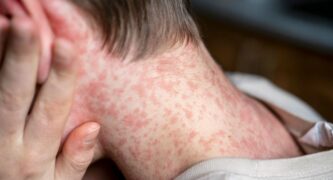
Symptoms typically appear seven to 14 days after exposure and include high fever — sometimes exceeding 104 degrees — cough, runny nose, red eyes, and a rash that begins on the face and spreads downward. But a person can transmit the virus for four days before the rash appears, often before they know they are sick.
“Receiving the measles, mumps, and rubella (MMR) vaccine is the most effective way to prevent the spread of measles and protect the community,” said Dr. Parveen Kaur, the city’s Acting Health Officer. “The recent measles outbreaks show how important it is for anyone who has not been immunized, to receive the vaccine.”
The vaccine is highly effective. One dose provides 93% protection against measles; two doses raise that to 97%. The CDC recommends children receive their first dose between 12 and 15 months of age and a second dose between ages 4 and 6.
Adults who are unsure of their vaccination status should consult a healthcare provider. Those vaccinated before 1968 may need a booster because earlier vaccine formulations were less effective. According to the CDC, there is no harm in receiving an additional dose if you have already been vaccinated.
Travelers face particular risk. Anyone planning an international trip — or traveling domestically to areas with active outbreaks — should verify their vaccination status at least two weeks before departure. The Pasadena health department recommends that children ages 6 to 11 months receive an early dose before international travel.
After returning home, travelers should monitor for symptoms for three weeks. Anyone who develops a fever, cough, or rash should call a healthcare provider before visiting a clinic to avoid exposing others.
Certain groups face higher risk of severe complications if infected: children under 5, adults over 20, pregnant women, and people with weakened immune systems, including those with leukemia or HIV. About one in five unvaccinated people who contract measles in the United States requires hospitalization, according to the CDC. Complications can include pneumonia, brain swelling, hearing loss, and in rare cases, death.
There is no antiviral treatment for measles. Medical care is limited to supportive treatment of symptoms.
Most health insurance plans cover the cost of the MMR vaccine. Uninsured or underinsured residents can access free or low-cost vaccines through the Vaccines for Children and Vaccines for Adults programs. The Pasadena health department participates in both.
For a list of additional clinics offering free or low-cost immunizations, residents can call 2-1-1 or visit the LA County Department of Public Health website at http://publichealth.
For more information, contact the Pasadena Public Health Department at (626) 744-6121 or visit cityofpasadena.net/
 Get our daily Pasadena newspaper in your email box. Free.
Get all the latest Pasadena news, more than 10 fresh stories daily, 7 days a week at 7 a.m.