






Adopting a definition would not, by itself, allow data centers in Pasadena. In a report to the commission, Acting Planning Director Jason Mikaelian wrote that “even if data centers remain unpermitted citywide, staff still recommends adding a clear land use definition for this use,” to avoid ambiguous interpretations of existing land uses should a data center be proposed. Any move to actually permit the facilities would come later, through separate public hearings and a City Council vote.
Staff has not proposed permitting the use. Instead, it has offered possible draft language to the commission.
The commission will not take a vote or make a recommendation on data centers at tonight’s meeting.
A base definition would treat a data center as a facility used mainly to store, manage, process and transmit digital data, and would count commercial cryptocurrency mining as a data center. It would also require the buildings of a phased or multi-building campus to be measured together against power and water thresholds, according to the report.
Under the draft, a “Limited” data center would be no larger than 5,000 square feet, incidental to a primary use, with an electrical design capacity of less than one megawatt and water use of 50 gallons or less per minute on an annualized basis. A “General” data center would meet any one of three tests: an electrical design capacity of one megawatt or more, water use above 50 gallons per minute on an annualized basis, or a site of one acre or more.
If the city were to allow the use, the report identifies where it might go: industrial land and the commercial, commercial-flex and industrial-flex categories of several specific plans, including South Fair Oaks, Lincoln Avenue, Lamanda Park and Fair Oaks/Orange Grove, along with public and semipublic land and certain planned developments. Data centers could be allowed by right or made to require a conditional use permit.
The report also raises a narrower option: letting institutions that operate under an existing master plan, such as Caltech and Huntington Hospital, host data centers as an accessory use.
Possible development standards the report lists include on-site and backup power, parking, security, screening of mechanical equipment, buffers for noise-producing equipment, setbacks, landscaped buffers and height limits. One existing rule already shapes the question: under Pasadena Municipal Code Section 13.04.75, any new customer seeking electric service with a peak demand of 10 megawatts or more must enter a long-term contract with Pasadena Water and Power, the report notes.
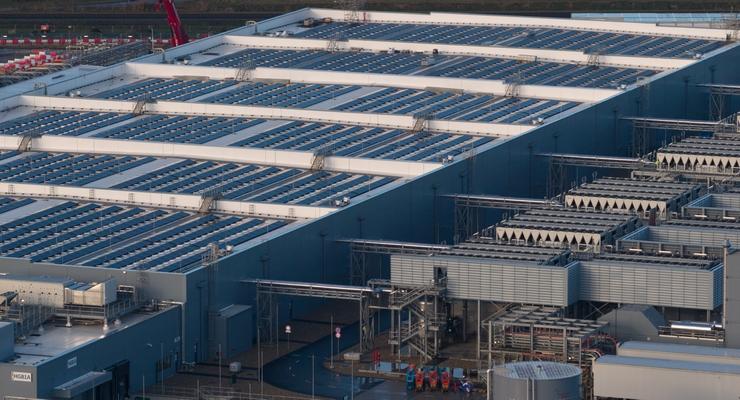
The item reaches the commission during what the report describes as surging interest in artificial intelligence. More than 4,000 data centers are already in operation, mostly in Virginia, Texas and California, with 3,000 more planned or under construction, the report says.
Supporters see the facilities as a catalyst for economic growth and essential for technological innovation, according to the report, while many communities have expressed significant concerns about electricity consumption, water scarcity, air pollution and noise.
Other cities have already acted, the report notes.
Monterey Park voters approved a data-center ban, Measure NDC, in June with 88% support, and Montebello, El Monte and Baldwin Park have adopted temporary moratoriums.
Pasadena staff briefed the Municipal Services Committee on March 10 and the Housing, Homelessness, and Planning Committee on April 1 before bringing the matter to the Planning Commission. At the April review, the report says, committee members raised concerns about allowing larger data centers in the city — citing strains on water and power, political challenges and limited community benefit — and, if the use were allowed, suggested requirements for fire hazards, cooling and on-site clean energy, while asking staff to weigh potential economic-development benefits for local businesses.
The report also surveys state and federal activity, including California’s Senate Bill 57, signed in October 2025, which directs the Public Utilities Commission to assess whether costs from new data-center power loads shift onto other customers, and a proposed federal moratorium on AI data centers introduced in March by U.S. Sen. Bernie Sanders.
No decision will be made Wednesday.
“This study session is an informational item only,” the report states.
Staff says it will conduct further analysis, return to the Housing, Homelessness, and Planning Committee for an update, and bring the matter back to the Planning Commission for public hearings, after which the commission would make a recommendation to the City Council. Adopting any definition, or permitting the use, would require an amendment to the Zoning Code.
The meeting will be conducted at 6:30 p.m. in Council Chambers, Room S249, 100 N. Garfield Ave., Pasadena.
Members of the public may submit an online speaker card through the city’s website beginning one hour before the meeting, and may comment in person in Room S249 at City Hall or by Zoom or telephone; the meeting streams at pasadenamedia.org.
The data-center item is one of two study sessions on Wednesday’s agenda, alongside a session on allowing safe parking on city-owned property, and follows a public hearing on renewing the Planned Development plan for The Affinity.
 Get our daily Pasadena newspaper in your email box. Free.
Get all the latest Pasadena news, more than 10 fresh stories daily, 7 days a week at 7 a.m.