








Scientists at NASA’s Jet Propulsion Laboratory and Caltech in Pasadena helped analyze a Martian meteorite more than 4.1 billion years old, uncovering evidence that water altered the rock early in the planet’s history.
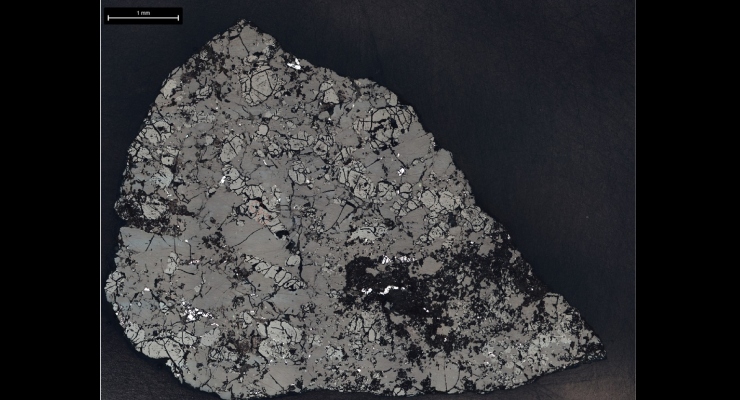
The research, published Thursday, Oct. 29, in the journal Science, examines Teghaza 001, a rose-colored meteorite discovered in Mali’s Sahara Desert in 2022. Its unusual minerals offer a rare look at the formation of Mars’ early crust and the changes that followed.
Yang Liu, a JPL scientist and the paper’s lead author, worked with researchers from several institutions to examine the stone. University of New Mexico scientists had identified its Martian origin through oxygen isotopes, which provide a chemical fingerprint of the planet.
Further analysis found unusual mineral textures and zircon crystals that preserve evidence of a rock’s formation. The nearly 2-pound meteorite differs from most Martian samples recovered on Earth, many of which formed much later in the planet’s history.
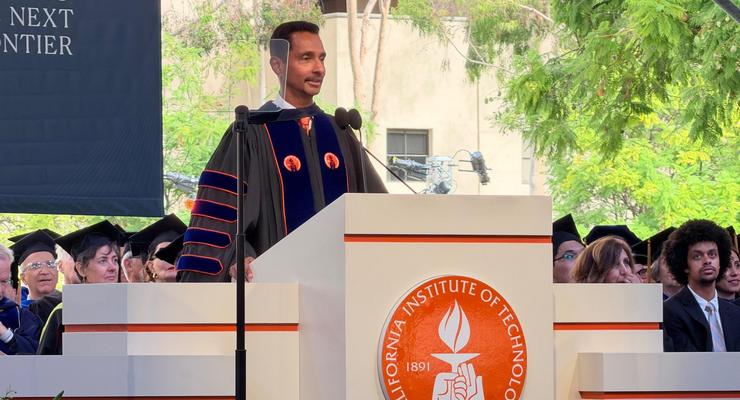
Caltech geochemistry professor Francois Tissot, a study co-author, helped apply a dating technique that measures rubidium and strontium in individual mineral grains rather than dissolving the entire specimen. The analysis used a fragment smaller than a fingernail, conserving the rare material for further research.
University of Maine researcher Alicia Cruz-Uribe and colleagues conducted measurements at Caltech in summer 2025. Their findings, combined with other analyses, established that the meteorite formed at least 4.1 billion years ago and experienced alteration by Martian water around that time.
The rock’s mineral composition also resembles terrain observed by NASA’s Mars Reconnaissance Orbiter in the planet’s southern highlands. Researchers identified 13 possible source areas, although its precise Martian origin remains unknown.
Lee Saper, a co-author who conducted the research as a postdoctoral scholar at JPL and now works at NASA’s Ames Research Center, also contributed to a June study in Science Advances examining water preserved in the meteorite’s minerals.
Saper told Reuters the findings do not establish whether life existed on ancient Mars. They do provide evidence of water interacting with the crust and show how laboratory tests can complement observations from spacecraft.
Liu said further studies could reveal more about the planet’s evolution: “We’ve only scratched the surface.”
 Get our daily Pasadena newspaper in your email box. Free.
Get all the latest Pasadena news, more than 10 fresh stories daily, 7 days a week at 7 a.m.