





The Municipal Services Committee is scheduled to receive a comprehensive update Tuesday on the City of Pasadena’s transition to a fully zero-emission transit fleet, with staff presenting real-world performance data showing battery electric buses are averaging only about 80 miles per day in service — a fraction of what Pasadena Transit’s daily routes demand.
The update from Joaquín T. Siques, Director of Transportation, is expected to brief the four-member advisory committee on infrastructure progress, vehicle procurement, and a fiscal strategy that has secured more than $115 million in funding to date, primarily from grants. As a Tier 4 advisory body, the Municipal Services Committee makes recommendations only; the full City Council retains final authority over all transit fleet and infrastructure decisions.
The stakes for Pasadena are significant. The City is operating under the California Air Resources Board’s Innovative Clean Transit Rule, which requires all public transit fleets to transition to zero-emission vehicles. Pasadena’s adopted Zero-Emission Bus Rollout Plan, approved by the City Council in January 2023, sets a 2030 deadline for converting Pasadena Dial-A-Ride and a 2037 deadline for Pasadena Transit. According to the staff report, departing from the current hybrid fleet strategy could jeopardize more than $38 million in already-secured grant funding.
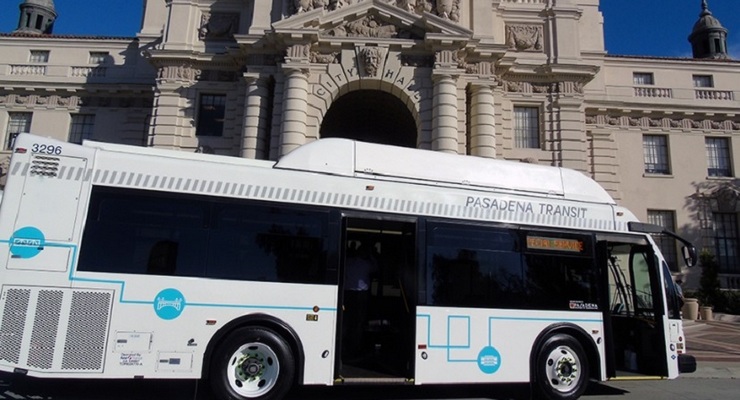
Real-world data from the City’s first battery electric bus, in service since May 2025, has revealed substantial range limitations. According to the staff report, Pasadena Transit buses travel up to 200 miles daily and sustain duty cycles of 14 to 16 hours per day, while the battery electric bus averages only about 80 miles per day before requiring removal from service for recharge. Although manufacturers may specify a total range of more than 200 miles, the practical daily range is restricted to approximately 45% to 50% of that total to maintain long-term battery health.
Those limitations have forced a recalculation of the replacement ratio. The Rollout Plan originally anticipated 1.5 battery electric buses for every one Renewable Natural Gas bus, but real-world performance suggests a 2-to-1 ratio is more realistic. By contrast, hydrogen Fuel Cell Electric Buses provide a one-to-one replacement for existing Renewable Natural Gas buses, which staff says better matches Pasadena’s long duty cycles. A 100% battery electric fleet would require a significant increase in total fleet size to maintain service, raising costs for vehicle purchases, parking, storage and maintenance.
Procurement and infrastructure milestones are well underway. Requests for Proposals are currently out for both the Transit Operations Maintenance Facility and the hydrogen fueling station. One battery electric bus has been in service for Pasadena Transit since May 19, 2025, and a second battery electric bus for Dial-A-Ride is about to be delivered. On Aug. 25, 2025, the Council awarded a contract for 17 hydrogen Fuel Cell Electric Buses, with the first delivery anticipated this October. Before the end of the current fiscal year, staff anticipate recommending the purchase of seven additional battery electric buses to the City Council, tied to an upcoming authorization request for nearly half of the Pasadena Dial-A-Ride battery electric bus fleet.
Staff would brief committee members that more than $115 million has been secured to fund infrastructure and roughly half of the fleet transition by 2028, with more than 35% of the additional $46 million needed for the second half of bus purchases already identified. On the fuel side, the City is coordinating with First Public Hydrogen, a Joint Powers Authority and consortium of transit operators, to secure green hydrogen supply aligned with the 2028 commissioning of the fueling facility. Hydrogen from First Public Hydrogen contracts is anticipated to be delivered with a zero-emission truck fleet.
Staff would also outline the consequences of altering the current strategy. According to the report, if the City Council were to change course and procure battery electric buses to replace the existing 17 compressed natural gas vehicles operating beyond their useful life, the City would need to identify an estimated additional $45 million to purchase 34 battery electric buses, on top of returning $38 million in grant funding and absorbing irreversible production costs. Staff also warns that failing to deliver projects already in implementation would jeopardize the City’s standing with Metro, the Southern California Association of Governments, and state and federal funding sources.
Ahead of the next major Pasadena Transit procurement in 2028, staff plan to conduct a comprehensive update to the Zero-Emission Bus Rollout Plan, incorporating updated technology performance, lifecycle costs, environmental impacts and operational needs. Following that update, the City Council would have the opportunity to review an updated transition analysis and determine whether changes should be made to the plan for future purchases.
The Municipal Services Committee is scheduled to meet at 5 p.m. on Tuesday, April 28, in the Pasadena City Hall Council Chamber, Room S249, 100 North Garfield Avenue, in Pasadena. For more information call (626) 744-7311 or visit https://www.cityofpasadena.
 Get our daily Pasadena newspaper in your email box. Free.
Get all the latest Pasadena news, more than 10 fresh stories daily, 7 days a week at 7 a.m.