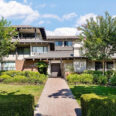











The district will remove fire-related contaminants from soil and trees at 11 campuses and sites during the summer break, work carried out under the direction of the California Department of Toxic Substances Control (DTSC) as part of the recovery from the Eaton Fire. Crews will excavate and replace contaminated soil, remove affected trees and restore the sites with clean soil and new native trees and plants.
“Any time toxic waste is being moved, it’s highly regulated and the community is concerned,” Superintendent Elizabeth Blanco said during a Friday briefing. “We’re doing this for the safety of students.”
The heaviest work cannot begin until students leave campus. Officials said removal of contaminated soil is set to start around June 15 and continue through the summer, scheduled before and after summer school and timed so that students are not present during excavation.
Michael Dunning, the district’s director of facilities, maintenance, operations and transportation, said the district has so far cleared only easy-to-reach spots such as planters, with deeper digging waiting for empty campuses. Crews will give priority to the sites where children return first when school resumes.
Dunning said contaminated soil will be removed at depths ranging from 1 foot to as much as 4 feet in places.
Across the 11 sites, the district estimates it will haul away about 8,367 cubic yards — roughly 13,390 tons — of contaminated soil, an estimated 613 truckloads at an average of 22 tons per truck, according to district documents. The largest volumes are at Blair High School, at about 163 truckloads, followed by San Rafael Elementary School at about 136 and Longfellow Magnet School at about 122. The removals will be phased by location and timing rather than done all at once, to limit the impact on neighbors.
Dunning said 193 trees are affected. Trees rooted in the contaminated soil must be removed to allow safe excavation, the district said.
Officials said they looked into whether the affected trees could be preserved but put children’s safety first, and cautioned that keeping unhealthy trees can itself pose a risk. The district said it will aim for one-to-one replacement, restoring each campus with appropriately sized trees and native plants.
PUSD is working with the city of Pasadena and West Coast Arborists Inc., a firm with more than 50 years of experience serving municipalities and public agencies across California, on the tree work.
The decision to remove a tree turns on whether it sits in contaminated soil, not on whether students use the area, the district said; even soil around a tree in an out-of-the-way planter can reach students through everyday activity.
In a letter to the school community Friday afternoon, Blanco and Dunning acknowledged the loss the removals represent.
“We know this is hard to hear. Trees are where children play, where communities gather, where roots run deep,” they wrote, noting that the district is home to more than 5,000 trees and that “the removal of any one of them is not something we take lightly.”
The two officials said that in working with the city of Pasadena, they learned the work is classified under the city’s Tree Protection Ordinance as “environmental remediation” rather than a formal project, meaning replacement planting is not legally required.
“However, we will replace these trees, going far beyond what the law requires,” they wrote, pledging that campuses “will remain welcoming, healthy, and green environments for our students and families for years to come.”
The cleanup is not optional. Under the California Health and Safety Code, once soil is identified as a health and safety risk, DTSC is required to direct its removal, the district said.
The agency holds school sites to stricter screening and oversight than parks or homes. Environmental testing in spring 2025 found fire-related contaminants above state screening thresholds at 19 campuses; eight were cleaned before the 2025-26 school year, leaving the 11 sites slated for this summer, and the affected areas have remained closed since 2025.
In all, DTSC is overseeing 15 district properties — the 11 active sites plus four fire-burned campuses, Eliot, Edison, Noyes and Loma Alta, that await future review. Substances of concern include lead, arsenic and polycyclic aromatic compounds.
Three of the 11 active sites — Franklin Elementary School, Longfellow Magnet School and San Rafael Elementary School — have site-specific, DTSC-approved Removal Action Workplans, and DTSC held public meetings on those plans April 16.
For the remaining eight — Blair High School, the former Cleveland Elementary School site, Field Elementary, Jefferson Dual Language Children’s Center, John Muir High School Early College Magnet, Octavia E. Butler Magnet, the PUSD Education Center and Washington Elementary STEM Magnet School — DTSC reviewed and approved the district’s Fire-Related Campus Assessment Reports and ordered the soil removed and replaced. The district said there are no contaminated soils at its sites in Sierra Madre.
District officials sought to reassure residents worried about contaminated soil escaping during transport, expressing confidence that would not happen.
Excavated soil will be hauled in tarped trucks or closed containers to licensed disposal facilities under DTSC requirements, and clean replacement soil will arrive separately in different trucks.
Contractors are required to water work areas to control dust, cover loads, limit work hours and follow approved traffic and safety plans, and haul routes will favor major roadways and freeway access while avoiding residential streets where possible.
While contaminated-soil removal will take place only when students are off campus, the later delivery of clean soil and landscaping may occur while school is in session, the district said, because that work carries no exposure to contaminated soil. The district’s environmental consultant, Verdantas, will be on site testing and monitoring to confirm that contaminated soil is properly removed and that incoming soil meets safety standards, and DTSC will review the final completion reports.
At the Franklin site, in Altadena, truck activity may take place from 7 a.m. to 7 p.m. Monday through Saturday. At the Pasadena sites, trucks may run from 7 a.m. to 7 p.m. Monday through Friday and from 8 a.m. to 5 p.m. Saturday, in coordination with the city of Pasadena.
Dunning put the total cost at $6.6 million, covering both the removal of contaminated material and the restoration of each site with clean soil, new trees and native plants. The district said it is pursuing available fire recovery funding and reimbursement.
Dunning also said the district has drawn on the experience of school and other officials from Paradise, California, who have helped Pasadena leaders understand what a community goes through after a fire destroys much of its infrastructure. The district plans community meetings and mailers to affected neighborhoods and the broader school district community as the work proceeds.
Blanco said the plan has been carefully reviewed and approved by state authorities, noting that school districts face far closer regulatory oversight than private landowners. The cleanup, she said, was not something the district wanted to do but something it had to do.
The district said it will keep sharing updates — including site-specific information, timelines and answers to frequently asked questions — and will notify neighborhoods before work begins nearby.
“Our goal is to ensure every PUSD campus and site stays safe and ready to welcome our students, employees, and families when school begins in August,” Blanco and Dunning wrote.
Resources and updates are available at pusd.us/restoringourschools.
 Get our daily Pasadena newspaper in your email box. Free.
Get all the latest Pasadena news, more than 10 fresh stories daily, 7 days a week at 7 a.m.