

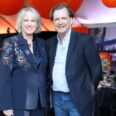






For nearly 30 years, John M. Williams Jr. has made his living in the space where most people don’t want to sit — the uncomfortable, unresolved middle of conversations about race.
His Pasadena-based organization, the Center for Restorative Justice, calls it creating “soft places for hard conversations.” The phrase sounds gentle. The work is not.
Williams has consulted with churches, universities, and nonprofits on becoming more equitable organizations, according to a church press release. He teaches at Azusa Pacific University and Life Pacific College. According to a church press release, he also serves on the board of Greenline Housing Foundation, the Pasadena-based nonprofit that has been working to keep families of color from losing land and homes in the wake of the Eaton Fire. And in recent months, he has been part of the coalition pushing Pasadena to formally reckon with the families displaced decades ago to make way for a freeway that was never built.
On Sunday morning, he brings that work — and the conversation he has been having in this city — to First United Methodist Church of Pasadena, where the congregation’s Church and Society Committee will host him at 11:30 a.m. in the Church Lounge. His presentation is titled “Navigating Tough Conversations About Racial Justice: Making an Impact in Times of Social Discord.”
Williams, a UC Berkeley and USC Law School graduate who has also practiced law for more than 20 years, leads an organization that became an independent Pasadena nonprofit in November 2023 after its roots at Fellowship Monrovia Church. The Center for Restorative Justice conducts educational “pilgrimages” through Pasadena’s own racial history — walking participants through sites that connect the city’s past to its present. The organization’s flagship program, “Reconcile Pasadena,” runs as a five-month cohort focused on housing and homelessness, schools and children, and faith community engagement.
“We’re living in a country that doesn’t share a common language in terms of defining racism, defining race, defining injustice,” Williams said at a Pasadena community event in February 2025. “They don’t share a common memory.”
That absence of a common language, he has said, is precisely what makes structured facilitation necessary. His workshops rely on critical questions, dialogue, and interactive exercises — not lectures.
“History rhymes, which makes it predictable and allows for us to not be shocked every time some sort of pattern of racism or racial prejudice repeats,” Williams has said. “It allows us to focus not just on the actual act, but to focus our attention on disrupting those types of patterns.”
Williams was mentored by the late Rev. Dr. John M. Perkins — the pioneering civil rights activist and co-founder of the Christian Community Development Association, who died on March 13 at the age of 95. Perkins spent his life calling the church toward racial reconciliation and community development.
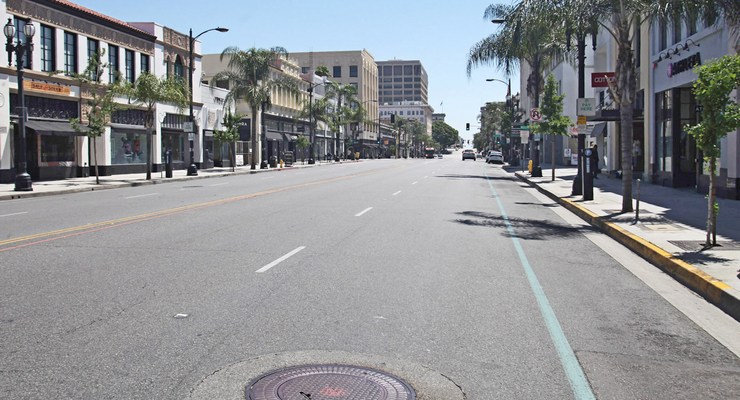
First United Methodist Church of Pasadena, founded in 1874 and now in its 152nd year, is one of the oldest congregations in the city. The neo-gothic building at 500 E. Colorado Blvd. — in the heart of the Playhouse District — was dedicated in December 1924. The congregation describes itself as welcoming all persons regardless of sexual orientation, gender identity, race, ethnicity, age, or physical and mental capacity.
Need to Know: John M. Williams Jr. speaks on “Navigating Tough Conversations About Racial Justice: Making an Impact in Times of Social Discord” on Sunday, April 26, 2026, at 11:30 a.m. in the Church Lounge at First United Methodist Church of Pasadena, 500 E. Colorado Blvd., Pasadena, CA 91101. For information, contact Communications Director Ashley Slade at (626) 796-0157 or Ashleys@fumcpasadena.org.
“For us, when we think about restorative justice,” Williams has said, “it means restoring history. For us, it means restoring relationships. For us, it means restoring cultures and communities that have been negatively impacted by systemic racism and systemic oppression.” In Pasadena, the community those words describe is not abstract. The work is here, and it is Sunday morning.
 Get our daily Pasadena newspaper in your email box. Free.
Get all the latest Pasadena news, more than 10 fresh stories daily, 7 days a week at 7 a.m.